





share
3-Quinuclidinone Hydrochloride CAS NO 1193-65-3
Unit Price:
CAS No.:1193-65-3
Grade:Customizable
Content:Customizable
Brand:Customizable
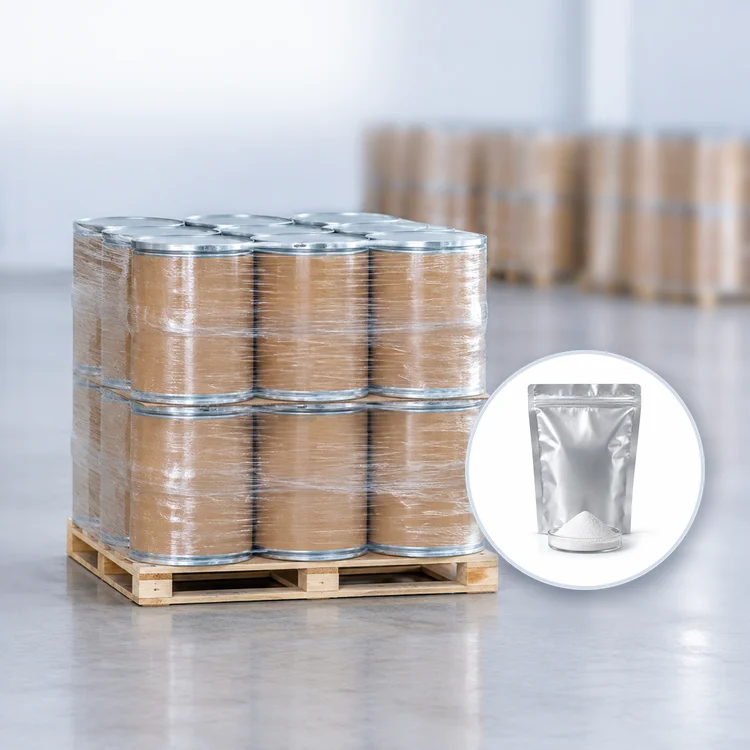
Packaging:Customizable
Description
3-Quinuclidinone Hydrochloride (CAS 1193-65-3) is the hydrochloride salt of 3-quinuclidinone, a bicyclic ketone built on the 1-azabicyclo[2.2.2]octane skeleton. It is recorded as a fine white powder. The structure combines a bridged tertiary amine, present as its hydrochloride, with a ketone carbonyl on the quinuclidine ring, so the compound offers both a basic nitrogen centre and a reactive carbonyl within a rigid bicyclic framework. In heterocyclic and organic synthesis, it serves as a quinuclidinone building block for constructing functionalized quinuclidine derivatives and related bicyclic amine structures.
In heterocyclic synthesis and process development, 3-Quinuclidinone Hydrochloride serves as a ketone-bearing bicyclic amine building block during batch synthesis and derivatization work. The resulting quinuclidine derivatives are used in ligand, catalyst and functional-material research for introducing a rigid bicyclic amine unit into larger molecular architectures.
Application
- Quinuclidine scaffold construction: In heterocyclic synthesis, 3-Quinuclidinone Hydrochloride serves as a bicyclic ketone building block, where its 1-azabicyclo[2.2.2]octane skeleton contributes a rigid tertiary amine framework. The resulting quinuclidine derivatives are used in ligand and catalyst research.
- Carbonyl derivatization: In organic synthesis, 3-Quinuclidinone Hydrochloride serves as a ketone substrate, where its ring carbonyl supports condensation, reductive amination and related transformations. The resulting functionalized quinuclidines are used in the preparation of substituted bicyclic amines.
- Salt-form handling in synthesis: In synthetic route development, the hydrochloride form of 3-quinuclidinone serves as a convenient, less volatile handling form of the free base, where the salt contributes improved handling during weighing and charging. The free base can be liberated under basic conditions before further reaction.
- Bicyclic amine compound research: In synthetic methodology research, 3-Quinuclidinone Hydrochloride may be evaluated as a model bicyclic aminoketone, where its combined amine and carbonyl functionality supports studies of ring functionalization. This is a research evaluation context.
- Ligand and catalyst studies: In ligand and catalyst research, 3-Quinuclidinone Hydrochloride may be examined as a starting material to quinuclidine-containing ligands, where the bicyclic amine framework contributes steric and electronic character. This is a research context.
Basic Information
| Property | Value |
|---|---|
| Product Name | 3-Quinuclidinone Hydrochloride |
| CAS No. | 1193-65-3 |
| Molecular Formula | C7H12ClNO |
| Molecular Weight | 161.63 g/mol |
| Physical | fine powder |
| Color | white |
| Chemical Property | H-bond donors 1; H-bond acceptors 2; TPSA 20.3; rotatable bonds 0; formal charge 0 |
| Customization | Content/concentration customizable per client specification |
Quality Control
The quality of 3-Quinuclidinone Hydrochloride is governed by its identity as the hydrochloride salt of a bicyclic aminoketone, where salt stoichiometry, ketone integrity and residual moisture affect its behaviour as a synthesis building block.
| Differentiated QC focus | Structure, application impact, detection and control |
|---|---|
| Identity and salt stoichiometry | The product is the hydrochloride of 3-quinuclidinone; the ratio of bound hydrogen chloride to the bicyclic ketone defines the effective content. In synthesis, a deviation in salt stoichiometry shifts the amount of free base released on neutralization and can alter charge calculations. Confirm identity and salt ratio by titration of the hydrochloride, elemental or ion analysis for chloride, and spectroscopic comparison with a reference. |
| Ketone content and purity | The ring carbonyl is the principal reactive site for derivatization. In condensation and reductive amination work, low ketone content or related impurities can reduce conversion and complicate purification. Set an agreed assay specification, monitor related substances, and trend purity against synthetic performance. Test by HPLC or GC with appropriate detection, supported by IR for carbonyl confirmation. |
| Moisture and hygroscopicity | The supplied record describes the material as hygroscopic. In weighing and charging operations, absorbed water can change the effective salt content and promote hydrolysis or caking. Control by moisture-limited packaging and storage, set a water content limit, and check before use in moisture-sensitive reactions. Test by Karl Fischer titration or loss on drying. |
| Appearance and particulate form | The product is recorded as a fine white powder. Colour or form changes can indicate oxidation, contamination or inconsistent isolation. In charging and dissolution steps, a fine powder affects dusting and dissolution rate. Set agreed appearance limits, inspect lots against a standard, and control milling and drying where form matters. |
| Residual solvents and volatiles | Volatiles from isolation and drying can remain in the solid. In synthesis, residual solvents can affect dissolution, reaction consistency and the quality of the isolated derivative. Define drying steps, set limits on residual solvents where relevant, and test by headspace GC or loss on drying. |
Batch release, COA and traceability. Each batch is released only when it conforms to the agreed specification. The Certificate of Analysis (COA) records the actual analytical methods and results for that released batch. Batch identity and results remain traceable, with lot trending used where it supports consistency review.
Storage
- Storage conditions: Store in a cool, dry, well-ventilated area. Keep containers tightly closed when not in use to limit moisture uptake.
- Secure storage: Store in a secure, designated area with access limited to authorized personnel.
- Incompatible materials: Keep away from strong oxidizers and strong bases.
- Handling precautions: Avoid breathing dust. Use only in a well-ventilated area. Wear protective gloves, protective clothing, eye protection, and face protection. Wash hands thoroughly after handling.
- Waste disposal: Dispose of contents and container in accordance with local, regional, national, and international regulations.
- Reference: Refer to the Safety Data Sheet (SDS) for detailed handling and disposal information.
Hot Related Products

Methyl 2-Aminopyridine-4-Carboxylate CAS NO 6937-03-7

2,5-Dichloro-4,6-Dimethylnicotinonitrile CAS NO 91591-63-8

1H-Pyrrolo[2,3-B]Pyridine, 3-(2-Chloroethyl)- CAS NO 90929-74-1
3-Bromo-5-Fluoro-2-Methoxypyrdine CAS NO 884494-81-9

2,6-Dichloro-5-Fluoronicotinic Acid CAS NO 82671-06-5
3,4-Dimethoxy-2-Pyridinemethanol CAS NO 72830-08-1
2-Amino-3-Acetylpyridine CAS NO 65326-33-2
3,4-Dihydro-2H-Pyrano[2,3-C]Pyridine-6-Carbaldehyde CAS NO 527681-61-4

Methyl 6-Methylnicotinate CAS NO 5470-70-2
5-Chloro-2-Nitropyridine CAS NO 52092-47-4
Methyl 2-Amino-5-Bromonicotinate CAS NO 50735-34-7
2-Aminopyridine CAS NO 504-29-0
5-Bromo-2,3-Dimethylpyridine CAS NO 27063-90-7
Methyl 5-Methylnicotinate CAS NO 29681-45-6
2-(5-Bromopyridin-2-Yl)-1-(2,4-Difluorophenyl)-2,2-Difluoroethanone CAS NO 294182-06-2
3-Bromo-4-Methylpyridine CAS NO 3430-22-6
4-Bromo-3,5-Dichloropyridine CAS NO 343781-45-3

3,5-Diethyl-1,2-Dihydro-1-Phenyl-2-Propylpyridine CAS NO 34562-31-7
(R)-7-(Benzyloxy)- 3,4,12,12A-Tetrahydro- 1H-[1,4]Oxazino[3,4- C]Pyrido[2,1-F][1,2,4]- Triazine-6,8-Dione CAS NO 1985607-70-2
1,3-Bis(4-Piperidyl)Propane CAS NO 16898-52-5
why choose us
Trusted Manufacturer
With our own production facilities, we ensure consistent quality, reliable supply, and full traceability.
Rigorous Quality Assurance
Each batch undergoes strict QC, accompanied by COA, MSDS, and full compliance with international standards.
Advanced R&D Expertise
Our in-house lab drives process innovation, new product development, and tailored synthesis solutions.