



share
Di-tert-Butyl L-(+)-Tartrate CAS NO 117384-45-9
Unit Price:
CAS No.:117384-45-9
Grade:Customizable
Content:Customizable
Brand:Customizable
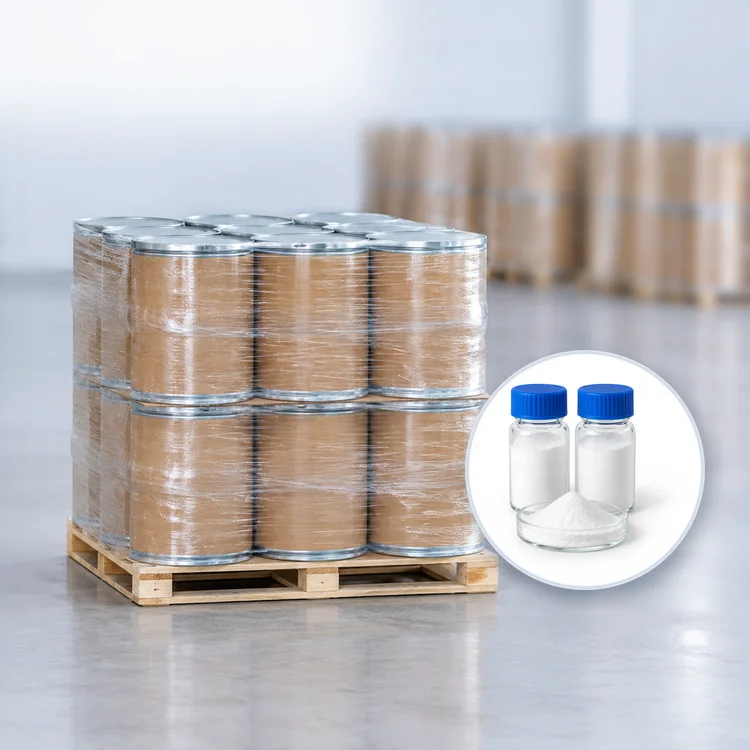
Packaging:Customizable
Description
Di-tert-Butyl L-(+)-Tartrate (CAS 117384-45-9) is the di-tert-butyl ester of L-(+)-tartaric acid, a chiral tartrate ester in which both carboxylic acid groups are protected as tert-butyl esters. It is recorded as a colorless liquid. As a fully esterified tartrate, it retains the two stereogenic centers of the L-tartaric acid backbone while lacking the free carboxylic acid groups of the parent acid, so it is expected to be handled as an organic ester rather than as an acidic compound. Its defined stereochemistry and ester-protected carboxyl groups support its role as a chiral building block and as a soluble organic reagent in synthesis and formulation work. In organic synthesis and materials-related laboratory work, it serves as a chiral ester component for the preparation of stereochemically defined derivatives and coordination compounds.
In organic synthesis and specialty chemical preparation, Di-tert-Butyl L-(+)-Tartrate serves as a chiral ester building block during batch synthesis and downstream derivatization. The resulting stereochemically defined esters and ligand-type derivatives are used in asymmetric catalysis development, chiral material preparation, and fine chemical manufacturing for stereoselective transformations.
Application
- Chiral building block in asymmetric synthesis: In asymmetric synthesis, Di-tert-Butyl L-(+)-Tartrate serves as a chiral tartrate ester building block, where its defined L-(+)-stereochemistry contributes to stereochemical control in the preparation of enantiomerically enriched products. The resulting chiral derivatives are used in the preparation of stereochemically defined fine chemicals.
- Ligand and chiral auxiliary preparation: In ligand synthesis, Di-tert-Butyl L-(+)-Tartrate serves as a chiral ester starting material for tartrate-derived ligands and auxiliaries, where its ester-protected carboxyl groups and stereocenters contribute to defined coordination geometry. The resulting ligands are used in asymmetric catalysis development.
- Ester-protected tartrate derivative preparation: In organic derivatization work, Di-tert-Butyl L-(+)-Tartrate serves as a protected tartrate substrate, where its tert-butyl ester groups contribute to selective transformation of the remaining functionality. The resulting derivatives are used in fine chemical and materials research.
- Organic solvent-borne reaction medium component: In organic reaction media, Di-tert-Butyl L-(+)-Tartrate serves as an ester-soluble chiral component, where its ester structure contributes to compatibility with organic solvent systems. The resulting reaction mixtures are used in solution-phase synthesis and process development.
- Chiral resolution and separation studies: In chiral separation research, Di-tert-Butyl L-(+)-Tartrate may be evaluated as a chiral ester reference component, where its defined stereochemistry supports studies of enantioselective recognition. This is a research evaluation context.
- Polymer and material modification research: In polymer and materials research, Di-tert-Butyl L-(+)-Tartrate may be evaluated as a chiral ester modifier, where its stereocenters and ester groups support studies of stereochemically defined material properties. This is a research context.
Basic Information
| Property | Value |
|---|---|
| Product Name | Di-tert-Butyl L-(+)-Tartrate |
| CAS No. | 117384-45-9 |
| Molecular Formula | C12H22O6 |
| Molecular Weight | 262.30 g/mol |
| Physical | Liquid |
| Color | Colorless |
| Chemical Property | XLogP3 0.9; H-bond donors 2; H-bond acceptors 6; TPSA 93.1; rotatable bonds 7; formal charge 0 |
| Customization | Content/concentration customizable per client specification |
Quality Control
The quality of Di-tert-Butyl L-(+)-Tartrate is governed by its identity as a chiral tartrate diester, so stereochemical integrity and ester purity are the primary quality concerns for synthesis and ligand-preparation uses.
| Differentiated QC focus | Structure, application impact, detection and control |
|---|---|
| Identity and ester structure | The product is the di-tert-butyl ester of L-(+)-tartaric acid; incorrect esterification or partial hydrolysis changes its reactivity in derivatization and ligand preparation. Confirm identity by IR carbonyl absorption and by comparison with an agreed reference where available. |
| Stereochemical integrity | The L-(+)-configuration of the tartrate backbone determines the stereochemical outcome in asymmetric applications; racemization or epimerization reduces enantioselectivity. Monitor optical rotation against an agreed specification and use chiral chromatographic comparison where suitable. |
| Purity and related esters | Residual monoester, tartaric acid, or other ester by-products can alter reaction stoichiometry and downstream selectivity. Set an agreed purity specification and monitor by HPLC or GC with appropriate detection. |
| Volatile and residual solvent content | Residual solvents from esterification or work-up can affect concentration control and solvent compatibility in solution-phase reactions. Define limits by agreed specification and check by GC or loss-on-drying where appropriate. |
| Appearance and color | The product is recorded as a colorless liquid; color development may indicate degradation or contamination. Compare against an agreed color standard and protect from light and heat during storage. |
Batch release, COA and traceability. Each batch is released only when it conforms to the agreed specification. The Certificate of Analysis (COA) records the actual analytical methods and results for that released batch. Batch identity and results remain traceable, with lot trending used where it supports consistency review.
Storage
- Storage conditions: Store in a cool, dry, well-ventilated area. Keep containers tightly closed when not in use.
- Secure storage: Store in a secure, designated area with access limited to authorized personnel.
- Incompatible materials: Keep away from strong oxidizing agents and sources of ignition.
- Handling precautions: Avoid breathing vapors or mist. Use only in a well-ventilated area. Wear protective gloves, protective clothing, eye protection, and face protection. Wash hands thoroughly after handling.
- Waste disposal: Dispose of contents and container in accordance with local, regional, national, and international regulations.
- Reference: Refer to the Safety Data Sheet (SDS) for detailed handling and disposal information.
Hot Related Products

1,12-Dodecanediol Dimethacrylate CAS NO 72829-09-5

Ethyl Methyl Oxalate CAS NO 615-52-1
Triethyl Methanetricarboxylate CAS NO 6279-86-3

Methyl 2-Methoxy-5-(Ethylsulfonyl)Benzoate CAS NO 62140-67-4
Ethyl Acetoacetate Propylene Glycol Ketal CAS NO 6290-17-1
Ethyl Bromofluoroacetate CAS NO 401-55-8
Methyl 4-Bromophenylacetate CAS NO 41841-16-1
3-Acetyl-3-Chlorodihydrofuran-2(3H)-One CAS NO 2986-00-7
2,3-Di-o-Para-Toluoyl-D-Tartaric Acid CAS NO 32634-68-7

Malonic Acid Bis(2,4,6-Trichlorophenyl) Ester CAS NO 15781-70-1
Methyl Decanoate CAS NO 110-42-9
Rel-Stearic Acid [(2S*)-2α*-Phenyl-1,3-Dioxolane]-4α*-Ylmethyl Ester CAS NO 56599-88-3
n-Tosyl-L-Alanine 3-Indoxyl Ester CAS NO 75062-54-3
Dimethyl Acetylenedicarboxylate CAS NO 762-42-5
Ethyl (R)-3-Hydroxybutyrate CAS NO 24915-95-5
Diethyl Carbonate CAS NO 105-58-8
Methyl Cyanoacetate CAS NO 105-34-0
p-Nitrophenethyl Acetate CAS NO 104-30-3

Isoamyl Nitrite CAS NO 110-46-3
Triethyl Orthopropionate CAS NO 115-80-0
why choose us
Trusted Manufacturer
With our own production facilities, we ensure consistent quality, reliable supply, and full traceability.
Rigorous Quality Assurance
Each batch undergoes strict QC, accompanied by COA, MSDS, and full compliance with international standards.
Advanced R&D Expertise
Our in-house lab drives process innovation, new product development, and tailored synthesis solutions.