




share
Ferrous Phosphate CAS NO 10028-23-6
Unit Price:
CAS No.:10028-23-6
Grade:Customizable
Content:Customizable
Brand:Customizable
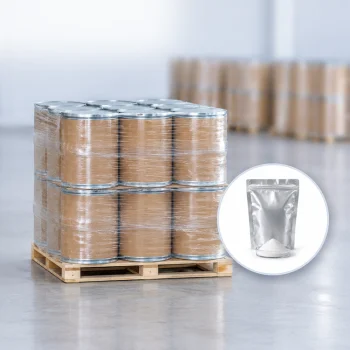
Packaging:Customizable
Description
Ferrous Phosphate (CAS 10028-23-6) is an iron(II) phosphate inorganic salt. It is recorded as a solid, gray material. Its composition centers on ferrous iron and phosphate, a combination that places it among iron phosphate salts whose behavior depends on oxidation state, hydration and particle form. In inorganic material and chemical processing contexts, Ferrous Phosphate serves as an iron- and phosphorus-containing inorganic salt for formulators and processors working with phosphate-based material systems.
In inorganic material preparation and phosphate-based formulation work, Ferrous Phosphate is handled as a solid iron phosphate salt that can be incorporated into batch compounding and downstream material preparation. The resulting iron- and phosphate-containing materials are used in industrial material and processing applications where an inorganic iron phosphate source is required.
Application
- Iron phosphate material preparation: In inorganic material preparation, Ferrous Phosphate serves as an iron- and phosphate-containing solid source, where its ferrous iron and phosphate composition contributes to the elemental balance of the resulting material. The resulting iron phosphate material is used in industrial material preparation.
- Phosphate-based formulation work: In phosphate-based formulation work, Ferrous Phosphate is handled as an inorganic phosphate salt component, where its solid form supports incorporation into blended or compounded systems. The resulting formulations are used in industrial material processing.
- Iron-containing inorganic compound studies: Ferrous Phosphate may be evaluated as an iron(II) phosphate model compound in studies of iron oxidation state and phosphate salt behavior. This is a laboratory research context.
Basic Information
| Property | Value |
|---|---|
| Product Name | Ferrous Phosphate |
| CAS No. | 10028-23-6 |
| Molecular Formula | Fe3H16O16P2 |
| Molecular Weight | 357.48 g/mol (anhydrous basis) |
| Physical | Solid |
| Color | Gray |
| Chemical Property | H-bond donors 8; H-bond acceptors 16; TPSA 181; rotatable bonds 0; formal charge 0 |
| Customization | Content/concentration customizable per client specification |
Quality Control
The quality of Ferrous Phosphate is governed by its identity as an iron(II) phosphate salt, where iron oxidation state, phosphate content and solid-form consistency are the primary quality concerns for material and formulation use.
| Differentiated QC focus | Structure, application impact, detection and control |
|---|---|
| Iron oxidation state | The iron in Ferrous Phosphate is present in the ferrous state, and oxidation toward the ferric state changes the composition of the material. In material preparation, a shifted oxidation state alters the iron chemistry delivered to the system. Qualify incoming material against an agreed iron(II) specification and control exposure during storage and handling. Iron oxidation state can be examined by redox titration or spectroscopic methods where suitable procedures are established. |
| Phosphate content | Phosphate is the second structural component of the salt, and its content determines the iron-to-phosphate balance of the material. In formulation work, an off-balance phosphate content changes the elemental composition of the resulting blend. Set an agreed specification for phosphate content and verify it against qualified reference procedures. Phosphate content can be determined by gravimetric or titrimetric methods where suitable procedures are established. |
| Identity confirmation | Confirmation that the material is the intended iron phosphate salt is the basis for all downstream quality decisions. In material preparation, a misidentified iron phosphate source compromises the elemental balance of the batch. Confirm identity against an agreed reference before release. Identity can be examined by elemental analysis and spectroscopic techniques where suitable procedures are established. |
| Moisture content | Residual moisture in a solid inorganic salt affects handling, weighing and blend consistency. In formulation work, variable moisture changes the effective composition of the weighed material. Set an agreed moisture limit and control drying and packaging accordingly. Moisture can be determined by loss-on-drying or Karl Fischer titration where suitable procedures are established. |
| Particle form and consistency | The solid form and particle characteristics of the material influence how it disperses and blends. In material preparation, inconsistent particle form can cause uneven distribution in the resulting blend. Set agreed limits on particle characteristics and verify them against qualified procedures. Particle form can be examined by sieving or particle-size analysis where suitable procedures are established. |
Batch release, COA and traceability. Each batch is released only when it conforms to the agreed specification. The Certificate of Analysis (COA) records the actual analytical methods and results for that released batch. Batch identity and results remain traceable, with lot trending used where it supports consistency review.
Storage
- Storage conditions: Store in a cool, dry, well-ventilated area. Keep containers tightly closed when not in use.
- Secure storage: Store in a secure, designated area with access limited to authorized personnel.
- Incompatible materials: Keep away from strong oxidizing agents.
- Handling precautions: Avoid breathing dust. Use only in a well-ventilated area. Wear protective gloves, protective clothing, eye protection, and face protection. Wash hands thoroughly after handling.
- Waste disposal: Dispose of contents and container in accordance with local, regional, national, and international regulations.
- Reference: Refer to the Safety Data Sheet (SDS) for detailed handling and disposal information.
Hot Related Products

Calcium Phosphate Dibasic Dihydrate CAS NO 7789-77-7
Magnesium Citrate CAS NO 7779-25-1
Magnesium Hydrogen Phosphate Trihydrate CAS NO 7782-75-4
Calcium Citrate Tetrahydrate CAS NO 5785-44-4
Zinc Citrate Dihydrate CAS NO 5990-32-9
Calcium Phosphate Tribasic CAS NO 12167-74-7
Sodium Ferrous Citrate CAS NO 43160-25-4
Calcium Citrate Malate CAS NO 142606-53-9
Trimagnesium Dicitrate CAS NO 3344-18-1
Calcium Phosphate CAS NO 7758-87-4

Lactate CAS NO 113-21-3
Monocalciumcitrate CAS NO 1185-56-4
Ferric Glycerophosphate CAS NO 1301-70-8
Calcium Glycerophosphate CAS NO 1336-00-1
Ferric Pyrophosphate CAS NO 1332-96-3

Ferric Ammonium Citrate,Brown CAS NO 1385-57-5
Calcium Iodate CAS NO 10031-32-0
Iron Sodium Diphosphate CAS NO 10045-87-1
Iron(Iii)Pyrophosphate Nonahydarate CAS NO 10049-18-0
Ferric Pyrophosphate CAS NO 10058-44-3
why choose us
Trusted Manufacturer
With our own production facilities, we ensure consistent quality, reliable supply, and full traceability.
Rigorous Quality Assurance
Each batch undergoes strict QC, accompanied by COA, MSDS, and full compliance with international standards.
Advanced R&D Expertise
Our in-house lab drives process innovation, new product development, and tailored synthesis solutions.