




share
Lactate CAS NO 113-21-3
Unit Price:
CAS No.:113-21-3
Grade:Customizable
Content:Customizable
Brand:Customizable
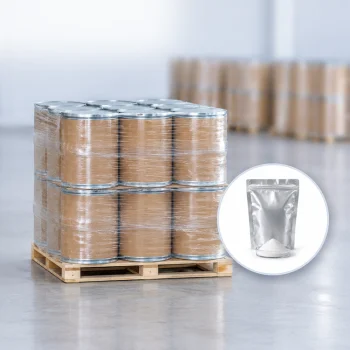
Packaging:Customizable
Description
Lactate (CAS 113-21-3) is the conjugate base of lactic acid, a three-carbon alpha-hydroxy carboxylate carrying both a carboxylate group and a hydroxyl group on the same carbon skeleton. It is described in the source record as white crystalline granules. The molecule combines an anionic carboxylate centre with an adjacent hydroxyl group, a pairing that supports pH-dependent proton exchange and chelation of polyvalent metal ions in aqueous systems. In aqueous formulation and process chemistry, Lactate serves as a water-compatible carboxylate source for buffering, pH adjustment and metal-ion handling.
In aqueous process streams and formulated liquid systems, Lactate is introduced as a carboxylate salt or acid-base pair during batch preparation and repeated manufacturing. The resulting buffered or chelated liquors are used in fermentation media preparation, metal-processing baths and general pH-controlled processing where a mild, water-soluble organic carboxylate is required.
Application
- Buffer and pH adjustment systems: In aqueous buffer preparation, Lactate serves as a carboxylate component of a conjugate acid-base pair, where its pKa in the mildly acidic region contributes to pH stabilisation. The resulting buffer solutions are used in fermentation media, biochemical processing and general laboratory pH control.
- Metal-ion chelation and sequestration: In metal-processing and process-water systems, Lactate acts as a hydroxy carboxylate ligand, where the carboxylate and adjacent hydroxyl groups contribute to binding of polyvalent metal ions. The resulting chelated liquors are used in descaling, stabilisation and metal-concentration control.
- Fermentation media preparation: In fermentation media formulation, Lactate serves as a water-soluble carbon and counter-ion source, where its carboxylate structure contributes to nutrient and ionic balance. The resulting media are used in microbial and cell-culture process development.
- Lactate salt manufacture: In salt preparation, Lactate serves as the anionic partner for neutralisation with metal hydroxides or carbonates, where its carboxylate group contributes to formation of lactate salts. The resulting salts are used in food-grade and technical material streams.
- Laboratory analytical work: In analytical laboratories, Lactate is used as a reference carboxylate for method development and calibration of organic-acid determinations, where its defined structure supports chromatographic and titrimetric comparison.
Basic Information
| Property | Value |
|---|---|
| Product Name | Lactate |
| CAS No. | 113-21-3 |
| Molecular Formula | C3H5O3- |
| Molecular Weight | 89.07 g/mol (Lactate anion) |
| Physical | Crystalline granules |
| Color | White |
| Chemical Property | XLogP3 0.2; H-bond donors 1; H-bond acceptors 3; TPSA 60.4; rotatable bonds 0; formal charge -1 |
| Customization | Content/concentration customizable per client specification |
Quality Control
The quality of Lactate is governed by its identity as a small hydroxy carboxylate, where carboxylate content, water content and ionic balance directly affect buffering behaviour and chelation performance in aqueous systems.
| Differentiated QC focus | Structure, application impact, detection and control |
|---|---|
| Carboxylate content and assay | The carboxylate group is the functional centre for buffering and salt formation. Low assay reduces buffering capacity and shifts pH control in fermentation and metal-processing systems. Control by acid-base titration or ion chromatography against an agreed specification. |
| Water content | The material is hygroscopic by source description, and absorbed water dilutes carboxylate content and alters weighed-in stoichiometry. Control by Karl Fischer titration and moisture-tight packaging. |
| Identity confirmation | Correct identity distinguishes Lactate from other hydroxy carboxylates. Confirm by infrared spectroscopy and chromatographic retention comparison against a suitable reference. |
| pH of aqueous solution | Solution pH reflects the acid-base balance of the supplied form. Out-of-range pH affects buffer preparation and neutralisation stoichiometry. Measure on a defined aqueous dilution against an agreed range. |
| Appearance and particulates | Colour and visible particulates indicate contamination or degradation. In clear liquid formulations, haze or discolouration affects product appearance. Inspect visually and by filtration against an agreed standard. |
Batch release, COA and traceability. Each batch is released only when it conforms to the agreed specification. The Certificate of Analysis (COA) records the actual analytical methods and results for that released batch. Batch identity and results remain traceable, with lot trending used where it supports consistency review.
Storage
- Storage conditions: Store in a cool, dry, well-ventilated area. Keep containers tightly closed when not in use.
- Secure storage: Store in a secure, designated area with access limited to authorized personnel.
- Incompatible materials: Keep away from strong oxidizers.
- Handling precautions: Avoid breathing dust. Use only in a well-ventilated area. Wear protective gloves, protective clothing, eye protection, and face protection. Wash hands thoroughly after handling.
- Waste disposal: Dispose of contents and container in accordance with local, regional, national, and international regulations.
- Reference: Refer to the Safety Data Sheet (SDS) for detailed handling and disposal information.
Hot Related Products

Calcium Phosphate Dibasic Dihydrate CAS NO 7789-77-7
Magnesium Citrate CAS NO 7779-25-1
Magnesium Hydrogen Phosphate Trihydrate CAS NO 7782-75-4
Calcium Citrate Tetrahydrate CAS NO 5785-44-4
Zinc Citrate Dihydrate CAS NO 5990-32-9
Calcium Phosphate Tribasic CAS NO 12167-74-7
Sodium Ferrous Citrate CAS NO 43160-25-4
Calcium Citrate Malate CAS NO 142606-53-9
Trimagnesium Dicitrate CAS NO 3344-18-1
Calcium Phosphate CAS NO 7758-87-4
Monocalciumcitrate CAS NO 1185-56-4

Ferric Glycerophosphate CAS NO 1301-70-8
Calcium Glycerophosphate CAS NO 1336-00-1
Ferric Pyrophosphate CAS NO 1332-96-3

Ferric Ammonium Citrate,Brown CAS NO 1385-57-5
Calcium Iodate CAS NO 10031-32-0
Ferrous Phosphate CAS NO 10028-23-6
Iron Sodium Diphosphate CAS NO 10045-87-1
Iron(Iii)Pyrophosphate Nonahydarate CAS NO 10049-18-0
Ferric Pyrophosphate CAS NO 10058-44-3
why choose us
Trusted Manufacturer
With our own production facilities, we ensure consistent quality, reliable supply, and full traceability.
Rigorous Quality Assurance
Each batch undergoes strict QC, accompanied by COA, MSDS, and full compliance with international standards.
Advanced R&D Expertise
Our in-house lab drives process innovation, new product development, and tailored synthesis solutions.