



share
1-Phenyl-2-Thiourea CAS NO 103-85-5
Unit Price:
CAS No.:103-85-5
Grade:Customizable
Content:Customizable
Brand:Customizable
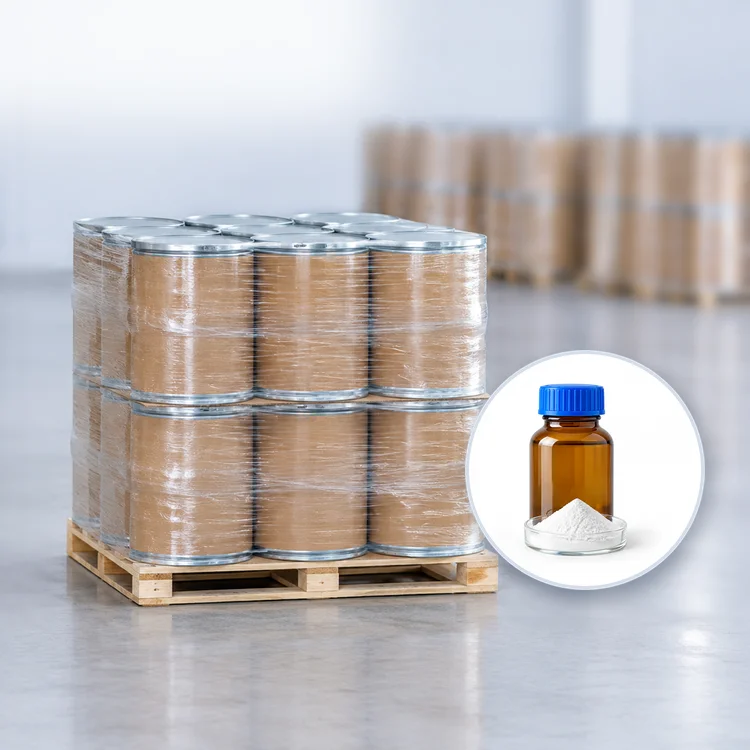
Packaging:Customizable
Description
1-Phenyl-2-Thiourea (CAS 103-85-5) is an N-phenyl-substituted thiourea, a compound in which a phenyl ring is attached to one nitrogen of the thiourea unit. It is recorded as a white crystalline solid in granular form. The molecule combines the electron-donating phenyl ring with the thiocarbonyl (C=S) and two N�CH groups of the thiourea core, a combination that supports hydrogen-bond donation and metal coordination. In organic synthesis and analytical chemistry, it serves as a sulfur- and nitrogen-containing reagent whose thiourea functionality is used for derivatization, coordination and heterocycle construction work.
In laboratory and specialty chemical preparation, 1-Phenyl-2-Thiourea is handled as a solid reagent that is dissolved or suspended in suitable organic media before reaction or analysis. Its thiourea group is used to introduce sulfur and nitrogen into target structures and to bind metal centers in coordination and analytical procedures. The resulting derivatives and complexes are used in method development, structural studies and fine chemical preparation.
Application
- Organic synthesis reagent: In organic synthesis, 1-Phenyl-2-Thiourea serves as a sulfur- and nitrogen-containing building block, where its thiocarbonyl and N�CH groups participate in condensation and addition reactions. The resulting thiourea-derived products are used in fine chemical preparation.
- Heterocycle construction: In heterocyclic chemistry, 1-Phenyl-2-Thiourea serves as a reagent for building nitrogen- and sulfur-containing rings, where the thiourea unit reacts with electrophiles and carbonyl compounds. The resulting heterocycles are used in further synthetic elaboration.
- Coordination chemistry: In coordination chemistry, 1-Phenyl-2-Thiourea serves as a sulfur-donor ligand, where the thiocarbonyl sulfur coordinates to metal centers. The resulting complexes are used in structural and spectroscopic studies.
- Analytical derivatization: In analytical chemistry, 1-Phenyl-2-Thiourea may be evaluated as a derivatizing reagent for sulfur- and nitrogen-reactive analytes, where its thiourea group reacts with suitable substrates. The resulting derivatives are examined in method development work.
- Metal-ion binding studies: In metal-ion binding research, 1-Phenyl-2-Thiourea may be evaluated as a chelating thiourea ligand, where its sulfur and nitrogen donor atoms support coordination studies. This is a research evaluation context.
Basic Information
| Property | Value |
|---|---|
| Product Name | 1-Phenyl-2-Thiourea |
| CAS No. | 103-85-5 |
| Molecular Formula | C7H8N2S |
| Molecular Weight | 152.22 g/mol |
| Physical | Crystalline granules |
| Color | White |
| Chemical Property | XLogP3 0.7; H-bond donors 2; H-bond acceptors 1; TPSA 70.1; rotatable bonds 1; formal charge 0 |
| Customization | Content/concentration customizable per client specification |
Quality Control
The quality of 1-Phenyl-2-Thiourea is governed by the integrity of the thiourea functionality and the purity of the phenyl-substituted core, which together determine its behavior as a synthesis reagent and coordinating ligand.
| Differentiated QC focus | Structure, application impact, detection and control |
|---|---|
| Identity and thiourea functionality | The N-phenyl thiourea structure provides the sulfur and nitrogen donor sites used in synthesis and coordination work. Impurities or substitution at the wrong nitrogen can alter reactivity and coordination behavior. Confirm identity against an agreed reference and set acceptance criteria for the thiourea content. |
| Purity and related substances | Residual starting materials or oxidation products can consume reagents or interfere with derivatization and complex formation. Define limits for related substances and monitor lots against them. |
| Appearance and color | The product is recorded as a white crystalline solid; discoloration can indicate oxidation or contamination. Set agreed color and appearance criteria and protect the material from light and air during storage. |
| Moisture content | Absorbed water can affect weighing, reaction stoichiometry and storage stability of the solid. Set a moisture limit and check it on receipt and before use in moisture-sensitive work. |
| Residual solvents | Solvents from preparation can remain in the crystalline solid and affect purity and odor. Define limits where relevant and verify by an appropriate volatiles method. |
Batch release, COA and traceability. Each batch is released only when it conforms to the agreed specification. The Certificate of Analysis (COA) records the actual analytical methods and results for that released batch. Batch identity and results remain traceable, with lot trending used where it supports consistency review.
Storage
- Storage conditions: Store in a cool, dry, well-ventilated area. Keep containers tightly closed when not in use.
- Secure storage: Store in a secure, designated area with access limited to authorized personnel.
- Incompatible materials: Keep away from strong oxidizers.
- Handling precautions: Avoid breathing dust. Use only in a well-ventilated area. Wear protective gloves, protective clothing, eye protection, and face protection. Wash hands thoroughly after handling.
- Waste disposal: Dispose of contents and container in accordance with local, regional, national, and international regulations.
- Reference: Refer to the Safety Data Sheet (SDS) for detailed handling and disposal information.
Hot Related Products

1,8-Diiodooctane CAS NO 24772-63-2

4,5-Dimethoxy-2-Nitrobenzoic Acid CAS NO 4998-07-6

1-(2-Chlorophenyl)Acetone CAS NO 6305-95-9
9-(2,6-Dichlorophenyl)-6-Hydroxy-4,5-Dimethyl-3-Oxo-3H-Xanthene-2,7-Dicarboxylic Acid CAS NO 6359-07-5

3-Chloro-1,1':3',1''-Terphenyl CAS NO 98781-25-0

Tosyl Chloride CAS NO 98-59-9

1-Bromo-2-Chloro-3-Methylbenzene CAS NO 97329-43-6
4-Chloro-3-Nitrobenzoic Acid CAS NO 96-99-1
n-Difluoromenthyl-4-Nitropyrazole CAS NO 956477-64-8
4-tert-Butylbenzaldehyde CAS NO 939-97-9

3-Chloropropiophenone CAS NO 936-59-4
Skq1 Bromide CAS NO 934826-68-3

1,1-Dimethoxycyclohexane CAS NO 933-40-4
n-Methylmaleimide CAS NO 930-88-1
2-Acetonaphthone CAS NO 93-08-3
Hex-4-Yn-1-Ol CAS NO 928-93-8
2,3,5,6-Tetrafluoro-1,4-Benzenedimethanol CAS NO 92339-07-6
cis-3-Methyl-2-Pentene CAS NO 922-62-3
3,3-Dimethyl-1-Butyne CAS NO 917-92-0
1,2-Bis(Bromomethyl)Benzene CAS NO 91-13-4
why choose us
Trusted Manufacturer
With our own production facilities, we ensure consistent quality, reliable supply, and full traceability.
Rigorous Quality Assurance
Each batch undergoes strict QC, accompanied by COA, MSDS, and full compliance with international standards.
Advanced R&D Expertise
Our in-house lab drives process innovation, new product development, and tailored synthesis solutions.