




share
Ethanaminium, N,N,n-Trimethyl-2-(1-Oxo-2-Propenyl)Oxy-, Chloride, Polymer With 2-Ethylhexyl 2-Propenoate And 2-Propenamide CAS NO 149778-23-4
Unit Price:
CAS No.:149778-23-4
Grade:Customizable
Content:Customizable
Brand:Customizable
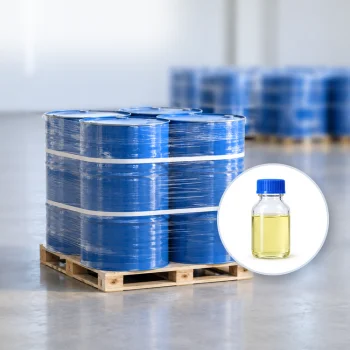
Packaging:Customizable
Description
Ethanaminium, N,N,n-Trimethyl-2-(1-Oxo-2-Propenyl)Oxy-, Chloride, Polymer With 2-Ethylhexyl 2-Propenoate And 2-Propenamide (CAS 149778-23-4) is a copolymer described in the supplied records as being formed from a quaternary ammonium acrylate monomer, 2-ethylhexyl 2-propenoate, and 2-propenamide. It is recorded as a viscous liquid with an off-white appearance. The polymer combines a cationic quaternary ammonium function with a hydrophobic 2-ethylhexyl ester component and an amide-bearing backbone, a combination that is expected to support charge interaction with suspended solids together with hydrophobic association in aqueous systems. In water-treatment and industrial separation contexts, it is positioned as a high-molecular-weight polymeric auxiliary for coagulation and flocculation duties.
In aqueous treatment and separation processes, Ethanaminium, N,N,n-Trimethyl-2-(1-Oxo-2-Propenyl)Oxy-, Chloride, Polymer With 2-Ethylhexyl 2-Propenoate And 2-Propenamide serves as a polymeric flocculant component during batch dilution and dosing into clarifiers, thickeners, and dewatering units. The resulting treated streams are used in industrial wastewater clarification, sludge conditioning, and solids separation for improved settling and filtrate clarity.
Application
- Industrial wastewater clarification: In industrial wastewater treatment, Ethanaminium, N,N,n-Trimethyl-2-(1-Oxo-2-Propenyl)Oxy-, Chloride, Polymer With 2-Ethylhexyl 2-Propenoate And 2-Propenamide serves as a cationic polymeric flocculant, where its quaternary ammonium groups are expected to neutralize dispersed particle charge and promote aggregate formation. The resulting clarified water is used in discharge and reuse circuits.
- Sludge conditioning and dewatering: In sludge conditioning, the polymer serves as a flocculant aid, where its high-molecular-weight chains are expected to bridge conditioned solids into larger, more rigid flocs. The resulting conditioned sludge is used in mechanical dewatering for improved cake solids and filtrate quality.
- Suspended solids settling: In clarifier and thickener operation, the polymer serves as a settling aid, where its cationic charge sites are expected to destabilize fine suspensions. The resulting settled solids are used in underflow thickening and downstream solids handling.
- Hydrophobically associating polymer research: In polymer and formulation research, Ethanaminium, N,N,n-Trimethyl-2-(1-Oxo-2-Propenyl)Oxy-, Chloride, Polymer With 2-Ethylhexyl 2-Propenoate And 2-Propenamide may be evaluated as a model cationic copolymer bearing hydrophobic ester groups, where its charge and hydrophobic balance supports studies of association behavior in aqueous media.
- Charge-demand and dosing studies: In treatment-process development, the polymer may be evaluated as a cationic flocculant candidate, where its charge density is expected to influence coagulant demand and floc properties. Such work supports dosing and mixing assessment in pilot treatment trials.
Basic Information
| Property | Value |
|---|---|
| Product Name | Ethanaminium, N,N,n-Trimethyl-2-(1-Oxo-2-Propenyl)Oxy-, Chloride, Polymer With 2-Ethylhexyl 2-Propenoate And 2-Propenamide |
| CAS No. | 149778-23-4 |
| Molecular Formula | UNKNOWN |
| Molecular Weight | UNKNOWN |
| Physical | Viscous liquid |
| Color | Off-white |
| Chemical Property | UNKNOWN |
| Customization | Content/concentration customizable per client specification |
Quality Control
The quality of Ethanaminium, N,N,n-Trimethyl-2-(1-Oxo-2-Propenyl)Oxy-, Chloride, Polymer With 2-Ethylhexyl 2-Propenoate And 2-Propenamide is governed by its polymeric nature and by the balance between cationic charge and hydrophobic ester content, which together determine how the product behaves in coagulation and flocculation duties. Because the supplied records do not include approved specifications or a validated method set for this SKU, the points below are stated as general quality considerations to be defined once identity and specification are confirmed.
| Differentiated QC focus | Structure, application impact, detection and control |
|---|---|
| Cationic charge character | Quaternary ammonium groups on the polymer chain are expected to provide the positive charge that interacts with negatively charged suspended solids. In clarification and dewatering, charge level affects floc size, settling rate, and overdosing behavior. Charge-related parameters should be agreed as specification items and monitored against application performance. |
| Hydrophobic ester content | The 2-ethylhexyl 2-propenoate units introduce hydrophobic character into the copolymer. In aqueous treatment systems, this balance can influence polymer conformation and association with organic matter. Composition consistency should be controlled through raw-material qualification and batch comparison. |
| Amide content and polymer composition | 2-Propenamide units contribute to the polymer backbone and to chain growth. Variation in composition can shift molecular weight and solution behavior, affecting flocculation performance. Composition should be checked against an agreed specification using suitable spectroscopic or chromatographic methods. |
| Solution viscosity and molecular weight | As a viscous liquid product, viscosity reflects polymer concentration and chain length. In dosing systems, viscosity affects pumping, dilution, and mixing. Viscosity should be measured under agreed conditions and correlated with dilution practice. |
| Residual monomers | Residual unsaturated monomers may remain after polymerization. Their level is a quality consideration for handling and for discharge-sensitive treatment applications. Limits should be set only where supported by an agreed specification and suitable analytical methods. |
| Appearance and homogeneity | The product is recorded as an off-white viscous liquid. Phase separation, gel bodies, or color shift can indicate instability or inconsistent manufacture. Appearance should be checked against an agreed reference, with homogeneity confirmed before dosing. |
Batch release, COA and traceability. Each batch is released only when it conforms to the agreed specification. The Certificate of Analysis (COA) records the actual analytical methods and results for that released batch. Batch identity and results remain traceable, with lot trending used where it supports consistency review.
Storage
- Storage conditions: Store in a cool, dry, well-ventilated area. Keep containers tightly closed when not in use.
- Secure storage: Store in a secure, designated area with access limited to authorized personnel.
- Incompatible materials: Keep away from strong oxidizers and materials incompatible with cationic polymer solutions.
- Handling precautions: Avoid breathing vapors or mist. Use only in a well-ventilated area. Wear protective gloves, protective clothing, eye protection, and face protection. Wash hands thoroughly after handling.
- Waste disposal: Dispose of contents and container in accordance with local, regional, national, and international regulations.
- Reference: Refer to the Safety Data Sheet (SDS) for detailed handling and disposal information.
Hot Related Products

Polyacrylamide CAS NO 9003-05-8
Poly(Acrylamide-Co-Acrylic Acid) CAS NO 9003-06-9

Vinylamine/Vinyl Alcohol Copolymer CAS NO 29499-22-7

Poly(Dimethylamine-Co-Epichlorohydrin) CAS NO 25988-97-0
Coagulant Ws CAS NO 106215-09-2
Aluminum Chlorohydrate CAS NO 1327-41-9
Aluminium Chloride Dihydroxide CAS NO 10284-64-7
Starch Xanthate CAS NO 11116-64-6
Polyacrylamide, Anionisch Mit Einem Restmonomergehalt <0,1 % CAS NO 12624-24-7

Hydroxy-Aluminum Polymer CAS NO 12703-68-3
Ewp 840 CAS NO 13104-02-4
Aluminium Chloride Oxide CAS NO 13596-11-7
Triphosphate CAS NO 14127-68-5
Aluminium Dichloride Hydroxide CAS NO 14215-15-7

Polyaluminum Chloride CAS NO 101707-17-9
2-Propenoic Acid, Ammonium Salt, Polymer With 2-Propenamide And 2-Propenenitrile CAS NO 102082-95-1
Hexanedioic Acid, Polymer With n-(2-Aminoethyl)-1,3-Propanediamine And N,n-1,2-Ethanediylbis1,3-Propanediamine CAS NO 102561-59-1
2-Propenoic Acid, Polymer With 2-(Diethylamino)Ethyl 2-Propenoate And 2-Propenamide, Sulfate CAS NO 103458-43-1
2-Propenoic Acid, 2-(Dimethylamino)Ethyl Ester, Polymer With 2-Propenamide, Sulfate CAS NO 103777-67-9
Guanidine, n-Cyano-, Polymer With n-(2-Aminoethyl)-1,2-Ethanediamine, Sulfate CAS NO 104339-61-9
why choose us
Trusted Manufacturer
With our own production facilities, we ensure consistent quality, reliable supply, and full traceability.
Rigorous Quality Assurance
Each batch undergoes strict QC, accompanied by COA, MSDS, and full compliance with international standards.
Advanced R&D Expertise
Our in-house lab drives process innovation, new product development, and tailored synthesis solutions.