




share
Aluminium Chloride Oxide CAS NO 13596-11-7
Unit Price:
CAS No.:13596-11-7
Grade:Customizable
Content:Customizable
Brand:Customizable
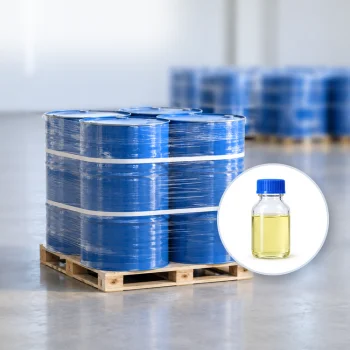
Packaging:Customizable
Description
Aluminium Chloride Oxide (CAS 13596-11-7) is an inorganic aluminium compound recorded under the name Aluminium Chloride Oxide. It is described in the supplied records as a solid, white material. Its composition places it among inorganic aluminium-based materials, a class in which aluminium centres and chloride content together influence hydrolysis behaviour, acidity and reactivity in aqueous and solvent media. In inorganic material research and auxiliary formulation studies, it serves as an aluminium-containing inorganic material for evaluation of its behaviour in dispersion, hydrolysis and solid-state processing contexts.
In inorganic material and auxiliary formulation work, Aluminium Chloride Oxide is handled as a solid aluminium-containing inorganic material during laboratory-scale and pilot material preparation. The resulting preparations are examined in catalyst and auxiliary research, particle and dispersion studies, and inorganic material development where aluminium-based chemistry is relevant.
Application
- Inorganic material research: In inorganic material research, Aluminium Chloride Oxide serves as an aluminium-containing inorganic solid for studies of hydrolysis behaviour, thermal treatment response and solid-state reactivity. The resulting observations support the design of further inorganic material experiments.
- Catalyst and auxiliary research: In catalyst and auxiliary research, Aluminium Chloride Oxide may be evaluated as an inorganic aluminium component in support and promoter studies, where its aluminium content and chloride association are relevant to surface and acidity behaviour. This is a research evaluation context.
- Flocculation formulation research: In flocculation formulation research, Aluminium Chloride Oxide may be evaluated as an inorganic aluminium source in coagulation and flocculation studies, where aluminium hydrolysis species are of interest in dispersion and settling behaviour. This is a formulation research context, not a confirmed commercial application.
- Ceramic and refractory material research: In ceramic and refractory material research, Aluminium Chloride Oxide may be examined as an aluminium-containing precursor for oxide formation during thermal treatment studies. The resulting oxide materials are of interest in inorganic material development.
- Laboratory reagent evaluation: In laboratory reagent evaluation, Aluminium Chloride Oxide may be examined as an inorganic aluminium compound for method development and comparative reactivity studies under controlled conditions.
Basic Information
| Property | Value |
|---|---|
| Product Name | Aluminium Chloride Oxide |
| CAS No. | 13596-11-7 |
| Molecular Formula | UNKNOWN |
| Molecular Weight | 78.43 g/mol |
| Physical | Solid |
| Color | White |
| Chemical Property | UNKNOWN |
| Customization | Content/concentration customizable per client specification |
Quality Control
The quality of Aluminium Chloride Oxide is governed by its identity as an inorganic aluminium-containing solid, where aluminium content, chloride association and moisture exposure influence its behaviour in dispersion, thermal treatment and auxiliary formulation studies.
| Differentiated QC focus | Structure, application impact, detection and control |
|---|---|
| Identity and aluminium content | The material is an inorganic aluminium compound, and aluminium content determines how much active inorganic material is present in a given mass. In inorganic material and auxiliary research, a low aluminium content shifts dosing and dispersion behaviour. Confirm identity and set an agreed aluminium content specification, with checks on incoming material. Test by complexometric titration or ICP-OES after suitable sample preparation. |
| Chloride content | Chloride associated with the aluminium centres affects hydrolysis behaviour, solution acidity and corrosivity toward equipment. In dispersion and thermal treatment studies, variable chloride content can change hydrolysis products and residue composition. Set an agreed chloride specification and monitor raw material consistency. Test by argentometric titration or ion chromatography. |
| Moisture and hygroscopic behaviour | The supplied records describe the material as hygroscopic, so absorbed water can alter weighing, dispersion and hydrolysis behaviour. In laboratory and pilot handling, moisture uptake can cause caking, dosing error and inconsistent hydrolysis. Use moisture-excluding packaging and storage, and set an agreed water content limit. Test by Karl Fischer titration or loss on drying. |
| Particle size and agglomeration | Particle size and agglomeration control dispersion, dissolution rate and reactivity in solid-state studies. In dispersion and ceramic research, coarse or agglomerated material can cause uneven mixing and slow hydrolysis. Use agreed particle size ranges and controlled milling or sieving where required. Test by laser diffraction or sieve analysis. |
| Insoluble matter and foreign particulates | Insoluble residues and foreign particulates can arise from raw materials and handling. In dispersion and ceramic studies, insolubles can cause sediment, surface defects or inconsistent reactivity. Include filtration or classification steps and inspect lots intended for fine dispersion work. Test by gravimetric filtration or microscopic examination. |
| Color and appearance | The material is described as white, and color change can indicate contamination or partial hydrolysis. In inorganic material research, off-color material can signal inconsistent composition. Set agreed appearance limits and protect from moisture during storage. Test by visual comparison against a retained reference sample. |
Batch release, COA and traceability. Each batch is released only when it conforms to the agreed specification. The Certificate of Analysis (COA) records the actual analytical methods and results for that released batch. Batch identity and results remain traceable, with lot trending used where it supports consistency review.
Storage
- Storage conditions: Store in a cool, dry, well-ventilated area. Keep containers tightly closed when not in use to limit moisture uptake.
- Secure storage: Store in a secure, designated area with access limited to authorized personnel.
- Incompatible materials: Keep away from strong oxidizers and from water or moisture sources where the material is intended to remain dry.
- Handling precautions: Avoid breathing dust. Use only in a well-ventilated area. Wear protective gloves, protective clothing, eye protection, and face protection. Wash hands thoroughly after handling.
- Waste disposal: Dispose of contents and container in accordance with local, regional, national, and international regulations.
- Reference: Refer to the Safety Data Sheet (SDS) for detailed handling and disposal information.
Hot Related Products

Polyacrylamide CAS NO 9003-05-8
Poly(Acrylamide-Co-Acrylic Acid) CAS NO 9003-06-9

Vinylamine/Vinyl Alcohol Copolymer CAS NO 29499-22-7

Poly(Dimethylamine-Co-Epichlorohydrin) CAS NO 25988-97-0
Coagulant Ws CAS NO 106215-09-2
Aluminum Chlorohydrate CAS NO 1327-41-9
Aluminium Chloride Dihydroxide CAS NO 10284-64-7
Starch Xanthate CAS NO 11116-64-6
Polyacrylamide, Anionisch Mit Einem Restmonomergehalt <0,1 % CAS NO 12624-24-7

Hydroxy-Aluminum Polymer CAS NO 12703-68-3
Ewp 840 CAS NO 13104-02-4
Triphosphate CAS NO 14127-68-5
Aluminium Dichloride Hydroxide CAS NO 14215-15-7

Polyaluminum Chloride CAS NO 101707-17-9
2-Propenoic Acid, Ammonium Salt, Polymer With 2-Propenamide And 2-Propenenitrile CAS NO 102082-95-1
Hexanedioic Acid, Polymer With n-(2-Aminoethyl)-1,3-Propanediamine And N,n-1,2-Ethanediylbis1,3-Propanediamine CAS NO 102561-59-1
2-Propenoic Acid, Polymer With 2-(Diethylamino)Ethyl 2-Propenoate And 2-Propenamide, Sulfate CAS NO 103458-43-1
2-Propenoic Acid, 2-(Dimethylamino)Ethyl Ester, Polymer With 2-Propenamide, Sulfate CAS NO 103777-67-9
Guanidine, n-Cyano-, Polymer With n-(2-Aminoethyl)-1,2-Ethanediamine, Sulfate CAS NO 104339-61-9
1,2-Ethanediamine, N,N,N',N'-Tetramethyl-, Polymer With (Chloromethyl)Oxirane, Hydrochloride CAS NO 104339-64-2
why choose us
Trusted Manufacturer
With our own production facilities, we ensure consistent quality, reliable supply, and full traceability.
Rigorous Quality Assurance
Each batch undergoes strict QC, accompanied by COA, MSDS, and full compliance with international standards.
Advanced R&D Expertise
Our in-house lab drives process innovation, new product development, and tailored synthesis solutions.