




share
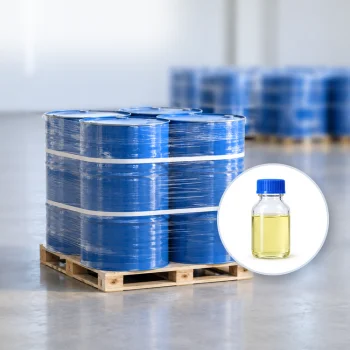
Polyaluminium Chloride CAS NO 114442-10-3
Unit Price:
CAS No.:114442-10-3
Grade:Customizable
Content:Customizable
Brand:Customizable
Packaging:Customizable
Description
Polyaluminium Chloride (CAS 114442-10-3) is a polymeric aluminium chloride coagulant, generally described as a fine powder and pale yellow in the supplied records. It is an inorganic aluminium-based material that hydrolyses in water to form polynuclear aluminium hydroxo species, which neutralise colloidal charge and bridge particles into settleable flocs. In water and wastewater treatment, it serves as a coagulant for turbidity and suspended-solids removal ahead of sedimentation and filtration.
In coagulation and flocculation stages of water-treatment plants, Polyaluminium Chloride is dosed as a working coagulant solution during batch or continuous clarification. The resulting clarified water is used in municipal and industrial water systems, where the coagulant supports particle aggregation, colour reduction and solids separation before downstream filtration.
Application
- Municipal water clarification: In municipal water treatment, Polyaluminium Chloride serves as a coagulant, where its hydrolysis products neutralise colloidal charge and aggregate suspended particles. The resulting flocs are removed by sedimentation and filtration to produce clarified water.
- Industrial wastewater treatment: In industrial wastewater clarification, Polyaluminium Chloride serves as a coagulation aid, where its polymeric aluminium species promote floc formation for solids and turbidity removal. The resulting treated water is directed to further treatment or discharge stages.
- Coagulation and flocculation dosing: In coagulation and flocculation units, Polyaluminium Chloride is dosed as a coagulant solution, where its hydrolysis behaviour contributes to rapid floc growth. The resulting flocs are separated in clarifiers and filters.
- Turbidity and colour reduction: In potable and process water treatment, Polyaluminium Chloride serves as a coagulant for turbidity and colour reduction, where charge neutralisation and bridging contribute to particle removal. The resulting water is clarified before disinfection or further processing.
- Sludge conditioning support: In water-treatment solids handling, Polyaluminium Chloride may be evaluated as a coagulant aid, where its aluminium hydroxo species contribute to particle aggregation. The resulting conditioned solids are handled in dewatering and disposal stages.
Basic Information
| Property | Value |
|---|---|
| Product Name | Polyaluminium Chloride |
| CAS No. | 114442-10-3 |
| Molecular Formula | UNKNOWN |
| Molecular Weight | UNKNOWN |
| Physical | Fine powder |
| Color | Pale yellow |
| Chemical Property | UNKNOWN |
| Customization | Content/concentration customizable per client specification |
Quality Control
Polyaluminium Chloride quality is governed by its polymeric aluminium composition and its behaviour as a coagulant in water-treatment dosing. Because the supplied records contain no verified specification or method data for this SKU, the points below are general quality considerations that must be confirmed against an agreed product specification before routine release testing is defined.
| Differentiated QC focus | Structure, application impact, detection and control |
|---|---|
| Aluminium content and basicity | The coagulant performance depends on the aluminium content and the degree of polymerisation, often expressed as basicity. In coagulation dosing, a shift in aluminium content or basicity can change charge neutralisation and floc formation. An agreed specification range should be set and raw material lots qualified against it. |
| Insoluble matter | Insoluble residue can carry through dosing systems and contribute to turbidity or deposits in treated water. Filtration and settling behaviour should be monitored, with limits agreed for the intended water-treatment use. |
| pH of solution | The pH of the prepared coagulant solution affects hydrolysis behaviour and dosing control. Solution pH should be checked against an agreed range before use in clarification stages. |
| Appearance and colour | The product is described as a pale yellow fine powder; colour or appearance changes may indicate compositional variation. Visual comparison against an agreed reference should be included in incoming checks. |
| Moisture and storage behaviour | The supplied record notes a tendency to absorb moisture, which can affect powder handling and dosing consistency. Containers should be kept closed and moisture uptake monitored where the product is stored as a powder. |
Batch release, COA and traceability. Each batch should be released only when it conforms to the agreed specification. The Certificate of Analysis (COA) records the actual analytical methods and results for that released batch, and batch identity and results remain traceable.
Storage
- Storage conditions: Store in a cool, dry, well-ventilated area. Keep containers tightly closed when not in use.
- Secure storage: Store in a secure, designated area with access limited to authorized personnel.
- Incompatible materials: Keep away from incompatible substances; confirm specific incompatibilities against the current product Safety Data Sheet.
- Handling precautions: Avoid breathing dust. Use only in a well-ventilated area. Wear protective gloves, protective clothing, eye protection, and face protection. Wash hands thoroughly after handling.
- Waste disposal: Dispose of contents and container in accordance with local, regional, national, and international regulations.
- Reference: Refer to the Safety Data Sheet (SDS) for detailed handling and disposal information.
Hot Related Products

Polyacrylamide CAS NO 9003-05-8
Poly(Acrylamide-Co-Acrylic Acid) CAS NO 9003-06-9

Vinylamine/Vinyl Alcohol Copolymer CAS NO 29499-22-7

Poly(Dimethylamine-Co-Epichlorohydrin) CAS NO 25988-97-0
Coagulant Ws CAS NO 106215-09-2
Aluminum Chlorohydrate CAS NO 1327-41-9
Aluminium Chloride Dihydroxide CAS NO 10284-64-7
Starch Xanthate CAS NO 11116-64-6
Polyacrylamide, Anionisch Mit Einem Restmonomergehalt <0,1 % CAS NO 12624-24-7

Hydroxy-Aluminum Polymer CAS NO 12703-68-3
Ewp 840 CAS NO 13104-02-4
Aluminium Chloride Oxide CAS NO 13596-11-7
Triphosphate CAS NO 14127-68-5
Aluminium Dichloride Hydroxide CAS NO 14215-15-7

Polyaluminum Chloride CAS NO 101707-17-9
2-Propenoic Acid, Ammonium Salt, Polymer With 2-Propenamide And 2-Propenenitrile CAS NO 102082-95-1
Hexanedioic Acid, Polymer With n-(2-Aminoethyl)-1,3-Propanediamine And N,n-1,2-Ethanediylbis1,3-Propanediamine CAS NO 102561-59-1
2-Propenoic Acid, Polymer With 2-(Diethylamino)Ethyl 2-Propenoate And 2-Propenamide, Sulfate CAS NO 103458-43-1
2-Propenoic Acid, 2-(Dimethylamino)Ethyl Ester, Polymer With 2-Propenamide, Sulfate CAS NO 103777-67-9
Guanidine, n-Cyano-, Polymer With n-(2-Aminoethyl)-1,2-Ethanediamine, Sulfate CAS NO 104339-61-9
Related Articles
why choose us
Trusted Manufacturer
With our own production facilities, we ensure consistent quality, reliable supply, and full traceability.
Rigorous Quality Assurance
Each batch undergoes strict QC, accompanied by COA, MSDS, and full compliance with international standards.
Advanced R&D Expertise
Our in-house lab drives process innovation, new product development, and tailored synthesis solutions.