




share
Benzene, Diethenyl-, Polymer With Ethenylbenzene And Ethenylethylbenzene, (Dimethylamino)Methyl Derivs., Chloromethane-Quaternized, Chloride CAS NO 114060-56-9
Unit Price:
CAS No.:114060-56-9
Grade:Customizable
Content:Customizable
Brand:Customizable
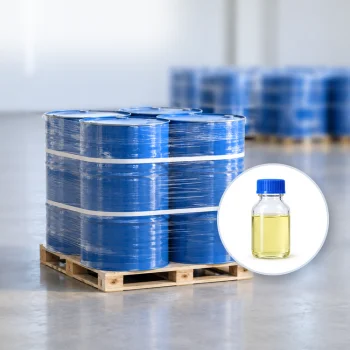
Packaging:Customizable
Description
Benzene, Diethenyl-, Polymer With Ethenylbenzene And Ethenylethylbenzene, (Dimethylamino)Methyl Derivs., Chloromethane-Quaternized, Chloride (CAS 114060-56-9) is a crosslinked styrene-divinylbenzene copolymer bearing quaternary ammonium groups in the chloride form. It is a solid, off-white polymeric material. Its polymer backbone is built from diethenylbenzene crosslinks and ethenylbenzene units, with (dimethylamino)methyl substituents quaternized by chloromethane to give fixed cationic sites paired with chloride counterions. This fixed-charge structure supports anion exchange behavior, giving it the role of a strong-base anion exchange polymer in water and liquid processing systems. In aqueous processing, it serves as an anion exchange medium for the uptake and exchange of dissolved anionic species.
In water processing and liquid purification systems, this quaternary ammonium styrene-divinylbenzene polymer serves as a strong-base anion exchange medium during repeated service and regeneration cycles. The resulting processed water or process liquid is used in demineralization, deionization and anion removal duties where dissolved anionic species must be exchanged or reduced.
Application
- Anion exchange in water processing: In water processing and demineralization systems, this quaternary ammonium functionalized styrene-divinylbenzene polymer serves as a strong-base anion exchange medium, where its fixed cationic quaternary ammonium sites exchange chloride counterions for dissolved anions. The resulting processed water is used in demineralization and deionization duties.
- Deionization and demineralization: In deionization and demineralization processes, the polymer serves as an anion exchange component, where its quaternary ammonium groups contribute to removal of dissolved anionic species from aqueous streams. The resulting demineralized water is used in industrial water preparation.
- Anion removal from process liquids: In industrial liquid purification, the polymer serves as an anion exchange material, where its fixed cationic sites contribute to exchange of anionic constituents. The resulting purified liquid is used in downstream process streams.
- Regenerable ion exchange service: In regenerable ion exchange operations, the polymer serves as a chloride-form strong-base anion exchanger, where its quaternary ammonium sites can be regenerated with chloride-containing solutions. The resulting medium is reused across service cycles in water processing systems.
- Flocculation and clarification support: In flocculation and clarification of aqueous systems, the polymer serves as a high-molecular-weight cationic polymeric material, where its quaternary ammonium groups contribute to charge interaction with suspended anionic particulates. The resulting clarified liquid is used in industrial water and wastewater handling.
Basic Information
| Property | Value |
|---|---|
| Product Name | Benzene, Diethenyl-, Polymer With Ethenylbenzene And Ethenylethylbenzene, (Dimethylamino)Methyl Derivs., Chloromethane-Quaternized, Chloride |
| CAS No. | 114060-56-9 |
| Molecular Formula | UNKNOWN |
| Molecular Weight | UNKNOWN |
| Physical | Solid |
| Color | Off-white |
| Chemical Property | UNKNOWN |
| Customization | Content/concentration customizable per client specification |
Quality Control
The quality of this quaternary ammonium styrene-divinylbenzene polymer is governed by its fixed cationic charge sites and crosslinked polymer network, which together determine anion exchange capacity, exchange kinetics and mechanical stability in water processing service.
| Differentiated QC focus | Structure, application impact, detection and control |
|---|---|
| Quaternary ammonium content | The (dimethylamino)methyl groups quaternized by chloromethane provide the fixed cationic sites that drive anion exchange. In water processing and deionization, lower quaternary ammonium content reduces exchange capacity and shortens service runs, while uneven quaternization causes inconsistent anion uptake. Control by qualifying quaternization completeness and trending exchange capacity against an agreed specification. Test by total exchange capacity titration and by chloride content determination. |
| Chloride counterion balance | The polymer is supplied in the chloride form, and the chloride counterion balance determines how readily anions are exchanged in service. In demineralization, an off-balance counterion can cause slow start-up exchange, pH excursions or premature breakthrough. Set an agreed specification for chloride-form conversion and verify by titration of released chloride. |
| Crosslink density and mechanical strength | Diethenylbenzene crosslinks set the network rigidity that governs swelling, osmotic stability and resistance to bead fracture. In repeated service and regeneration, low crosslinking can cause excessive swelling and bead breakage, while high crosslinking slows exchange kinetics. Control crosslink level within an agreed range and monitor bead integrity. Test by swelling measurement and by mechanical or attrition testing. |
| Moisture content | Water held in the polymer pores affects exchange kinetics, swelling behavior and handling. In water processing service, incorrect moisture can indicate incomplete conditioning or drying damage, leading to slow kinetics or bead cracking. Set an agreed moisture specification and control drying and conditioning steps. Test by loss-on-drying or Karl Fischer titration. |
| Particle size distribution | Bead size distribution governs hydraulic behavior, pressure drop and fines generation in packed beds. In demineralization columns, excessive fines or a skewed distribution can cause high pressure drop, channeling and poor bed utilization. Control by classification and screening, with an agreed particle size specification. Test by sieve analysis or laser diffraction. |
| Extractables and rinse profile | Residual soluble species from polymerization or quaternization can leach into processed liquids. In deionization and process liquid purification, extractables can raise conductivity or contaminate the processed stream. Control by aqueous rinsing and set an agreed rinse conductivity endpoint. Test by conductivity measurement of rinse water and total organic carbon where relevant. |
Batch release, COA and traceability. Each batch is released only when it conforms to the agreed specification. The Certificate of Analysis (COA) records the actual analytical methods and results for that released batch. Batch identity and results remain traceable, with lot trending used where it supports consistency review.
Storage
- Storage conditions: Store in a cool, dry, well-ventilated area. Keep containers closed when not in use to limit moisture uptake and contamination.
- Secure storage: Store in a secure, designated area with access limited to authorized personnel.
- Incompatible materials: Keep away from strong oxidizers and materials incompatible with quaternary ammonium polymers.
- Handling precautions: Avoid generating and breathing dust. Use in a well-ventilated area. Wear protective gloves, protective clothing, eye protection and face protection. Wash hands thoroughly after handling.
- Waste disposal: Dispose of contents and container in accordance with local, regional, national and international regulations.
- Reference: Refer to the Safety Data Sheet (SDS) for detailed handling and disposal information.
Hot Related Products

Polyacrylamide CAS NO 9003-05-8
Poly(Acrylamide-Co-Acrylic Acid) CAS NO 9003-06-9

Vinylamine/Vinyl Alcohol Copolymer CAS NO 29499-22-7

Poly(Dimethylamine-Co-Epichlorohydrin) CAS NO 25988-97-0
Coagulant Ws CAS NO 106215-09-2
Aluminum Chlorohydrate CAS NO 1327-41-9
Aluminium Chloride Dihydroxide CAS NO 10284-64-7
Starch Xanthate CAS NO 11116-64-6
Polyacrylamide, Anionisch Mit Einem Restmonomergehalt <0,1 % CAS NO 12624-24-7

Hydroxy-Aluminum Polymer CAS NO 12703-68-3
Ewp 840 CAS NO 13104-02-4
Aluminium Chloride Oxide CAS NO 13596-11-7
Triphosphate CAS NO 14127-68-5
Aluminium Dichloride Hydroxide CAS NO 14215-15-7

Polyaluminum Chloride CAS NO 101707-17-9
2-Propenoic Acid, Ammonium Salt, Polymer With 2-Propenamide And 2-Propenenitrile CAS NO 102082-95-1
Hexanedioic Acid, Polymer With n-(2-Aminoethyl)-1,3-Propanediamine And N,n-1,2-Ethanediylbis1,3-Propanediamine CAS NO 102561-59-1
2-Propenoic Acid, Polymer With 2-(Diethylamino)Ethyl 2-Propenoate And 2-Propenamide, Sulfate CAS NO 103458-43-1
2-Propenoic Acid, 2-(Dimethylamino)Ethyl Ester, Polymer With 2-Propenamide, Sulfate CAS NO 103777-67-9
Guanidine, n-Cyano-, Polymer With n-(2-Aminoethyl)-1,2-Ethanediamine, Sulfate CAS NO 104339-61-9
why choose us
Trusted Manufacturer
With our own production facilities, we ensure consistent quality, reliable supply, and full traceability.
Rigorous Quality Assurance
Each batch undergoes strict QC, accompanied by COA, MSDS, and full compliance with international standards.
Advanced R&D Expertise
Our in-house lab drives process innovation, new product development, and tailored synthesis solutions.