




share
Benzene, Diethenyl-, Polymer With Ethenylbenzene And Ethenylethylbenzene, Aminomethylated, Chloromethane-Quaternized, Hydroxide CAS NO 113114-06-0
Unit Price:
CAS No.:113114-06-0
Grade:Customizable
Content:Customizable
Brand:Customizable
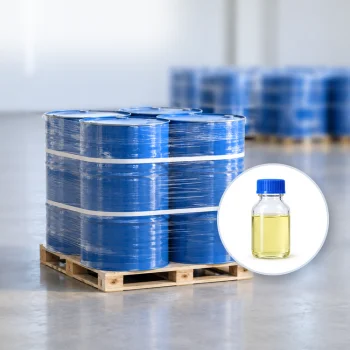
Packaging:Customizable
Description
Benzene, Diethenyl-, Polymer With Ethenylbenzene And Ethenylethylbenzene, Aminomethylated, Chloromethane-Quaternized, Hydroxide (CAS 113114-06-0) is a crosslinked styrene-divinylbenzene copolymer bearing aminomethyl groups that have been quaternized with chloromethane and supplied in the hydroxide form. It is a solid polymeric material, recorded in the source as bead or particle form, and is insoluble in water and common organic solvents by virtue of its crosslinked network. Its quaternary ammonium groups carry exchangeable hydroxide counter-ions, giving the polymer the character of a strong-base anion-exchange resin. In water processing and related separation processes, it serves as an anion-exchange medium for the removal of anionic species from aqueous streams.
In industrial water processing and demineralization systems, this quaternized aminomethylated styrene-divinylbenzene polymer is packed as a resin bed through which aqueous streams are passed in repeated service cycles. The quaternary ammonium hydroxide sites exchange hydroxide for dissolved anions, and the resulting processed water is used in boiler feed, process water and deionized water applications where anion removal is required.
Application
- Water demineralization: In demineralization trains, the polymer serves as a strong-base anion-exchange resin, where its quaternary ammonium hydroxide groups exchange hydroxide for dissolved anions such as chloride and sulfate. The resulting demineralized water is used in boiler feed and industrial process water systems.
- Anion removal from aqueous streams: In industrial water processing, the resin serves as an anion-exchange medium, where its fixed quaternary ammonium sites take up anionic species from the passing stream. The processed water is used where reduced anion content is required.
- Deionization polishing: In deionization polishing stages, the hydroxide-form resin serves as a final anion-removal step, where its exchangeable hydroxide contributes to reduced conductivity of the processed water. The polished water is used in industrial water preparation.
- Strong-base anion exchange in packed beds: In packed-bed ion-exchange service, the bead-form polymer serves as a permeable resin bed, where its crosslinked network and quaternary ammonium sites support repeated exchange cycles. The bed is used in continuous industrial water processing operations.
- Anion-exchange resin research: In ion-exchange research, the polymer may be evaluated as a model quaternized aminomethylated styrene-divinylbenzene resin, where its fixed quaternary ammonium hydroxide sites support studies of anion-exchange behavior.
Basic Information
| Property | Value |
|---|---|
| Product Name | Benzene, Diethenyl-, Polymer With Ethenylbenzene And Ethenylethylbenzene, Aminomethylated, Chloromethane-Quaternized, Hydroxide |
| CAS No. | 113114-06-0 |
| Molecular Formula | UNKNOWN |
| Molecular Weight | UNKNOWN |
| Physical | bead/particle form |
| Color | UNKNOWN |
| Chemical Property | UNKNOWN |
| Customization | Content/concentration customizable per client specification |
Quality Control
The quality of this quaternized aminomethylated styrene-divinylbenzene polymer is governed by its crosslinked polymeric structure and its quaternary ammonium hydroxide exchange sites, which together determine exchange behavior in water-processing service.
| Differentiated QC focus | Structure, application impact, detection and control |
|---|---|
| Exchange capacity | The quaternary ammonium groups fixed on the aminomethylated polymer provide the anion-exchange sites. In demineralization and anion-removal service, exchange capacity controls how much anion a given resin volume can take up per cycle; low capacity shortens service runs, while inconsistent capacity causes variable processed-water quality. Set an agreed specification range for exchange capacity and trend it against batch performance. |
| Moisture content | The crosslinked polymer holds water within its network, and moisture affects the accessible exchange sites and the packed-bed behavior. In packed-bed service, moisture variation can change bed volume and pressure drop. Set agreed moisture limits and control drying and packaging conditions. |
| Bead integrity and fines | The bead-form polymer can generate fines through handling, swelling and repeated cycling. In packed beds, fines can raise pressure drop and channel the flow, reducing exchange efficiency. Control by screening and inspection of bead lots intended for column service. |
| Swelling behavior | The crosslinked network changes volume with the ionic form and with the ionic strength of the contacting stream. In column operation, excessive or inconsistent swelling can cause bed movement and mechanical stress. Set agreed swelling limits and qualify lots against the intended service form. |
| Residual chloride and quaternization completeness | The polymer is quaternized with chloromethane, and residual chloride or incompletely quaternized amine sites can affect the hydroxide-form performance. In demineralization service, incomplete quaternization reduces strong-base capacity. Set agreed limits and monitor the quaternization step. |
Batch release, COA and traceability. Each batch is released only when it conforms to the agreed specification. The Certificate of Analysis (COA) records the actual analytical methods and results for that released batch. Batch identity and results remain traceable, with lot trending used where it supports consistency review.
Storage
- Storage conditions: Store in a cool, dry, well-ventilated area. Keep containers closed when not in use.
- Secure storage: Store in a secure, designated area with access limited to authorized personnel.
- Incompatible materials: Keep away from strong oxidizers.
- Handling precautions: Avoid breathing dust or fines. Use only in a well-ventilated area. Wear protective gloves, protective clothing, eye protection, and face protection. Wash hands thoroughly after handling.
- Waste disposal: Dispose of contents and container in accordance with local, regional, national, and international regulations.
- Reference: Refer to the Safety Data Sheet (SDS) for detailed handling and disposal information.
Hot Related Products

Polyacrylamide CAS NO 9003-05-8
Poly(Acrylamide-Co-Acrylic Acid) CAS NO 9003-06-9

Vinylamine/Vinyl Alcohol Copolymer CAS NO 29499-22-7

Poly(Dimethylamine-Co-Epichlorohydrin) CAS NO 25988-97-0
Coagulant Ws CAS NO 106215-09-2
Aluminum Chlorohydrate CAS NO 1327-41-9
Aluminium Chloride Dihydroxide CAS NO 10284-64-7
Starch Xanthate CAS NO 11116-64-6
Polyacrylamide, Anionisch Mit Einem Restmonomergehalt <0,1 % CAS NO 12624-24-7

Hydroxy-Aluminum Polymer CAS NO 12703-68-3
Ewp 840 CAS NO 13104-02-4
Aluminium Chloride Oxide CAS NO 13596-11-7
Triphosphate CAS NO 14127-68-5
Aluminium Dichloride Hydroxide CAS NO 14215-15-7

Polyaluminum Chloride CAS NO 101707-17-9
2-Propenoic Acid, Ammonium Salt, Polymer With 2-Propenamide And 2-Propenenitrile CAS NO 102082-95-1
Hexanedioic Acid, Polymer With n-(2-Aminoethyl)-1,3-Propanediamine And N,n-1,2-Ethanediylbis1,3-Propanediamine CAS NO 102561-59-1
2-Propenoic Acid, Polymer With 2-(Diethylamino)Ethyl 2-Propenoate And 2-Propenamide, Sulfate CAS NO 103458-43-1
2-Propenoic Acid, 2-(Dimethylamino)Ethyl Ester, Polymer With 2-Propenamide, Sulfate CAS NO 103777-67-9
Guanidine, n-Cyano-, Polymer With n-(2-Aminoethyl)-1,2-Ethanediamine, Sulfate CAS NO 104339-61-9
why choose us
Trusted Manufacturer
With our own production facilities, we ensure consistent quality, reliable supply, and full traceability.
Rigorous Quality Assurance
Each batch undergoes strict QC, accompanied by COA, MSDS, and full compliance with international standards.
Advanced R&D Expertise
Our in-house lab drives process innovation, new product development, and tailored synthesis solutions.