




share
Sodium Polyphosphate CAS NO 68915-31-1
Unit Price:
CAS No.:68915-31-1
Grade:Customizable
Content:Customizable
Brand:Customizable
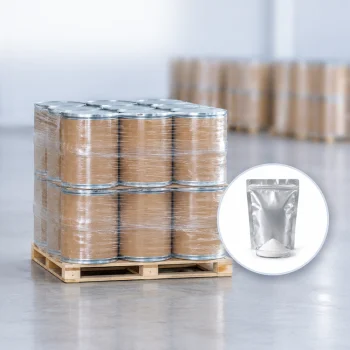
Packaging:Customizable
Description
Sodium Polyphosphate (CAS 68915-31-1) is a sodium salt of condensed polyphosphoric acids, in which phosphate units are linked through P-O-P anhydride bonds. It is a white powder and is hygroscopic, taking up moisture from ambient air when exposed. Its polyphosphate chain carries multiple negatively charged phosphate groups that chelate multivalent metal ions and disperse particulate solids in aqueous systems. In water processing, food processing and industrial dispersion, it serves as a sequestrant, scale-control and emulsifying agent for stabilizing aqueous formulations and controlling mineral deposition.
In aqueous process streams and formulated product manufacture, Sodium Polyphosphate is charged as a dry ingredient during batch preparation, where its polyphosphate chains sequester hardness ions and inhibit crystal growth of sparingly soluble salts. The resulting processed water, process liquor or formulated food system is used in municipal and industrial water circuits, food processing and dispersion applications for scale control, mineral stabilization and emulsion consistency.
Application
- Water processing and scale control: In municipal and industrial water circuits, Sodium Polyphosphate serves as a sequestrant and threshold scale inhibitor, where its polyphosphate chains complex calcium and magnesium ions and interfere with carbonate and sulfate crystal growth. The resulting processed water is used in cooling, boiler feed and distribution systems to limit mineral scaling and deposit formation.
- Food processing aid: In food processing, Sodium Polyphosphate serves as an emulsifying and sequestering salt, where its phosphate groups bind metal ions and help stabilize emulsions and dispersions. The resulting formulated food systems are used for texture and emulsion consistency in processed products.
- Industrial dispersant and deflocculant: In aqueous slurry and pigment dispersion systems, Sodium Polyphosphate serves as a dispersing agent, where adsorbed polyphosphate anions raise particle surface charge and reduce aggregation. The resulting slurries are used in mineral processing, ceramic body preparation and coating formulation for improved flow and suspension stability.
- Detergent and cleaning formulation: In alkaline cleaning formulations, Sodium Polyphosphate serves as a builder and sequestrant, where its polyphosphate chains soften wash water by binding hardness ions. The resulting cleaning solutions are used in industrial and institutional cleaning for improved detergency in hard-water conditions.
- Drilling and process fluid conditioning: In aqueous process and drilling fluids, Sodium Polyphosphate serves as a thinner and clay-conditioning additive, where its polyphosphate anions deflocculate clay solids and moderate rheology. The resulting fluids are used in industrial drilling and slurry handling for viscosity control.
- Metal surface processing: In aqueous metal processing baths, Sodium Polyphosphate serves as a complexing and buffering component, where its phosphate groups bind metal ions and help stabilize the processing bath. The resulting baths are used in industrial surface preparation for deposit control and bath consistency.
Basic Information
| Property | Value |
|---|---|
| Product Name | Sodium Polyphosphate |
| CAS No. | 68915-31-1 |
| Molecular Formula | H2Na2O7P2 |
| Molecular Weight | UNKNOWN |
| Physical | Powder |
| Color | White |
| Chemical Property | Hygroscopic |
| Customization | Content/concentration customizable per client specification |
Quality Control
The quality of Sodium Polyphosphate is governed by its condensed polyphosphate chain composition, which controls sequestration capacity, dispersing performance and moisture behavior in water processing, food processing and industrial dispersion applications. Because the material is a distribution of chain lengths rather than a single compound, quality assessment focuses on composition and functional performance rather than a single molecular identity.
| Differentiated QC focus | Structure, application impact, detection and control |
|---|---|
| Polyphosphate chain distribution | The product is a mixture of condensed phosphate chains of differing length, and chain distribution determines sequestration capacity and dispersing efficiency. In water processing and slurry dispersion, a shift toward short chains can reduce threshold scale inhibition, while excessive long-chain content can raise viscosity and slow dissolution. Set an agreed distribution specification, qualify raw materials, and trend distribution against functional performance tests. Test by ion chromatography or gradient elution HPLC for phosphate species, and by 31P NMR where speciation detail is required. |
| Total phosphate content | Phosphate content on a P2O5 basis reflects the active polyphosphate fraction and directly affects dosage requirements. In water processing and cleaning formulations, low phosphate content requires higher dosage and can leave mineral ions insufficiently sequestered. Set specification limits on total phosphate, verify raw material stoichiometry, and correlate with sequestration capacity. Test by gravimetric phosphomolybdate precipitation or titrimetric methods after hydrolysis. |
| Moisture and hygroscopicity | The material is hygroscopic and can absorb atmospheric moisture during storage and handling. In dry blending and food processing, absorbed moisture can cause caking, poor flow and premature hydrolysis of polyphosphate chains, reducing sequestration performance. Control packaging and storage humidity, set water content limits, and check moisture before use in moisture-sensitive blends. Test by Karl Fischer titration or loss on drying. |
| pH of aqueous solution | Aqueous solutions of condensed phosphates are alkaline, and pH affects hydrolysis rate and compatibility with formulation components. In water processing and cleaning systems, out-of-range pH can reduce sequestration efficiency or cause precipitation with hardness ions. Set an agreed pH range for a defined solution concentration, and monitor during dissolution. Test by potentiometric pH measurement on a prepared solution. |
| Water-insoluble matter | Insoluble residue can arise from raw materials or incomplete reaction and remains undissolved in aqueous systems. In water processing and dispersion applications, insolubles can foul membranes, form deposits or create haze in clear formulations. Include filtration during production, set limits on insoluble matter, and inspect lots intended for clear or membrane applications. Test by filtration and gravimetric determination of residue. |
| Particle size and flowability | As a powder, particle size and size distribution affect dissolution rate, dusting and blending uniformity. In dry blending and food processing, coarse or agglomerated particles can dissolve slowly and segregate in blends, while excessive fines increase dusting. Set agreed particle size ranges, control milling and drying, and correlate with dissolution behavior. Test by sieve analysis or laser diffraction. |
| Appearance and color | The product is described as white; discoloration can indicate iron contamination or thermal degradation. In food and clear industrial formulations, off-color material can affect product appearance. Set agreed color limits, qualify raw materials and equipment, and protect from contamination during drying and packaging. Test by visual comparison against a standard or colorimetry. |
Batch release, COA and traceability. Each batch is released only when it conforms to the agreed specification. The Certificate of Analysis (COA) records the actual analytical methods and results for that released batch. Batch identity and results remain traceable, with lot trending used where it supports consistency review.
Storage
- Storage conditions: Store in a cool, dry, well-ventilated area. Keep containers tightly closed when not in use to limit moisture uptake.
- Secure storage: Store in a secure, designated area with access limited to authorized personnel.
- Incompatible materials: Keep away from strong acids and materials that promote hydrolysis of condensed phosphates.
- Handling precautions: Avoid breathing dust. Use only in a well-ventilated area. Wear protective gloves, protective clothing, eye protection, and face protection. Wash hands thoroughly after handling.
- Waste disposal: Dispose of contents and container in accordance with local, regional, national, and international regulations.
- Reference: Refer to the Safety Data Sheet (SDS) for detailed handling and disposal information.
Hot Related Products

Lecithin CAS NO 8002-43-5

Glycerides, C8-10 CAS NO 85409-09-2

Starch Sodiilm Octenylsuccinate CAS NO 66829-29-6

Sucrose Palmitate CAS NO 26446-38-8
Sucrose Monolaurate CAS NO 25339-99-5

Monocaprylin CAS NO 26402-26-6
n-Hydroxy Succinate CAS NO 8005-40-1
Sucrose Benzoate CAS NO 12738-64-6

Glycery Monolaurate CAS NO 142-18-7
Monobehenin CAS NO 30233-64-8
Lecithin Hydrogenated CAS NO 92128-87-5

Glyceryl Monooleate CAS NO 111-03-5
Ethylene Glycol Monostearate CAS NO 111-60-4

Sucrose Acetate Isobutyrate CAS NO 126-13-6
Monostearin CAS NO 123-94-4
Propylene Glycol Monostearate (Contains Ca. 35% Monopalmitate) CAS NO 1323-39-3
D-Glucitol Monooleate CAS NO 1333-68-2
D-Glucitol Trioleate CAS NO 1333-71-7
2-(Hexadecanoyloxy)Propionic Acid, Monoester With Glycerol CAS NO 1335-49-5
Stearyl Citrate CAS NO 1337-33-3
why choose us
Trusted Manufacturer
With our own production facilities, we ensure consistent quality, reliable supply, and full traceability.
Rigorous Quality Assurance
Each batch undergoes strict QC, accompanied by COA, MSDS, and full compliance with international standards.
Advanced R&D Expertise
Our in-house lab drives process innovation, new product development, and tailored synthesis solutions.