




share
Glycerides, Coco Mono- CAS NO 61789-05-7
Unit Price:
CAS No.:61789-05-7
Grade:Customizable
Content:Customizable
Brand:Customizable
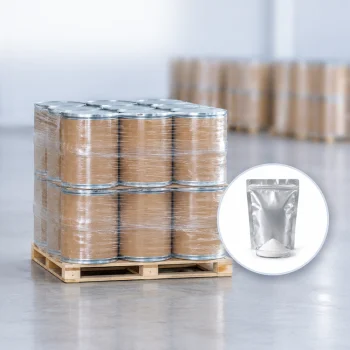
Packaging:Customizable
Description
Glycerides, Coco Mono- (CAS 61789-05-7) is a mixture of mono- and diglycerides of coconut-derived fatty acids, obtained by glycerolysis of coconut oil or by esterification of glycerol with coconut fatty acids. It is a waxy solid, white in color, and melts on warming to a clear to slightly hazy liquid; the monoester content governs its melting range, surface activity and dispersibility. Its amphiphilic structure, a lipophilic fatty-acid chain attached to a hydrophilic glycerol headgroup, supports interfacial adsorption and emulsification in oil–water systems. In food and industrial emulsion systems, it serves as an emulsifier and emulsion stabilizer for fat dispersion, starch interaction and texture control.
In food and industrial emulsion manufacture, Glycerides, Coco Mono- is used as an emulsifying and stabilizing component during batch formulation and repeated production of fat-containing systems. The resulting emulsions, baked goods, confectionery and other formulated products rely on it for fat dispersion, crumb softening and emulsion stability.
Application
- Food emulsifier systems: In food emulsion formulation, Glycerides, Coco Mono- serves as a primary emulsifier, where its monoester fraction adsorbs at oil–water interfaces and contributes to droplet dispersion and emulsion stability. The resulting emulsions are used in dairy-type, beverage and fat-based food products.
- Bakery and starch-containing foods: In bakery and starch-based food production, Glycerides, Coco Mono- serves as a crumb-softening and starch-complexing emulsifier, where its fatty-acid chain associates with amylose and contributes to texture retention and staling delay. The resulting baked goods are used in bread, cakes and related baked products.
- Confectionery and fat systems: In confectionery and fat-based formulations, Glycerides, Coco Mono- serves as a fat-dispersion and crystallization-modifying emulsifier, where its monoester content contributes to uniform fat distribution and texture. The resulting products are used in chocolate-type coatings, fillings and compound fat systems.
- Dairy and imitation dairy products: In dairy and imitation dairy formulation, Glycerides, Coco Mono- serves as an emulsifier and stabilizer, where its amphiphilic structure contributes to fat globule dispersion and homogeneity. The resulting products are used in cream-type, dessert and beverage applications.
- Industrial emulsion and dispersion formulation: In industrial emulsion and dispersion formulation, Glycerides, Coco Mono- serves as a nonionic emulsifying component, where its glycerol ester structure contributes to oil–water compatibility and dispersion stability. The resulting emulsions are used in formulated industrial products requiring fat or oil dispersion.
- Emulsifier blend formulation: In emulsifier blend formulation, Glycerides, Coco Mono- serves as a blending component with other emulsifiers and stabilizers, where its mono/diglyceride composition contributes to balanced hydrophilic–lipophilic behavior. The resulting blends are used in food and industrial formulation systems.
Basic Information
| Property | Value |
|---|---|
| Product Name | Glycerides, Coco Mono- |
| CAS No. | 61789-05-7 |
| Molecular Formula | UNKNOWN |
| Molecular Weight | UNKNOWN |
| Physical | Waxy |
| Color | White |
| Chemical Property | UNKNOWN |
| Customization | Content/concentration customizable per client specification |
Quality Control
Glycerides, Coco Mono- is a mixture of mono-, di- and triglyceride species whose composition determines its emulsifying performance, melting behavior and stability in food and industrial emulsion systems. Quality control therefore focuses on the monoester content and the fatty-acid profile that govern surface activity and texture effects.
| Differentiated QC focus | Structure, application impact, detection and control |
|---|---|
| Monoester content | The monoester fraction is the surface-active species that adsorbs at oil–water interfaces and complexes with starch. In food emulsions and bakery systems, low monoester content reduces emulsifying capacity and crumb softening, while excessive free glycerol indicates incomplete glycerolysis. Set an agreed specification range for monoester content, qualify incoming lots, and trend the value against emulsifying performance. Test by gas chromatography of the silylated glyceride distribution or by periodic acid oxidation methods. |
| Free glycerol | Residual glycerol remains from glycerolysis or esterification and does not contribute to emulsification. In food and industrial formulations, elevated free glycerol can affect texture, sweetness and hygroscopicity. Set specification limits on free glycerol, control reaction conversion, and monitor lots against the agreed range. Test by gas chromatography or enzymatic assay. |
| Fatty-acid composition | The coconut-derived fatty-acid profile, dominated by lauric and myristic acids, determines melting range, crystallization behavior and emulsifier functionality. In confectionery and fat systems, a shifted profile changes melting and texture. Qualify raw materials, set an agreed fatty-acid profile, and compare lots against it. Test by gas chromatography of fatty acid methyl esters. |
| Melting range | The melting range reflects the balance of saturated glycerides and monoester content and governs handling and product texture. In bakery and confectionery use, an off-range melting point affects processing and mouthfeel. Set an agreed melting range, control feedstock and processing, and verify lots against it. Test by capillary melting point or differential scanning calorimetry. |
| Acid value and free fatty acids | Free fatty acids arise from hydrolysis of the glycerides and indicate hydrolytic degradation. In food and industrial emulsions, elevated free fatty acids can affect taste, emulsion stability and shelf life. Set specification limits on acid value, control moisture and storage conditions, and trend lots. Test by titration with standard alkali. |
| Peroxide value | Oxidation of unsaturated fatty-acid chains produces peroxides that can cause off-flavors and rancidity. In fat-containing foods, oxidation affects sensory quality and shelf life. Set specification limits on peroxide value, control raw material quality and storage, and monitor lots. Test by iodometric titration. |
| Moisture | Residual water can promote hydrolysis and microbial growth and affects the waxy solid's handling. In stored food emulsifiers, elevated moisture reduces stability and shelf life. Set specification limits on water content, dry and package under controlled conditions, and check lots. Test by Karl Fischer titration or loss on drying. |
| Appearance and color | The product is described as a white waxy solid; discoloration can indicate oxidation, contamination or thermal degradation. In food and light-colored industrial products, color affects appearance and acceptability. Set agreed color limits, protect from heat and light, and inspect lots. Test by visual comparison against a standard or colorimetry. |
Batch release, COA and traceability. Each batch is released only when it conforms to the agreed specification. The Certificate of Analysis (COA) records the actual analytical methods and results for that released batch. Batch identity and results remain traceable, with lot trending used where it supports consistency review.
Storage
- Storage conditions: Store in a cool, dry, well-ventilated area. Keep containers tightly closed when not in use.
- Secure storage: Store in a secure, designated area with access limited to authorized personnel.
- Incompatible materials: Keep away from strong oxidizing agents.
- Handling precautions: Avoid breathing dust or mist. Use only in a well-ventilated area. Wear protective gloves, protective clothing, eye protection, and face protection. Wash hands thoroughly after handling.
- Waste disposal: Dispose of contents and container in accordance with local, regional, national, and international regulations.
- Reference: Refer to the Safety Data Sheet (SDS) for detailed handling and disposal information.
Hot Related Products

Lecithin CAS NO 8002-43-5

Glycerides, C8-10 CAS NO 85409-09-2

Starch Sodiilm Octenylsuccinate CAS NO 66829-29-6

Sucrose Palmitate CAS NO 26446-38-8
Sucrose Monolaurate CAS NO 25339-99-5

Monocaprylin CAS NO 26402-26-6
n-Hydroxy Succinate CAS NO 8005-40-1
Sucrose Benzoate CAS NO 12738-64-6

Glycery Monolaurate CAS NO 142-18-7
Monobehenin CAS NO 30233-64-8
Lecithin Hydrogenated CAS NO 92128-87-5

Glyceryl Monooleate CAS NO 111-03-5
Ethylene Glycol Monostearate CAS NO 111-60-4

Sucrose Acetate Isobutyrate CAS NO 126-13-6
Monostearin CAS NO 123-94-4
Propylene Glycol Monostearate (Contains Ca. 35% Monopalmitate) CAS NO 1323-39-3
D-Glucitol Monooleate CAS NO 1333-68-2
D-Glucitol Trioleate CAS NO 1333-71-7
2-(Hexadecanoyloxy)Propionic Acid, Monoester With Glycerol CAS NO 1335-49-5
Stearyl Citrate CAS NO 1337-33-3
why choose us
Trusted Manufacturer
With our own production facilities, we ensure consistent quality, reliable supply, and full traceability.
Rigorous Quality Assurance
Each batch undergoes strict QC, accompanied by COA, MSDS, and full compliance with international standards.
Advanced R&D Expertise
Our in-house lab drives process innovation, new product development, and tailored synthesis solutions.