




share
Monomyristin CAS NO 27214-38-6
Unit Price:
CAS No.:27214-38-6
Grade:Customizable
Content:Customizable
Brand:Customizable
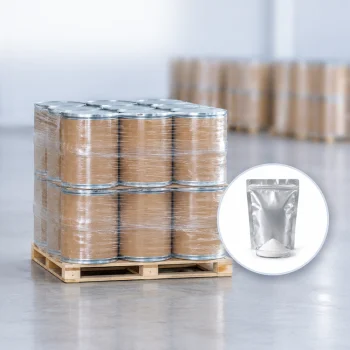
Packaging:Customizable
Description
Monomyristin (CAS 27214-38-6) is a monoglyceride formed from glycerol and myristic acid, in which one primary hydroxyl of glycerol is esterified with the C14 saturated fatty acid. It is a waxy, white solid at ambient temperature and is essentially insoluble in water, while dissolving or dispersing in warm oils, fats and many organic solvents. Its molecular structure combines a lipophilic C14 acyl chain with two free glycerol hydroxyl groups, giving the molecule both oil-compatible and hydrophilic character at the same interface. In food and industrial formulation, it serves as an emulsifier and oil-phase structuring component for stabilizing fat-containing systems and modifying fat crystallization.
In emulsified fat and oil systems, Monomyristin is incorporated during the oil-phase preparation and homogenization stages of batch formulation, where its monoacylglycerol structure supports interfacial film formation between the oil and aqueous phases. The resulting emulsions, fat blends and lipid-based products are used in food manufacturing and related industrial processing for texture control, emulsion stability and crystallization behavior.
Application
- Food emulsifier systems: In food emulsion formulation, Monomyristin serves as a monoglyceride emulsifier, where its lipophilic acyl chain and free hydroxyl groups contribute to interfacial tension reduction and oil-in-water droplet stabilization. The resulting emulsions are used in fat-based food products for consistency and shelf stability.
- Fat crystallization modification: In edible fat and oil processing, Monomyristin serves as a crystallization modifier, where its monoacylglycerol structure contributes to nucleation and polymorphic behavior of the fat phase. The resulting structured fats are used in confectionery, bakery and spread products for texture and melting profile control.
- Oil-phase structuring: In lipid blend preparation, Monomyristin serves as an oil-phase structuring component, where its C14 acyl chain contributes to the organization of the fat crystal network. The resulting blends are used in food and industrial lipid formulations for firmness and phase stability.
- Emulsion stabilization in industrial formulations: In industrial emulsion preparation, Monomyristin serves as a lipophilic emulsifier, where its balanced acyl chain and hydroxyl functionality contribute to interfacial film formation. The resulting emulsions are used in lubricant, coating and process-fluid systems requiring stable oil-water dispersion.
- Lipid coating and dispersion systems: In lipid-based coating and dispersion preparation, Monomyristin serves as a dispersing and film-forming lipid component, where its waxy solid character and oil compatibility contribute to uniform coating deposition. The resulting coatings are used in food-contact and industrial surface applications.
- Monoglyceride formulation research: In monoglyceride formulation research, Monomyristin may be evaluated as a model saturated monoacylglycerol, where its defined C14 chain supports studies of interfacial behavior and fat crystallization. This is a research evaluation context.
Basic Information
| Property | Value |
|---|---|
| Product Name | Monomyristin |
| CAS No. | 27214-38-6 |
| Molecular Formula | UNKNOWN |
| Molecular Weight | 302.45 g/mol |
| Physical | Waxy |
| Color | White |
| Chemical Property | UNKNOWN |
| Customization | Content/concentration customizable per client specification |
Quality Control
Monomyristin is a monoacylglycerol whose quality is governed by its monoester content, the proportion of di- and triacylglycerol species, and the free glycerol and free fatty acid levels, all of which affect emulsifying performance and fat crystallization behavior in food and industrial formulations.
| Differentiated QC focus | Structure, application impact, detection and control |
|---|---|
| Monoester content and glyceride distribution | The product is defined by one myristoyl group on glycerol; residual di- and triacylglycerols and unreacted glycerol shift the hydrophilic-lipophilic balance. In food emulsions and fat blends, a low monoester fraction weakens interfacial film formation and crystallization control. Set an agreed specification range for monoester content, qualify starting materials, and trend glyceride distribution against emulsifying performance. Test by HPLC or GC after derivatization, with glyceride distribution profiled by HPLC or GC. |
| Free fatty acid | Residual myristic acid arises from incomplete esterification or hydrolysis. In emulsified fat systems, elevated free fatty acid can alter taste, odor and emulsion pH stability. Set specification limits on acid value, control reaction completion, and monitor during storage. Test by acid value titration. |
| Free glycerol | Unreacted glycerol affects hygroscopicity, emulsifier balance and product handling. In food and industrial formulations, excess free glycerol can change texture and water uptake. Set limits on free glycerol, control the esterification ratio, and check lots against the agreed range. Test by GC or enzymatic methods where suitable. |
| Moisture and water content | The waxy solid can take up moisture during handling and storage. In fat-based formulations, moisture can promote hydrolysis, rancidity and emulsion instability. Set a water content limit, use moisture-controlled packaging, and check before release. Test by Karl Fischer titration. |
| Oxidative stability | The saturated C14 chain is comparatively resistant, but residual unsaturated fatty material or trace metals can promote oxidation. In stored fat blends, oxidation causes off-odor and color change. Qualify raw materials, limit trace metals, and monitor peroxide value over shelf life. Test by peroxide value and anisidine value. |
| Color and appearance | The product is described as a white waxy solid; discoloration can indicate oxidation or contamination. In food and light-colored formulations, color deviation affects appearance. Set agreed color limits, protect from heat and light, and inspect lots. Test by visual comparison against a standard or colorimetry. |
Batch release, COA and traceability. Each batch is released only when it conforms to the agreed specification. The Certificate of Analysis (COA) records the actual analytical methods and results for that released batch. Batch identity and results remain traceable, with lot trending used where it supports consistency review.
Storage
- Storage conditions: Store in a cool, dry, well-ventilated area. Keep containers tightly closed when not in use.
- Secure storage: Store in a secure, designated area with access limited to authorized personnel.
- Incompatible materials: Keep away from strong oxidizing agents.
- Handling precautions: Avoid breathing dust. Use only in a well-ventilated area. Wear protective gloves, protective clothing, eye protection, and face protection. Wash hands thoroughly after handling.
- Waste disposal: Dispose of contents and container in accordance with local, regional, national, and international regulations.
- Reference: Refer to the Safety Data Sheet (SDS) for detailed handling and disposal information.
Hot Related Products

Lecithin CAS NO 8002-43-5

Glycerides, C8-10 CAS NO 85409-09-2

Starch Sodiilm Octenylsuccinate CAS NO 66829-29-6

Sucrose Palmitate CAS NO 26446-38-8
Sucrose Monolaurate CAS NO 25339-99-5

Monocaprylin CAS NO 26402-26-6
n-Hydroxy Succinate CAS NO 8005-40-1
Sucrose Benzoate CAS NO 12738-64-6

Glycery Monolaurate CAS NO 142-18-7
Monobehenin CAS NO 30233-64-8
Lecithin Hydrogenated CAS NO 92128-87-5

Glyceryl Monooleate CAS NO 111-03-5
Ethylene Glycol Monostearate CAS NO 111-60-4

Sucrose Acetate Isobutyrate CAS NO 126-13-6
Monostearin CAS NO 123-94-4
Propylene Glycol Monostearate (Contains Ca. 35% Monopalmitate) CAS NO 1323-39-3
D-Glucitol Monooleate CAS NO 1333-68-2
D-Glucitol Trioleate CAS NO 1333-71-7
2-(Hexadecanoyloxy)Propionic Acid, Monoester With Glycerol CAS NO 1335-49-5
Stearyl Citrate CAS NO 1337-33-3
why choose us
Trusted Manufacturer
With our own production facilities, we ensure consistent quality, reliable supply, and full traceability.
Rigorous Quality Assurance
Each batch undergoes strict QC, accompanied by COA, MSDS, and full compliance with international standards.
Advanced R&D Expertise
Our in-house lab drives process innovation, new product development, and tailored synthesis solutions.