




share
2-O,3-o-Diacetyltartaric Acid CAS NO 18261-99-9
Unit Price:
CAS No.:18261-99-9
Grade:Customizable
Content:Customizable
Brand:Customizable
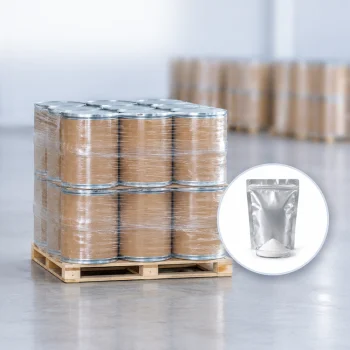
Packaging:Customizable
Description
2-O,3-o-Diacetyltartaric Acid (CAS 18261-99-9) is a diacetylated derivative of tartaric acid, in which the two hydroxyl groups of the tartaric acid backbone are esterified with acetyl groups. It is a viscous liquid with a pale yellow appearance. Its structure combines the two carboxylic acid functions of the tartaric acid skeleton with two acetyl ester groups, giving the molecule both acidic and ester functionality within a single small-molecule framework. In formulation and industrial material systems, it serves as an acid-functional and ester-bearing component for pH adjustment, chelation-related functions, and compatibility with ester-based media.
In formulation work and material compounding, 2-O,3-o-Diacetyltartaric Acid serves as an acid-functional small-molecule component during batch preparation and blending. The resulting formulations are used in food-additive and general industrial material contexts for acidity control and metal-ion interaction functions.
Application
- Emulsifier and formulation systems: In emulsifier and formulation systems, 2-O,3-o-Diacetyltartaric Acid serves as an acid-functional co-component, where its carboxylic acid groups contribute to pH control and interfacial behavior in the formulated system. The resulting formulation is used in food-additive and industrial emulsifier contexts.
- Chelation and metal-ion interaction: In chelation-related formulation, 2-O,3-o-Diacetyltartaric Acid serves as a polycarboxylic acid component, where its two carboxylic acid groups can interact with metal ions. The resulting system is used where control of metal-ion availability is required in formulation.
- Acidulant function: In acidulant applications, 2-O,3-o-Diacetyltartaric Acid serves as an acid source, where its carboxylic acid groups contribute to acidity adjustment. The resulting material is used in food-additive and general formulation contexts.
- Ester-functional compatibility: In ester-based and mixed-solvent formulation, 2-O,3-o-Diacetyltartaric Acid serves as an ester-bearing acid component, where its acetyl ester groups contribute to compatibility with ester-containing media. The resulting blend is used in formulation and material preparation.
- Tartaric acid derivative chemistry: In tartaric acid derivative chemistry, 2-O,3-o-Diacetyltartaric Acid serves as an acetylated tartaric acid building block, where its carboxylic acid and acetyl ester groups provide distinct reaction sites. The resulting derivative chemistry is used in specialty material and formulation development.
Basic Information
| Property | Value |
|---|---|
| Product Name | 2-O,3-o-Diacetyltartaric Acid |
| CAS No. | 18261-99-9 |
| Molecular Formula | C8H10O8 |
| Molecular Weight | 234.16 g/mol |
| Physical | viscous liquid |
| Color | pale yellow |
| Chemical Property | XLogP3 -0.7; H-bond donors 2; H-bond acceptors 8; TPSA 127; rotatable bonds 7; formal charge 0 |
| Customization | Content/concentration customizable per client specification |
Quality Control
The quality of 2-O,3-o-Diacetyltartaric Acid is governed by its acid and ester functionality, which affects acidity control, chelation behavior, and compatibility in formulation systems. Reliable product-specific quality variables and methods are not available in the supplied records; appropriate specifications should be established after identity and grade are confirmed.
Batch release, COA and traceability. Each batch is released only when it conforms to the agreed specification. The Certificate of Analysis (COA) records the actual analytical methods and results for that released batch. Batch identity and results remain traceable, with lot trending used where it supports consistency review.
Storage
- Storage conditions: Store in a cool, dry, well-ventilated area. Keep containers tightly closed when not in use.
- Secure storage: Store in a secure, designated area with access limited to authorized personnel.
- Incompatible materials: Keep away from strong oxidizers and strong bases.
- Handling precautions: Avoid breathing vapors or mist. Use only in a well-ventilated area. Wear protective gloves, protective clothing, eye protection, and face protection. Wash hands thoroughly after handling.
- Waste disposal: Dispose of contents and container in accordance with local, regional, national, and international regulations.
- Reference: Refer to the Safety Data Sheet (SDS) for detailed handling and disposal information.
Hot Related Products

Lecithin CAS NO 8002-43-5

Glycerides, C8-10 CAS NO 85409-09-2

Starch Sodiilm Octenylsuccinate CAS NO 66829-29-6

Sucrose Palmitate CAS NO 26446-38-8
Sucrose Monolaurate CAS NO 25339-99-5

Monocaprylin CAS NO 26402-26-6
n-Hydroxy Succinate CAS NO 8005-40-1
Sucrose Benzoate CAS NO 12738-64-6

Glycery Monolaurate CAS NO 142-18-7
Monobehenin CAS NO 30233-64-8
Lecithin Hydrogenated CAS NO 92128-87-5

Glyceryl Monooleate CAS NO 111-03-5
Ethylene Glycol Monostearate CAS NO 111-60-4

Sucrose Acetate Isobutyrate CAS NO 126-13-6
Monostearin CAS NO 123-94-4
Propylene Glycol Monostearate (Contains Ca. 35% Monopalmitate) CAS NO 1323-39-3
D-Glucitol Monooleate CAS NO 1333-68-2
D-Glucitol Trioleate CAS NO 1333-71-7
2-(Hexadecanoyloxy)Propionic Acid, Monoester With Glycerol CAS NO 1335-49-5
Stearyl Citrate CAS NO 1337-33-3
why choose us
Trusted Manufacturer
With our own production facilities, we ensure consistent quality, reliable supply, and full traceability.
Rigorous Quality Assurance
Each batch undergoes strict QC, accompanied by COA, MSDS, and full compliance with international standards.
Advanced R&D Expertise
Our in-house lab drives process innovation, new product development, and tailored synthesis solutions.