




share
Tetrahydropyran-2-Methanol CAS NO 100-72-1
Unit Price:
CAS No.:100-72-1
Grade:Customizable
Content:Customizable
Brand:Customizable
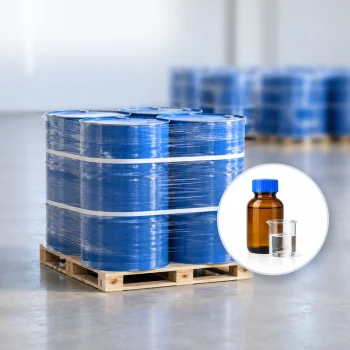
Packaging:Customizable
Description
Tetrahydropyran-2-Methanol (CAS 100-72-1) is a saturated six-membered oxygen heterocycle bearing a hydroxymethyl substituent at the 2-position of the tetrahydropyran ring. It is a liquid and is colorless under the recorded description. As a primary alcohol attached to an ether-containing ring, it combines the hydrogen-bonding and derivatization behavior of an aliphatic alcohol with the solvating character of a cyclic ether. In organic synthesis and fine chemical processing, it serves as a functionalized alcohol building block and reaction medium for transformations that require a polar, ether-containing alcohol.
In organic synthesis and fine chemical processing, Tetrahydropyran-2-Methanol is handled as a functionalized alcohol feedstock during batch reaction and downstream work-up. Its hydroxyl group provides a site for esterification, etherification, and other derivatization, while the tetrahydropyran ring contributes ether-like solvency. The resulting derivatives and reaction streams are used in fine chemical manufacturing and specialty material preparation.
Application
- Organic synthesis building block: In organic synthesis, Tetrahydropyran-2-Methanol serves as a functionalized alcohol building block, where its primary hydroxyl group provides a site for esterification, etherification, and oxidation. The resulting derivatives are used in fine chemical preparation.
- Reaction solvent and diluent: In reaction processing, Tetrahydropyran-2-Methanol serves as a polar ether-alcohol medium, where its cyclic ether and hydroxyl functions contribute to dissolution of polar and moderately polar reactants. The resulting reaction streams are carried into downstream work-up.
- Ester and ether derivative preparation: In derivative preparation, Tetrahydropyran-2-Methanol serves as the alcohol component, where its primary hydroxyl reacts with acids or alkylating agents. The resulting esters and ethers are used in specialty material formulation.
- Protective-group and ring-functional chemistry research: In synthetic method research, Tetrahydropyran-2-Methanol may be evaluated as a hydroxymethyl-substituted tetrahydropyran substrate, where its ring and hydroxyl functions support studies of protection and functionalization sequences.
- Formulation and compatibility evaluation: In formulation evaluation, Tetrahydropyran-2-Methanol may be examined as an alcohol-ether co-solvent, where its mixed polarity supports compatibility assessment in liquid systems.
Basic Information
| Property | Value |
|---|---|
| Product Name | Tetrahydropyran-2-Methanol |
| CAS No. | 100-72-1 |
| Molecular Formula | C6H12O2 |
| Molecular Weight | 116.16 g/mol |
| Physical | Liquid |
| Color | Colorless |
| Chemical Property | UNKNOWN |
| Customization | Content/concentration customizable per client specification |
Quality Control
Tetrahydropyran-2-Methanol is a hydroxymethyl-substituted cyclic ether, so its quality profile centers on hydroxyl content, water, and volatile impurities that affect derivatization and solvent performance.
| Differentiated QC focus | Structure, application impact, detection and control |
|---|---|
| Hydroxyl content and alcohol purity | The primary hydroxyl group is the reactive site for esterification and etherification. Low hydroxyl content or alcohol impurities reduce derivatization yield and can shift reaction stoichiometry. Control by establishing an agreed assay specification and qualifying incoming lots against it. |
| Water content | Water competes with the alcohol in acid-catalyzed and acylating reactions and can hydrolyze acid chlorides or anhydrides. In solvent use, moisture can alter polarity and reaction rates. Control by setting a water limit and checking lots before moisture-sensitive use. |
| Volatile and low-boiling impurities | Residual low-boiling components can concentrate during solvent recovery and affect boiling behavior and odor. Control by defining a volatiles limit and monitoring distillation or drying steps. |
| Color and appearance | Color development can indicate oxidation or contamination of the alcohol. In applications where appearance matters, color drift signals quality change. Control by visual or colorimetric comparison against an agreed standard. |
| Identity confirmation | Confirming the tetrahydropyran-ring alcohol structure distinguishes the material from other alcohol or ether isomers. Control by comparing lot identity against an agreed reference using suitable spectroscopic or chromatographic methods. |
Batch release, COA and traceability. Each batch is released only when it conforms to the agreed specification. The Certificate of Analysis (COA) records the actual analytical methods and results for that released batch. Batch identity and results remain traceable, with lot trending used where it supports consistency review.
Storage
- Storage conditions: Store in a cool, dry, well-ventilated area. Keep containers tightly closed when not in use.
- Secure storage: Store in a secure, designated area with access limited to authorized personnel.
- Incompatible materials: Keep away from strong oxidizing agents and strong acids.
- Handling precautions: Avoid breathing vapors or mist. Use only in a well-ventilated area. Wear protective gloves, protective clothing, eye protection, and face protection. Wash hands thoroughly after handling.
- Waste disposal: Dispose of contents and container in accordance with local, regional, national, and international regulations.
- Reference: Refer to the Safety Data Sheet (SDS) for detailed handling and disposal information.
Hot Related Products

1,3-Dichloro-2-Propanol CAS NO 96-23-1
2-Ethyl-1,3-Hexanediol CAS NO 94-96-2

3-Chloro-1-Propanol CAS NO 627-30-5
2-Octyl-1-Dodecanol CAS NO 5333-42-6
2,2-Dichloroethanol CAS NO 598-38-9
1-Phenyl-2-Propyn-1-Ol CAS NO 4187-87-5

cis-2,5-Bishydroxymethyl-Tetrahydrofuran CAS NO 2144-40-3
3-Aminopropanol CAS NO 156-87-6
Neopentyl Glycol Mono(Hydroxypivalate) CAS NO 1115-20-4
2-Methyl-2,4-Pentanediol CAS NO 107-41-5
1,2,6-Hexanetriol CAS NO 106-69-4
3-Amino-4-Octanol CAS NO 1001354-72-8

2-Bromoethanol CAS NO 540-51-2
3-Chloro-1,2-Propanediol CAS NO 96-24-2
Diethylene Glycol CAS NO 111-46-6

trans-2,3-Dibromo-2-Butene-1,4-Diol CAS NO 3234-02-4
(5-Methyl-2-Furyl)Methanol CAS NO 3857-25-8
1-Adamantanol CAS NO 768-95-6
2-Aminoethoxyethanol CAS NO 929-06-6
Trichloroethanol CAS NO 115-20-8
why choose us
Trusted Manufacturer
With our own production facilities, we ensure consistent quality, reliable supply, and full traceability.
Rigorous Quality Assurance
Each batch undergoes strict QC, accompanied by COA, MSDS, and full compliance with international standards.
Advanced R&D Expertise
Our in-house lab drives process innovation, new product development, and tailored synthesis solutions.