




share
Isopentyl Valerate CAS NO 2050-09-1
Unit Price:
CAS No.:2050-09-1
Grade:Customizable
Content:Customizable
Brand:Customizable
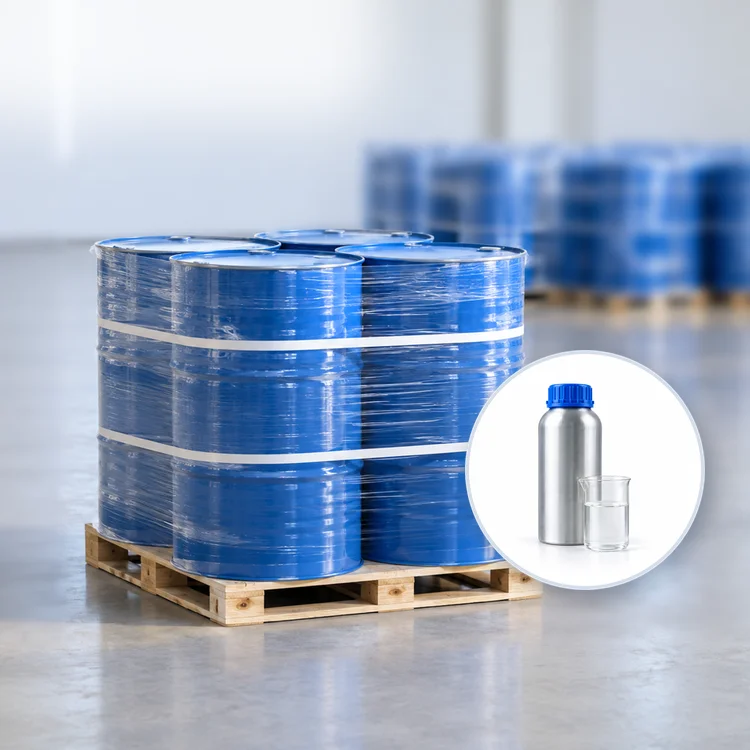
Packaging:Customizable
Description
Isopentyl Valerate (CAS 2050-09-1) is an ester formed from isopentyl alcohol and valeric acid, also described as isopentyl pentanoate. It is a colorless liquid under ordinary conditions. As a low-molecular-weight aliphatic ester, it is expected to be miscible with many organic solvents and only sparingly soluble in water, and it carries the characteristic fruity, apple- and pineapple-like odor typical of short-chain alkyl valerates. Its ester linkage and branched C5 alcohol moiety support its role as an aroma-active ester in flavor and fragrance formulation systems. In flavor and fragrance compounding, it serves as an aroma component for fruity odor and taste profiles.
In flavor and fragrance compounding operations, Isopentyl Valerate is used as an aroma-active ester ingredient during batch blending and dilution into concentrated flavor or fragrance bases. The resulting compounded bases are used in food flavor applications, beverage and confectionery flavor systems, and fragrance compositions where a fruity, apple-like character is required.
Application
- Fruit flavor formulation: In fruit flavor formulation, Isopentyl Valerate serves as an aroma-active ester component, where its fruity, apple- and pineapple-like odor contributes to the characteristic top notes of compounded fruit flavors. The resulting flavor bases are used in beverages, confectionery, and baked goods.
- Fragrance compounding: In fragrance compounding, Isopentyl Valerate serves as a fruity top-note ingredient, where its low-molecular-weight ester structure contributes to a fresh, diffusive opening character. The resulting fragrance concentrates are used in consumer fragrance and personal care scent compositions.
- Confectionery and dairy flavor systems: In confectionery and dairy flavor systems, Isopentyl Valerate serves as a flavor contributor, where its ester odor profile contributes to fruity and creamy-fruity taste impressions. The resulting flavor preparations are used in sugar confectionery and dairy dessert products.
- Beverage flavor bases: In beverage flavor bases, Isopentyl Valerate serves as a volatile aroma constituent, where its ester structure contributes to fruity aroma impact at low use levels. The resulting flavor concentrates are used in soft drink and juice-type beverage formulations.
- Flavor and fragrance raw material blending: In flavor and fragrance raw material blending, Isopentyl Valerate serves as a dilutable ester component, where its solubility in organic solvents and alcohol carriers contributes to uniform incorporation into compounded bases. The resulting blends are used in downstream flavor and fragrance manufacturing.
- Analytical and sensory evaluation work: In analytical and sensory evaluation work, Isopentyl Valerate is used as an ester reference compound, where its defined ester structure supports chromatographic identification and odor-profile assessment in flavor research laboratories.
Basic Information
| Property | Value |
|---|---|
| Product Name | Isopentyl Valerate |
| CAS No. | 2050-09-1 |
| Molecular Formula | C10H20O2 |
| Molecular Weight | 172.26 g/mol |
| Physical | Liquid |
| Color | Colorless |
| Chemical Property | UNKNOWN |
| Customization | Content/concentration customizable per client specification |
Quality Control
The quality of Isopentyl Valerate is governed by its identity as a low-molecular-weight aliphatic ester and by its role as an aroma-active component, where ester purity and volatile impurity profile directly affect odor fidelity in flavor and fragrance formulations.
| Differentiated QC focus | Structure, application impact, detection and control |
|---|---|
| Identity and ester structure | The ester linkage formed from isopentyl alcohol and valeric acid defines the product's odor character and its function as an aroma component. In flavor and fragrance compounding, a mismatched ester or an isomeric ester can shift the odor profile and alter the intended fruity character. Confirm identity against a qualified reference standard and set an agreed identity specification. Test by GC retention comparison, FTIR for the ester carbonyl band, and 1H NMR where structural confirmation is required. |
| Assay and ester content | Ester content determines the aroma intensity delivered per unit weight in compounded flavor and fragrance bases. In flavor formulation, low ester content requires higher use levels and can distort the intended top-note balance. Set an agreed assay range and trend results against odor evaluation. Test by GC with a suitable internal standard or by titration of the ester function where applicable. |
| Volatile and low-boiling impurities | Residual isopentyl alcohol, valeric acid, or low-boiling by-products can accompany the ester depending on the production route. In fragrance and flavor bases, these impurities can introduce off-odors or alter the intended profile. Qualify raw materials and set limits on specified volatile impurities. Test by headspace GC or GC with flame ionization detection against qualified reference standards. |
| Moisture and acid value | Water and free acid can arise from incomplete esterification or from hydrolysis during storage. In flavor and fragrance systems, elevated free acid can contribute sour or rancid notes and can affect stability of the compounded base. Set agreed limits on water content and acid value, and control exposure to moisture during packaging. Test by Karl Fischer titration for water and by titrimetric acid value determination. |
| Color and appearance | The product is described as a colorless liquid; color development can indicate oxidation or contamination. In clear flavor and fragrance bases, color or haze can affect product appearance and may signal quality loss. Set agreed color limits and protect from light and air during storage. Test by visual comparison against a standard or by colorimetry. |
| Odor profile consistency | Odor is the primary functional attribute of an aroma ester, and small compositional differences can be perceptible. In flavor and fragrance compounding, inconsistent odor profiles can cause batch-to-batch variation in finished products. Establish an agreed sensory reference and evaluate each lot against it. Test by trained sensory panel comparison against a retained reference sample, supported by GC profile comparison. |
Batch release, COA and traceability. Each batch is released only when it conforms to the agreed specification. The Certificate of Analysis (COA) records the actual analytical methods and results for that released batch. Batch identity and results remain traceable, with lot trending used where it supports consistency review.
Storage
- Storage conditions: Store in a cool, dry, well-ventilated area. Keep containers tightly closed when not in use.
- Secure storage: Store in a secure, designated area with access limited to authorized personnel.
- Incompatible materials: Keep away from strong oxidizing agents.
- Handling precautions: Avoid breathing vapors or mist. Use only in a well-ventilated area. Wear protective gloves, protective clothing, eye protection, and face protection. Wash hands thoroughly after handling.
- Waste disposal: Dispose of contents and container in accordance with local, regional, national, and international regulations.
- Reference: Refer to the Safety Data Sheet (SDS) for detailed handling and disposal information.
Hot Related Products

Dl-Ethyl Lactate CAS NO 97-64-3

Eugenol Acetate CAS NO 93-28-7
Isobutyric Acid CAS NO 79-31-2
Cyclohexanol, 5-Methyl-2-(1-Methylethyl)-, Acetate, (1R,2S,5R)-Rel- CAS NO 89-48-5
Bornyl Isovalerate CAS NO 76-50-6
Ethyl 2-Methylbutyrate CAS NO 7452-79-1
Bornyl Acetate CAS NO 76-49-3
Methyl Butyrate CAS NO 623-42-7
Furfuryl Acetate CAS NO 623-17-6
2-Methylbutyl Acetate CAS NO 624-41-9
Formic Acid Isopropyl Ester CAS NO 625-55-8
Tetrahydrofurfuryl Acetate CAS NO 637-64-9

n-((Ethoxycarbonyl)Methyl)-p-Menthane-3-Carboxamide CAS NO 68489-14-5
Fema 2561 CAS NO 6789-80-6
Amyl-2-Methylbutyrate CAS NO 68039-26-9
Ethyl Valerate CAS NO 539-82-2
Pentyl Hexanoate CAS NO 540-07-8
Amyl Butyrate CAS NO 540-18-1
Methyl Isovalerate CAS NO 556-24-1
Amyl Phenylacetate CAS NO 5137-52-0
why choose us
Trusted Manufacturer
With our own production facilities, we ensure consistent quality, reliable supply, and full traceability.
Rigorous Quality Assurance
Each batch undergoes strict QC, accompanied by COA, MSDS, and full compliance with international standards.
Advanced R&D Expertise
Our in-house lab drives process innovation, new product development, and tailored synthesis solutions.