




share
Protein Hydrolyzates, Silk, C10-18-Alkyl-Quaternized CAS NO 124046-54-4
Unit Price:
CAS No.:124046-54-4
Grade:Customizable
Content:Customizable
Brand:Customizable
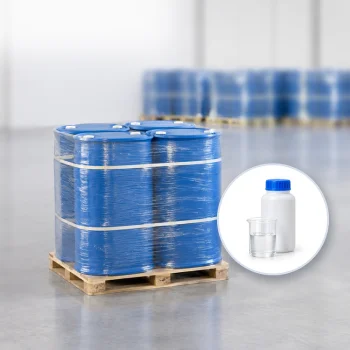
Packaging:Customizable
Description
Protein Hydrolyzates, Silk, C10-18-Alkyl-Quaternized (CAS 124046-54-4) is a quaternized silk-protein hydrolyzate in which C10-18 alkyl groups are attached to the protein backbone through quaternary ammonium functionality. It is a paste and is off-white in appearance. The combination of a hydrolyzed silk-protein backbone with quaternary ammonium centers gives the material a cationic character, so it is expected to adsorb onto negatively charged surfaces and to contribute conditioning and antistatic effects in formulated systems. In surface-conditioning and antistatic formulation, it serves as a cationic protein-based conditioning component for substrate softening, static reduction, and surface feel improvement.
In conditioning and antistatic formulation, Protein Hydrolyzates, Silk, C10-18-Alkyl-Quaternized serves as a cationic protein-derived conditioning agent during batch compounding of surfactant-based systems. The resulting formulations are used in fiber and surface processing applications for conditioning, static control, and improved surface feel.
Application
- Hair conditioning formulation: In hair conditioning formulation, Protein Hydrolyzates, Silk, C10-18-Alkyl-Quaternized serves as a cationic conditioning component, where its quaternary ammonium centers and protein backbone are expected to contribute to adsorption on negatively charged hair surfaces, reducing static and improving combability and softness.
- Antistatic formulation: In antistatic formulation, Protein Hydrolyzates, Silk, C10-18-Alkyl-Quaternized serves as a cationic antistatic agent, where its quaternary ammonium groups are expected to contribute to charge dissipation on processed surfaces.
- Fiber and textile conditioning: In fiber and textile conditioning, Protein Hydrolyzates, Silk, C10-18-Alkyl-Quaternized serves as a cationic surface-conditioning component, where its protein-derived backbone and quaternary ammonium groups are expected to contribute to fiber softness and surface feel.
- Cationic surfactant compounding: In cationic surfactant compounding, Protein Hydrolyzates, Silk, C10-18-Alkyl-Quaternized serves as a protein-based quaternary ammonium component, where its cationic character is expected to contribute to compatibility with other cationic and nonionic formulation ingredients.
- Surface conditioning formulation: In surface conditioning formulation, Protein Hydrolyzates, Silk, C10-18-Alkyl-Quaternized serves as a conditioning additive, where its adsorption on negatively charged substrates is expected to contribute to surface modification and feel improvement.
Basic Information
| Property | Value |
|---|---|
| Product Name | Protein Hydrolyzates, Silk, C10-18-Alkyl-Quaternized |
| CAS No. | 124046-54-4 |
| Molecular Formula | UNKNOWN |
| Molecular Weight | UNKNOWN |
| Physical | Paste |
| Color | Off-white |
| Chemical Property | UNKNOWN |
| Customization | Content/concentration customizable per client specification |
Quality Control
The quality of Protein Hydrolyzates, Silk, C10-18-Alkyl-Quaternized is governed by its cationic protein-based composition, which affects adsorption behavior, conditioning performance, and antistatic function in formulated systems. Because the material is a hydrolyzed protein derivative with variable composition, quality assessment should focus on the properties that control its behavior in formulation.
| Differentiated QC focus | Structure, application impact, detection and control |
|---|---|
| Cationic charge and quaternary ammonium content | Quaternary ammonium centers on the protein backbone provide the cationic character responsible for adsorption onto negatively charged surfaces. In conditioning and antistatic formulations, charge level affects substantivity, static reduction, and compatibility with anionic ingredients. Control should be based on an agreed specification for cationic content or charge density, with qualification of quaternizing raw materials and correlation of charge with conditioning performance. |
| Protein hydrolyzate composition and molecular weight distribution | The hydrolyzed silk-protein backbone determines film formation, adsorption, and surface feel. In fiber and surface conditioning, the degree of hydrolysis and molecular weight distribution affect penetration, substantivity, and smoothness. Control should use agreed ranges for protein content and molecular weight distribution, with lot comparison by suitable chromatographic or electrophoretic methods where available. |
| Moisture content | The material is described as a paste, and moisture content affects handling, microbial stability, and formulation consistency. In aqueous conditioning systems, excess or variable moisture can shift the effective concentration and affect batch reproducibility. Control should set an agreed moisture specification and use appropriate moisture determination methods. |
| pH | The pH of the material and of the formulated system affects the ionization state of the protein and quaternary ammonium groups, and therefore adsorption and stability. In conditioning formulations, pH outside the intended range can reduce substantivity or cause precipitation with other ingredients. Control should set an agreed pH range and monitor pH during compounding. |
| Appearance and color | The material is described as an off-white paste; color or consistency changes can indicate degradation, contamination, or inconsistent hydrolysis. In finished conditioning products, color and consistency affect visual quality and consumer acceptance. Control should use agreed visual or colorimetric standards and check consistency against a reference. |
| Microbial quality | Protein-based materials can support microbial growth if moisture and nutrients are present. In formulated products, microbial contamination can cause spoilage, odor, and product failure. Control should include an agreed microbial specification and appropriate preservation or hygiene measures during handling and storage. |
Batch release, COA and traceability. Each batch is released only when it conforms to the agreed specification. The Certificate of Analysis (COA) records the actual analytical methods and results for that released batch. Batch identity and results remain traceable, with lot trending used where it supports consistency review.
Storage
- Storage conditions: Store in a cool, dry, well-ventilated area. Keep containers tightly closed when not in use.
- Secure storage: Store in a secure, designated area with access limited to authorized personnel.
- Incompatible materials: Keep away from strong oxidizing agents and materials incompatible with cationic surfactants.
- Handling precautions: Avoid breathing dust or mist. Use only in a well-ventilated area. Wear protective gloves, protective clothing, eye protection, and face protection. Wash hands thoroughly after handling.
- Waste disposal: Dispose of contents and container in accordance with local, regional, national, and international regulations.
- Reference: Refer to the Safety Data Sheet (SDS) for detailed handling and disposal information.
Hot Related Products

(Z,Z)-2-(8-Heptadecenyl)-4,5-Dihydro-1-Methyl-3-[2-[(1-Oxo-9-Octadecenyl)Amino]Ethyl]-1H-Imidazolium Methyl Sulphate CAS NO 94944-77-1

Tributyltetradecylphosphonium Chloride CAS NO 81741-28-8

Quaternary Ammonium Compounds, C12-18-Alkyl(Hydroxyethyl)Dimethyl, Chlorides CAS NO 85736-63-6
Diallyldimethylammonium Chloride CAS NO 7398-69-8
Benzyldimethylphenylammonium Chloride CAS NO 3204-68-0
Ethonium CAS NO 21954-74-5
Dodecyldimethylbenzylammonium Chloride CAS NO 139-07-1
Dioctadecyl Dimethyl Ammonium Chloride CAS NO 107-64-2
1-(Dimethylamino)Tetradecane CAS NO 112-75-4
Methacrylatoethyl Trimethyl Ammonium Chloride CAS NO 5039-78-1
Dodecyltrimethylammonium Bromide CAS NO 1119-94-4
Cetyldimethylethylammonium Bromide CAS NO 124-03-8
Benzyldimethylhexadecylammonium Chloride CAS NO 122-18-9
Octadecy Trimethyl Ammonium Bromide CAS NO 1120-02-1
Tetradecyltrimethylammonium Bromide CAS NO 1119-97-7
Tetrahexylammonium Hydrogensulphate CAS NO 32503-34-7
Tetrapropylammonium Hydroxide CAS NO 4499-86-9
Hexadecyl Trimethyl Ammonium Bromide CAS NO 57-09-0
Methyl Tributyl Ammonium Chloride CAS NO 56375-79-2
Benzyltriethylammonium Chloride CAS NO 56-37-1
why choose us
Trusted Manufacturer
With our own production facilities, we ensure consistent quality, reliable supply, and full traceability.
Rigorous Quality Assurance
Each batch undergoes strict QC, accompanied by COA, MSDS, and full compliance with international standards.
Advanced R&D Expertise
Our in-house lab drives process innovation, new product development, and tailored synthesis solutions.