




share
Oxirane, Methyl-, Polymer With Oxirane, Mono(Hydrogen Sulfate), C9-11-Alkyl Ethers, Sodium Salts CAS NO 113133-73-6
Unit Price:
CAS No.:113133-73-6
Grade:Customizable
Content:Customizable
Brand:Customizable
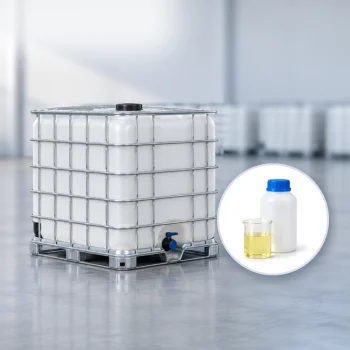
Packaging:Customizable
Description
Oxirane, Methyl-, Polymer With Oxirane, Mono(Hydrogen Sulfate), C9-11-Alkyl Ethers, Sodium Salts (CAS 113133-73-6) is a sodium salt of a sulfated C9-11 alkyl ether built on a methyloxirane-oxirane copolymer backbone. It is recorded as a viscous liquid with an off-white appearance. The molecule combines a polyether chain of propylene oxide and ethylene oxide units with a terminal C9-11 alkyl ether and a sulfate ester group neutralized as the sodium salt, giving it the character of an anionic surfactant with a hydrophilic sulfate head and a hydrophobic alkyl-polyether tail. In aqueous formulation systems, it serves as an anionic surface-active component for interfacial tension reduction, emulsification, and wetting.
In aqueous surfactant and emulsion formulation, Oxirane, Methyl-, Polymer With Oxirane, Mono(Hydrogen Sulfate), C9-11-Alkyl Ethers, Sodium Salts serves as an anionic surface-active agent during batch compounding and repeated manufacturing of detergent, cleaning, and emulsion-based products. The resulting formulations are used in industrial cleaning, textile processing, and emulsion polymerization systems for emulsification, wetting, and dispersion functions.
Application
- Detergent and cleaning formulation: In aqueous detergent and cleaning formulations, Oxirane, Methyl-, Polymer With Oxirane, Mono(Hydrogen Sulfate), C9-11-Alkyl Ethers, Sodium Salts serves as an anionic surfactant, where its sulfate head group and alkyl-polyether tail contribute to soil removal and emulsification of oily residues. The resulting cleaners are used in industrial and institutional cleaning applications.
- Emulsifier for emulsion systems: In oil-in-water emulsion formulation, Oxirane, Methyl-, Polymer With Oxirane, Mono(Hydrogen Sulfate), C9-11-Alkyl Ethers, Sodium Salts serves as an anionic emulsifier, where its amphiphilic structure contributes to droplet stabilization. The resulting emulsions are used in industrial process and material formulation contexts.
- Wetting and penetration aid: In aqueous processing baths, Oxirane, Methyl-, Polymer With Oxirane, Mono(Hydrogen Sulfate), C9-11-Alkyl Ethers, Sodium Salts serves as a wetting agent, where its surface-active character contributes to lowering interfacial tension and improving liquid penetration into fibrous or porous substrates. The resulting baths are used in textile and industrial processing.
- Emulsion polymerization surfactant: In emulsion polymerization, Oxirane, Methyl-, Polymer With Oxirane, Mono(Hydrogen Sulfate), C9-11-Alkyl Ethers, Sodium Salts may be evaluated as an anionic surfactant for stabilizing monomer droplets and polymer particles, where its sulfate group contributes to surface charge. The resulting latex systems are used in polymer dispersion manufacture.
- Industrial and institutional cleaning concentrates: In concentrated alkaline or neutral cleaning formulations, Oxirane, Methyl-, Polymer With Oxirane, Mono(Hydrogen Sulfate), C9-11-Alkyl Ethers, Sodium Salts serves as a surfactant component, where its polyether chain contributes to tolerance of electrolyte-rich and moderately alkaline conditions. The resulting concentrates are diluted for industrial cleaning use.
- Textile processing auxiliary: In textile scouring and finishing baths, Oxirane, Methyl-, Polymer With Oxirane, Mono(Hydrogen Sulfate), C9-11-Alkyl Ethers, Sodium Salts serves as a wetting and emulsifying auxiliary, where its surface activity contributes to removal of oils and uniform liquor penetration. The resulting processed textiles are used in apparel and technical textile production.
Basic Information
| Property | Value |
|---|---|
| Product Name | Oxirane, Methyl-, Polymer With Oxirane, Mono(Hydrogen Sulfate), C9-11-Alkyl Ethers, Sodium Salts |
| CAS No. | 113133-73-6 |
| Molecular Formula | UNKNOWN |
| Molecular Weight | UNKNOWN |
| Physical | Viscous liquid |
| Color | Off-white |
| Chemical Property | UNKNOWN |
| Customization | Content/concentration customizable per client specification |
Quality Control
The quality of Oxirane, Methyl-, Polymer With Oxirane, Mono(Hydrogen Sulfate), C9-11-Alkyl Ethers, Sodium Salts is governed by its anionic surfactant structure, in which the sulfate head group, the C9-11 alkyl chain, and the methyloxirane-oxirane polyether backbone jointly determine surface activity, solubility, and stability in aqueous formulations.
| Differentiated QC focus | Structure, application impact, detection and control |
|---|---|
| Anionic surfactant content and sulfate group integrity | The sulfate ester group provides the anionic charge that drives emulsification and detergency. Incomplete sulfation or hydrolysis of the sulfate ester reduces surface activity and can cause poor emulsification or phase separation in cleaning and emulsion formulations. Control by anionic surfactant titration and confirm sulfate ester presence by FTIR or sulfate determination. |
| Alkyl chain distribution (C9-11) | The C9-11 alkyl ether segment provides the hydrophobic tail that governs interfacial behavior. A shifted chain distribution can alter wetting, foaming, and emulsification performance. Control by gas chromatography of the alkyl ether fraction after suitable cleavage where applicable, and trend against surface tension and foaming tests. |
| Polyether backbone composition | The methyloxirane-oxirane copolymer segment determines hydrophilic-lipophilic balance and electrolyte tolerance. Variation in oxyalkylene ratio can shift solubility and cloud behavior in formulated systems. Monitor by NMR or hydroxyl value where applicable and correlate with solubility and surface tension data. |
| pH and alkalinity | The product is a sodium salt of a sulfate ester, and extreme pH can hydrolyze the sulfate group. In alkaline cleaning formulations, uncontrolled pH can reduce surfactant activity over time. Set agreed pH limits and check stability in the intended formulation matrix. |
| Moisture and water content | Aqueous surfactant products are sensitive to water content variation, which affects concentration, viscosity, and dosing accuracy. Control water content by Karl Fischer titration or loss-on-drying and adjust specification ranges accordingly. |
| Inorganic salts (sodium sulfate, sodium chloride) | Residual inorganic salts from neutralization can affect viscosity, solubility, and electrolyte balance in formulations. Control by conductometric or ion chromatographic determination and set agreed limits for the intended application. |
| Color and appearance | Off-white appearance is the recorded description; darkening can indicate oxidation or contamination. In formulations where appearance matters, color drift can affect product acceptance. Compare against an agreed color standard and protect from heat and light during storage. |
| Viscosity | The product is described as a viscous liquid; viscosity affects pumping, dosing, and mixing behavior. Set agreed viscosity ranges and correlate with solids content and temperature. |
Batch release, COA and traceability. Each batch is released only when it conforms to the agreed specification. The Certificate of Analysis (COA) records the actual analytical methods and results for that released batch. Batch identity and results remain traceable, with lot trending used where it supports consistency review.
Storage
- Storage conditions: Store in a cool, dry, well-ventilated area. Keep containers tightly closed when not in use.
- Secure storage: Store in a secure, designated area with access limited to authorized personnel.
- Incompatible materials: Keep away from strong oxidizing agents.
- Handling precautions: Avoid breathing vapors or mist. Use only in a well-ventilated area. Wear protective gloves, protective clothing, eye protection, and face protection. Wash hands thoroughly after handling.
- Waste disposal: Dispose of contents and container in accordance with local, regional, national, and international regulations.
- Reference: Refer to the Safety Data Sheet (SDS) for detailed handling and disposal information.
Hot Related Products

Sodium Lauryl Ether Sulfate CAS NO 68585-34-2

(2-Hydroxyethyl)Ammonium Dodecylsulphate CAS NO 4722-98-9

Sodium Dodecyl Sulfate CAS NO 151-21-3

Poly(Oxy-1,2-Ethanediyl), α-Sulfo-ω-Hydroxy-, C12-14-Alkyl Ethers, Sodium Salts CAS NO 68891-38-3
Ammonium Laureth Sulfate CAS NO 32612-48-9
Sodium Cetyl Stearyl Sulfate CAS NO 59186-41-3
Octyl Hydrogen Sulphate CAS NO 110-11-2

1-Butyl 9-(Sulphonatooxy)Octadecanoate CAS NO 122-53-2
Sodium 2-Ethylhexyl Sulfate CAS NO 126-92-1

Triethanolamine Lauryl Sulfate CAS NO 139-96-8
Diethanolamine Lauryl Sulfate CAS NO 143-00-0
Hexadecyl Hydrogen Sulphate CAS NO 143-02-2
Octadecyl Hydrogen Sulphate CAS NO 143-03-3
Decyl Hydrogen Sulphate CAS NO 142-98-3
Sodium Decyl Sulfate CAS NO 142-87-0
Dodecyl Hydrogen Sulphate CAS NO 151-41-7
Sodium Propylsulfate CAS NO 1000-56-2
Sodium n-Butyl Sulphate CAS NO 1000-67-5
Sodium n-Nonyl Sulfate CAS NO 1072-15-7
Sodium n-Undecyl Sulphate CAS NO 1072-24-8
why choose us
Trusted Manufacturer
With our own production facilities, we ensure consistent quality, reliable supply, and full traceability.
Rigorous Quality Assurance
Each batch undergoes strict QC, accompanied by COA, MSDS, and full compliance with international standards.
Advanced R&D Expertise
Our in-house lab drives process innovation, new product development, and tailored synthesis solutions.