




share
Poly(Oxy-1,2-Ethanediyl), α-[2-[Hexadecyl(2-Sulfoethyl) Amino]Ethyl]-ω-Hydroxy-, Monosodium Salt CAS NO 104351-91-9
Unit Price:
CAS No.:104351-91-9
Grade:Customizable
Content:Customizable
Brand:Customizable
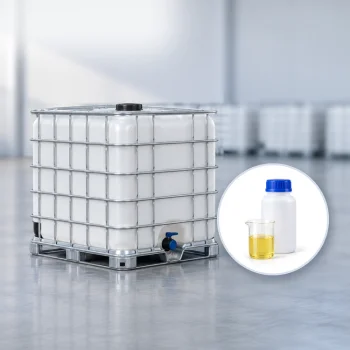
Packaging:Customizable
Description
Poly(Oxy-1,2-Ethanediyl), ��-[2-[Hexadecyl(2-Sulfoethyl) Amino]Ethyl]-��-Hydroxy-, Monosodium Salt (CAS 104351-91-9) is a sulfonate-functional polyether surfactant supplied as the monosodium salt. It is a paste and off-white in appearance. Its structure combines a poly(oxyethylene) chain with a hexadecyl-substituted amino group bearing a sulfoethyl moiety, giving the molecule a hydrophilic polyether segment, a hydrophobic long-chain alkyl segment, and a strongly anionic sulfonate head group. This combination of a nonionic polyether chain with an anionic sulfonate group supports surface activity, emulsification, and dispersion in aqueous and mixed solvent systems. In industrial formulation, it serves as an anionic surfactant for emulsification, wetting, and dispersion in cleaning, coating, and process-fluid systems.
In aqueous and mixed-solvent formulation, Poly(Oxy-1,2-Ethanediyl), ��-[2-[Hexadecyl(2-Sulfoethyl) Amino]Ethyl]-��-Hydroxy-, Monosodium Salt serves as an anionic surface-active component during batch compounding and repeated manufacturing of emulsified and dispersed products. The resulting formulations are used in industrial cleaning, surface treatment, and process-fluid applications for emulsification, wetting, and particle dispersion.
Application
- Industrial emulsifier: In aqueous emulsion formulation, Poly(Oxy-1,2-Ethanediyl), ��-[2-[Hexadecyl(2-Sulfoethyl) Amino]Ethyl]-��-Hydroxy-, Monosodium Salt serves as an anionic emulsifier, where its sulfonate head group and polyether chain contribute to interfacial stabilization. The resulting emulsion is used in industrial cleaning and surface-treatment products.
- Wetting and dispersing agent: In pigment and particulate dispersion, this sulfonate polyether surfactant serves as a wetting and dispersing aid, where its anionic head group adsorbs at particle surfaces and its polyether chain provides steric stabilization. The resulting dispersion is used in coatings, pigment pastes, and industrial suspensions.
- Detergent and cleaning formulation: In industrial and institutional cleaning formulations, it serves as an anionic surfactant component, where its sulfonate group contributes to detergency and soil removal. The resulting cleaner is used for hard-surface and process-equipment cleaning.
- Emulsion polymerization aid: In emulsion polymerization, this anionic surfactant may be evaluated as an emulsifier for monomer dispersion, where its sulfonate and polyether segments contribute to latex particle stabilization. The resulting latex is used in polymer dispersion and binder applications.
- Metal working fluid additive: In metal working fluid formulation, it serves as an anionic surfactant component, where its surface-active structure contributes to emulsification and wetting of metal surfaces. The resulting fluid is used in machining and metal processing operations.
- Textile and fiber processing: In textile processing formulations, this sulfonate polyether surfactant may be evaluated as a wetting and emulsifying agent, where its surface activity contributes to fiber wetting and processing-bath stability.
Basic Information
| Property | Value |
|---|---|
| Product Name | Poly(Oxy-1,2-Ethanediyl), ��-[2-[Hexadecyl(2-Sulfoethyl) Amino]Ethyl]-��-Hydroxy-, Monosodium Salt |
| CAS No. | 104351-91-9 |
| Molecular Formula | UNKNOWN |
| Molecular Weight | UNKNOWN |
| Physical | Paste |
| Color | Off-white |
| Chemical Property | UNKNOWN |
| Customization | Content/concentration customizable per client specification |
Quality Control
The quality of Poly(Oxy-1,2-Ethanediyl), ��-[2-[Hexadecyl(2-Sulfoethyl) Amino]Ethyl]-��-Hydroxy-, Monosodium Salt is governed by its combined polyether chain and sulfonate head group, which determine surface activity, emulsification performance, and dispersion stability in formulated systems.
| Differentiated QC focus | Structure, application impact, detection and control |
|---|---|
| Sulfonate content and anionic activity | The monosodium sulfonate group provides the anionic charge that drives interfacial adsorption and emulsification. In cleaning and emulsion formulations, low sulfonate content can reduce detergency and emulsion stability, while excess electrolyte or unreacted sulfonate precursors can shift performance. Set an agreed specification range for sulfonate content and qualify sulfonating raw materials. Test by titration of anionic activity or by ion chromatography for sulfonate species. |
| Polyether chain length and distribution | The poly(oxyethylene) segment provides hydrophilic character and steric stabilization; chain length and distribution affect solubility, cloud behavior, and dispersion performance. In pigment dispersion and emulsion systems, a broad or shifted distribution can cause inconsistent wetting or phase separation. Use agreed hydroxyl value or cloud-point ranges and compare lots by GPC where a suitable solvent and calibration are available. |
| Moisture and hygroscopicity | The polyether chain can take up atmospheric moisture, which affects weighing, dosing, and formulation consistency. In batch compounding, variable moisture can shift active content and emulsion behavior. Control packaging and storage humidity, set a specification limit on water content, and check incoming lots. Test by Karl Fischer titration. |
| pH and salt balance | The monosodium salt form and residual electrolytes influence pH and ionic strength, which affect emulsion stability and compatibility with other surfactants. In mixed surfactant systems, out-of-range pH or salt can cause precipitation or reduced activity. Set agreed pH and electrolyte limits and verify compatibility in the intended formulation. Test by pH measurement and conductivity or ion analysis. |
| Color and appearance | The product is described as an off-white paste; darkening can indicate oxidation, contamination, or thermal degradation. In light-colored or clear formulations, color bodies can affect product appearance. Set agreed color limits, protect from heat and light, and inspect incoming lots. Test by visual comparison against a standard or colorimetry. |
| Insoluble matter and particulates | Insoluble matter or gel particles can arise from incomplete reaction or handling and can cause specks, filter blockage, or surface defects. In coating and cleaning applications, particulates affect appearance and performance. Include filtration and clean handling, and set a limit on insoluble matter. Test by filtration and gravimetric determination. |
Batch release, COA and traceability. Each batch is released only when it conforms to the agreed specification. The Certificate of Analysis (COA) records the actual analytical methods and results for that released batch. Batch identity and results remain traceable, with lot trending used where it supports consistency review.
Storage
- Storage conditions: Store in a cool, dry, well-ventilated area. Keep containers tightly closed when not in use to limit moisture uptake.
- Secure storage: Store in a secure, designated area with access limited to authorized personnel.
- Incompatible materials: Keep away from strong oxidizing agents.
- Handling precautions: Avoid breathing dust or mist. Use only in a well-ventilated area. Wear protective gloves, protective clothing, eye protection, and face protection. Wash hands thoroughly after handling.
- Waste disposal: Dispose of contents and container in accordance with local, regional, national, and international regulations.
- Reference: Refer to the Safety Data Sheet (SDS) for detailed handling and disposal information.
Hot Related Products

Amines, n-C8-22-Alkyltrimethylenedi-, Acrylated, Sodium Salts CAS NO 97659-50-2

Alkylsulfonic Phenyl Ester CAS NO 91082-17-6
Benzenesulfonic Acid, C10-16-Alkyl Derivs. CAS NO 68584-22-5

Sulfonic Acids, Petroleum, Sodium Salts CAS NO 68608-26-4
Sulfonic Acids, C10-18-Alkane, Ph Esters CAS NO 70775-94-9

Sodium-n-Coconut Acid n-Methyl Taurate CAS NO 61791-42-2

Niaproof Type 4 CAS NO 139-88-8
Sodium Decyl Diphenyl Ether Disulfonate CAS NO 36445-71-3
Sodium Dodecyl Diphenyl Ether Disulfonate CAS NO 119345-04-9
Sodium Decane-1-Sulfonate CAS NO 13419-61-9

Sodium-n-Methyl-n-Oleyl Taurate CAS NO 137-20-2
1-Dodecanesulfonic Acid Sodium Salt CAS NO 2386-53-0
Lithium Dodecyl Sulfate CAS NO 2044-56-6
Sodium Isethionate CAS NO 1562-00-1
Calcium Dodecylbenzene Sulfonate CAS NO 26264-06-2
Sodium Alkylbenzene Sulfonate CAS NO 68411-30-3
Disodium 4-Dodecyl-2,4'-Oxydibenzenesulfonate CAS NO 7575-62-4
Sodium Methyl Cocoyl Taurate CAS NO 12765-39-8
Dodecylbenzenesulfonic Acid CAS NO 121-65-3
Linear Alklybezene Sulfonates CAS NO 126-66-9
why choose us
Trusted Manufacturer
With our own production facilities, we ensure consistent quality, reliable supply, and full traceability.
Rigorous Quality Assurance
Each batch undergoes strict QC, accompanied by COA, MSDS, and full compliance with international standards.
Advanced R&D Expertise
Our in-house lab drives process innovation, new product development, and tailored synthesis solutions.