




share
Castor Oil, Sulfonated CAS NO 101316-48-7
Unit Price:
CAS No.:101316-48-7
Grade:Customizable
Content:Customizable
Brand:Customizable
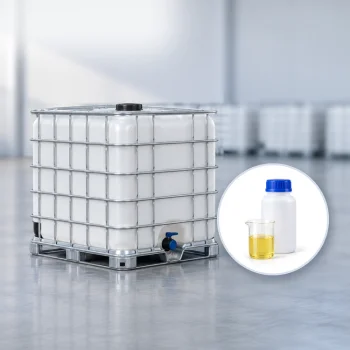
Packaging:Customizable
Description
Castor Oil, Sulfonated (CAS 101316-48-7) is a sulfonated derivative of castor oil, a triglyceride rich in ricinoleic acid (12-hydroxyoleic acid) units. It is a viscous liquid with an amber appearance. The sulfonation of the hydroxyl-bearing fatty acid chains introduces anionic sulfonate functionality, which gives the material amphiphilic character and surface-active behavior in aqueous and mixed solvent systems. In industrial surfactant formulation, Castor Oil, Sulfonated serves as an anionic emulsifying and wetting component for the dispersion of oils, pigments, and particulates.
In industrial emulsification, textile processing, and leather processing systems, Castor Oil, Sulfonated serves as an anionic surface-active component during batch formulation and repeated processing operations. The resulting emulsified, wetted, or lubricated materials are used in textile fiber processing, leather finishing, metalworking fluid formulation, and pigment dispersion for wetting, emulsification, and lubrication functions.
Application
- Industrial emulsification: In industrial emulsification systems, Castor Oil, Sulfonated serves as an anionic emulsifier, where its sulfonated fatty acid chains contribute to oil-in-water dispersion and emulsion stability. The resulting emulsions are used in metalworking fluids, textile processing baths, and general industrial oil dispersion.
- Textile wetting and processing: In textile processing, Castor Oil, Sulfonated serves as a wetting and penetrating agent, where its surface-active sulfonate groups contribute to fiber wetting and uniform liquor penetration. The resulting processing baths are used in scouring, dyeing, and finishing operations for improved liquor contact.
- Leather processing: In leather processing, Castor Oil, Sulfonated serves as an anionic fatliquoring and wetting component, where its amphiphilic structure contributes to fiber lubrication and even distribution within the leather matrix. The resulting processed leather is used in upholstery, footwear, and garment applications for flexibility and surface hand.
- Metalworking fluid formulation: In metalworking fluid formulation, Castor Oil, Sulfonated serves as an emulsifying and lubricity component, where its sulfonated castor oil structure contributes to oil dispersion and boundary lubrication. The resulting fluids are used in machining and metal forming operations for cooling and friction reduction.
- Pigment and particulate dispersion: In pigment dispersion, Castor Oil, Sulfonated serves as an anionic dispersing and wetting aid, where its surface-active character contributes to particulate wetting and dispersion stability. The resulting dispersions are used in coatings, inks, and industrial pigment preparations.
- Industrial surfactant formulation: In industrial surfactant formulation, Castor Oil, Sulfonated serves as an anionic surfactant base or co-surfactant, where its sulfonate functionality contributes to surface tension reduction and emulsification. The resulting formulations are used in cleaning, wetting, and emulsifying products for industrial processing.
Basic Information
| Property | Value |
|---|---|
| Product Name | Castor Oil, Sulfonated |
| CAS No. | 101316-48-7 |
| Molecular Formula | UNKNOWN |
| Molecular Weight | UNKNOWN |
| Physical | Viscous liquid |
| Color | Amber |
| Chemical Property | UNKNOWN |
| Customization | Content/concentration customizable per client specification |
Quality Control
The quality of Castor Oil, Sulfonated is governed by its degree of sulfonation, the residual hydroxyl and fatty acid profile inherited from the castor oil base, and its physical consistency, all of which affect emulsification, wetting, and lubrication performance in textile, leather, and metalworking systems.
| Differentiated QC focus | Structure, application impact, detection and control |
|---|---|
| Degree of sulfonation and anionic content | Sulfonate groups introduced onto the ricinoleic acid chains provide the anionic surface activity. In emulsification and textile wetting, insufficient sulfonation reduces emulsifying capacity and wetting efficiency, while excessive or uneven sulfonation can alter solubility and cause phase separation. Control by monitoring sulfonate content or anionic activity against an agreed range and correlating with emulsion stability tests. |
| Residual hydroxyl and fatty acid profile | The castor oil base retains hydroxyl-bearing fatty acid chains; incomplete reaction leaves residual hydroxyl functionality. In emulsification and leather fatliquoring, residual hydroxyl affects hydrophile-lipophile balance and penetration behavior. Monitor hydroxyl value and fatty acid composition against the agreed specification. |
| Viscosity and consistency | The product is a viscous liquid; viscosity reflects molecular composition and solids level. In metalworking fluids and textile baths, viscosity affects pumping, mixing, and liquor stability. Set an agreed viscosity range and check against it for each lot. |
| Moisture content | Water content affects emulsion behavior, storage stability, and microbial susceptibility. In aqueous processing baths, excess moisture can dilute active content and shift emulsion balance. Set a moisture limit and check by Karl Fischer titration or loss on drying. |
| pH and acid value | Residual acidity or alkalinity from sulfonation affects compatibility with anionic and nonionic systems and corrosion behavior in metalworking fluids. Control pH and acid value within agreed limits and verify compatibility in the intended formulation. |
| Color and appearance | The product is described as an amber viscous liquid; color development can indicate oxidation or thermal degradation. In textile and leather applications, color can affect the appearance of processed goods. Compare against an agreed color standard and protect from excessive heat and light. |
| Inorganic salts and sulfonation residues | Sulfonation and neutralization can leave inorganic salts or residual reagents. In metalworking and textile systems, excess salts can cause corrosion, spotting, or emulsion instability. Set limits on salt content and monitor by conductivity or ash determination where relevant. |
Batch release, COA and traceability. Each batch is released only when it conforms to the agreed specification. The Certificate of Analysis (COA) records the actual analytical methods and results for that released batch. Batch identity and results remain traceable, with lot trending used where it supports consistency review.
Storage
- Storage conditions: Store in a cool, dry, well-ventilated area. Keep containers tightly closed when not in use.
- Secure storage: Store in a secure, designated area with access limited to authorized personnel.
- Incompatible materials: Keep away from strong oxidizing agents.
- Handling precautions: Avoid breathing vapors or mist. Use only in a well-ventilated area. Wear protective gloves, protective clothing, eye protection, and face protection. Wash hands thoroughly after handling.
- Waste disposal: Dispose of contents and container in accordance with local, regional, national, and international regulations.
- Reference: Refer to the Safety Data Sheet (SDS) for detailed handling and disposal information.
Hot Related Products

Amines, n-C8-22-Alkyltrimethylenedi-, Acrylated, Sodium Salts CAS NO 97659-50-2

Alkylsulfonic Phenyl Ester CAS NO 91082-17-6
Benzenesulfonic Acid, C10-16-Alkyl Derivs. CAS NO 68584-22-5

Sulfonic Acids, Petroleum, Sodium Salts CAS NO 68608-26-4
Sulfonic Acids, C10-18-Alkane, Ph Esters CAS NO 70775-94-9

Sodium-n-Coconut Acid n-Methyl Taurate CAS NO 61791-42-2

Niaproof Type 4 CAS NO 139-88-8
Sodium Decyl Diphenyl Ether Disulfonate CAS NO 36445-71-3
Sodium Dodecyl Diphenyl Ether Disulfonate CAS NO 119345-04-9
Sodium Decane-1-Sulfonate CAS NO 13419-61-9

Sodium-n-Methyl-n-Oleyl Taurate CAS NO 137-20-2
1-Dodecanesulfonic Acid Sodium Salt CAS NO 2386-53-0
Lithium Dodecyl Sulfate CAS NO 2044-56-6
Sodium Isethionate CAS NO 1562-00-1
Calcium Dodecylbenzene Sulfonate CAS NO 26264-06-2
Sodium Alkylbenzene Sulfonate CAS NO 68411-30-3
Disodium 4-Dodecyl-2,4'-Oxydibenzenesulfonate CAS NO 7575-62-4
Sodium Methyl Cocoyl Taurate CAS NO 12765-39-8
Dodecylbenzenesulfonic Acid CAS NO 121-65-3
Linear Alklybezene Sulfonates CAS NO 126-66-9
why choose us
Trusted Manufacturer
With our own production facilities, we ensure consistent quality, reliable supply, and full traceability.
Rigorous Quality Assurance
Each batch undergoes strict QC, accompanied by COA, MSDS, and full compliance with international standards.
Advanced R&D Expertise
Our in-house lab drives process innovation, new product development, and tailored synthesis solutions.