




share
Sodium 2-Hydroxydodecane-1-Sulphonate CAS NO 19327-23-2
Unit Price:
CAS No.:19327-23-2
Grade:Customizable
Content:Customizable
Brand:Customizable
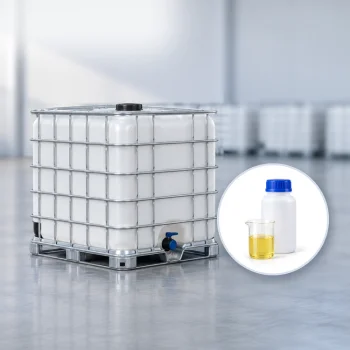
Packaging:Customizable
Description
Sodium 2-Hydroxydodecane-1-Sulphonate (CAS 19327-23-2) is the sodium salt of a hydroxy-substituted long-chain alkane sulfonic acid, in which a sulfonate group and a secondary hydroxyl group are located on adjacent carbons of a C12 chain. It is recorded as a white powder. As an anionic sulfonate surfactant, it carries a permanently ionized sulfonate head group together with a hydroxyl function on the hydrophobic alkyl chain, a combination that supports surface activity and gives the molecule a hydrophilic-lipophilic balance suited to aqueous surfactant systems. In surfactant and detergent formulation, it serves as an anionic surface-active component for interfacial tension reduction, emulsification and wetting.
In aqueous surfactant formulation and industrial cleaning product manufacture, Sodium 2-Hydroxydodecane-1-Sulphonate serves as an anionic surfactant component during batch compounding, where its sulfonate head group and hydroxyl-bearing alkyl chain contribute to emulsification, detergency and substrate wetting. The resulting formulations are used in industrial cleaning, surface processing and general surfactant-based products for soil removal, emulsion stabilization and wetting of hard surfaces.
Application
- Detergent and cleaning formulation: In detergent and industrial cleaning formulation, Sodium 2-Hydroxydodecane-1-Sulphonate serves as an anionic surfactant, where its sulfonate head group contributes to soil removal and detergency in aqueous media. The resulting formulations are used in hard-surface cleaning and general industrial cleaning products.
- Emulsification: In emulsion formulation, Sodium 2-Hydroxydodecane-1-Sulphonate serves as an anionic emulsifier, where its amphiphilic structure contributes to oil-water interfacial stabilization. The resulting emulsions are used in industrial process and formulation contexts requiring stable oil-in-water dispersions.
- Wetting and penetration: In wetting applications, Sodium 2-Hydroxydodecane-1-Sulphonate serves as a wetting agent, where its surface activity contributes to lowering the surface tension of aqueous solutions. The resulting wetting systems are used in industrial processing where uniform liquid spreading on substrates is required.
- Surfactant blend component: In surfactant blending, Sodium 2-Hydroxydodecane-1-Sulphonate serves as an anionic component, where its sulfonate functionality contributes to the balance of hydrophilic and hydrophobic behavior in mixed surfactant systems. The resulting blends are used in formulation work where anionic surface activity is required.
- Hydroxyl-functional surfactant research: In surfactant structure-property research, Sodium 2-Hydroxydodecane-1-Sulphonate may be evaluated as a hydroxyl-bearing anionic sulfonate, where the adjacent hydroxyl and sulfonate groups support studies of surface activity and interfacial behavior. This is a research evaluation context.
Basic Information
| Property | Value |
|---|---|
| Product Name | Sodium 2-Hydroxydodecane-1-Sulphonate |
| CAS No. | 19327-23-2 |
| Molecular Formula | UNKNOWN |
| Molecular Weight | 288.38 g/mol |
| Physical | Powder |
| Color | White |
| Chemical Property | UNKNOWN |
| Customization | Content/concentration customizable per client specification |
Quality Control
The quality of Sodium 2-Hydroxydodecane-1-Sulphonate is governed by its identity as an anionic sulfonate surfactant, so the relevant quality concerns center on surfactant content, inorganic salt load and moisture, which affect surface activity and formulation behavior.
| Differentiated QC focus | Structure, application impact, detection and control |
|---|---|
| Surfactant content | The sulfonate head group provides the surface activity of the product. In detergent and emulsifier formulation, low active content reduces detergency and emulsion stability, while batch-to-batch variation shifts the required dosage. Set an agreed specification range for active content and trend results across lots. Test by two-phase titration or potentiometric titration of the anionic surfactant. |
| Inorganic salts | Sulfonate salts produced by neutralization can carry sodium chloride or sodium sulfate. In aqueous formulations, high salt load can reduce solubility, raise viscosity or depress foaming behavior. Set limits on salt content and qualify neutralization and purification steps. Test by conductometric or ion chromatographic determination of chloride and sulfate. |
| Moisture | The product is recorded as a powder and may take up water on storage. In powder handling and formulation, elevated moisture can cause caking, weighing errors and dosage variation. Set a moisture limit, control drying and packaging, and store in closed containers. Test by Karl Fischer titration or loss on drying. |
| pH | Residual acidity or alkalinity from neutralization affects the pH of the formulated system. In cleaning and emulsifier formulations, out-of-range pH can shift surfactant ionization and affect stability. Set an agreed pH range for an aqueous solution and check each lot. Test by potentiometric pH measurement on a defined solution. |
| Appearance and insoluble matter | Color and clarity indicate purification quality and the presence of insoluble residues. In formulations requiring clear or light-colored products, insoluble matter can cause haze or sediment. Set appearance limits and include filtration where required. Test by visual comparison and gravimetric determination of matter insoluble in water. |
Batch release, COA and traceability. Each batch is released only when it conforms to the agreed specification. The Certificate of Analysis (COA) records the actual analytical methods and results for that released batch. Batch identity and results remain traceable, with lot trending used where it supports consistency review.
Storage
- Storage conditions: Store in a cool, dry, well-ventilated area. Keep containers tightly closed when not in use.
- Secure storage: Store in a secure, designated area with access limited to authorized personnel.
- Incompatible materials: Keep away from strong oxidizing agents.
- Handling precautions: Avoid breathing dust. Use only in a well-ventilated area. Wear protective gloves, protective clothing, eye protection, and face protection. Wash hands thoroughly after handling.
- Waste disposal: Dispose of contents and container in accordance with local, regional, national, and international regulations.
- Reference: Refer to the Safety Data Sheet (SDS) for detailed handling and disposal information.
Hot Related Products

Amines, n-C8-22-Alkyltrimethylenedi-, Acrylated, Sodium Salts CAS NO 97659-50-2

Alkylsulfonic Phenyl Ester CAS NO 91082-17-6
Benzenesulfonic Acid, C10-16-Alkyl Derivs. CAS NO 68584-22-5

Sulfonic Acids, Petroleum, Sodium Salts CAS NO 68608-26-4
Sulfonic Acids, C10-18-Alkane, Ph Esters CAS NO 70775-94-9

Sodium-n-Coconut Acid n-Methyl Taurate CAS NO 61791-42-2

Niaproof Type 4 CAS NO 139-88-8
Sodium Decyl Diphenyl Ether Disulfonate CAS NO 36445-71-3
Sodium Dodecyl Diphenyl Ether Disulfonate CAS NO 119345-04-9
Sodium Decane-1-Sulfonate CAS NO 13419-61-9

Sodium-n-Methyl-n-Oleyl Taurate CAS NO 137-20-2
1-Dodecanesulfonic Acid Sodium Salt CAS NO 2386-53-0
Lithium Dodecyl Sulfate CAS NO 2044-56-6
Sodium Isethionate CAS NO 1562-00-1
Calcium Dodecylbenzene Sulfonate CAS NO 26264-06-2
Sodium Alkylbenzene Sulfonate CAS NO 68411-30-3
Disodium 4-Dodecyl-2,4'-Oxydibenzenesulfonate CAS NO 7575-62-4
Sodium Methyl Cocoyl Taurate CAS NO 12765-39-8
Dodecylbenzenesulfonic Acid CAS NO 121-65-3
Linear Alklybezene Sulfonates CAS NO 126-66-9
why choose us
Trusted Manufacturer
With our own production facilities, we ensure consistent quality, reliable supply, and full traceability.
Rigorous Quality Assurance
Each batch undergoes strict QC, accompanied by COA, MSDS, and full compliance with international standards.
Advanced R&D Expertise
Our in-house lab drives process innovation, new product development, and tailored synthesis solutions.