




share
Tetrasodium [(Dodecylimino)Bis(Methylene)]Bisphosphonate CAS NO 16693-69-9
Unit Price:
CAS No.:16693-69-9
Grade:Customizable
Content:Customizable
Brand:Customizable
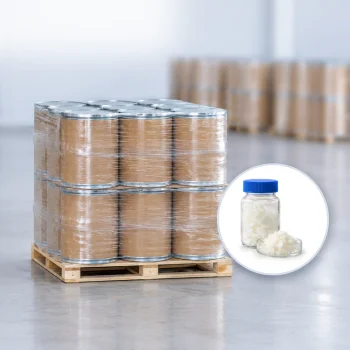
Packaging:Customizable
Description
Tetrasodium [(Dodecylimino)Bis(Methylene)]Bisphosphonate] (CAS 16693-69-9) is the tetrasodium salt of a bisphosphonic acid bearing a dodecylimino group linked through two methylene bridges to two phosphonate units. It is recorded as a solid, white material. Its structure combines two ionized phosphonate groups with a long-chain dodecyl substituent on the bridging nitrogen, a combination that supports strong metal-ion binding together with surface activity in aqueous systems. In industrial surfactant and water-treatment formulation, it serves as a multifunctional phosphonate component for scale-control and metal-ion sequestration duties.
In aqueous industrial formulation, Tetrasodium [(Dodecylimino)Bis(Methylene)]Bisphosphonate] is handled as a water-soluble phosphonate salt that is dosed into circulating water, cleaning baths, and process streams during batch make-up and repeated plant operation. The resulting treated water or cleaning liquor is used in cooling, boiler, and industrial cleaning service for hardness control and deposit suppression.
Application
- Industrial water treatment: In cooling and boiler water treatment, Tetrasodium [(Dodecylimino)Bis(Methylene)]Bisphosphonate] serves as a scale-control phosphonate, where its ionized phosphonate groups bind calcium and magnesium ions and inhibit crystal growth. The treated water is used in recirculating industrial cooling and steam systems to limit hardness deposit formation.
- Metal-ion sequestration: In aqueous process streams, Tetrasodium [(Dodecylimino)Bis(Methylene)]Bisphosphonate] serves as a chelating agent, where its bisphosphonate chelating groups hold polyvalent metal ions in solution. The resulting sequestered stream is used in industrial processing where iron, calcium, or magnesium interference must be limited.
- Industrial cleaning formulations: In alkaline and neutral industrial cleaners, Tetrasodium [(Dodecylimino)Bis(Methylene)]Bisphosphonate] serves as a builder and antiredeposition component, where its phosphonate binding and amphiphilic dodecyl group contribute to soil suspension and hardness control. The resulting cleaner is used in plant and equipment cleaning.
- Surfactant formulation: In surfactant blends, Tetrasodium [(Dodecylimino)Bis(Methylene)]Bisphosphonate] serves as a phosphonate-functional surfactant component, where the lipophilic dodecyl chain and the hydrophilic bisphosphonate head group contribute to interfacial activity in aqueous media. The resulting blend is used in industrial wetting and dispersion formulations.
- Dispersion and slurry stabilization: In mineral and pigment slurries, Tetrasodium [(Dodecylimino)Bis(Methylene)]Bisphosphonate] serves as a dispersing aid, where phosphonate adsorption on particle surfaces contributes to charge stabilization. The resulting slurry is used in industrial mineral processing and pigment handling.
- Corrosion-control formulation research: In corrosion-inhibitor formulation research, Tetrasodium [(Dodecylimino)Bis(Methylene)]Bisphosphonate] may be evaluated as a phosphonate additive, where its metal-binding groups support film-forming and anodic inhibition studies in aqueous systems.
Basic Information
| Property | Value |
|---|---|
| Product Name | Tetrasodium [(Dodecylimino)Bis(Methylene)]Bisphosphonate |
| CAS No. | 16693-69-9 |
| Molecular Formula | UNKNOWN |
| Molecular Weight | 579.26 g/mol |
| Physical | Solid |
| Color | White |
| Chemical Property | UNKNOWN |
| Customization | Content/concentration customizable per client specification |
Quality Control
The quality of Tetrasodium [(Dodecylimino)Bis(Methylene)]Bisphosphonate] is governed by its bisphosphonate content, its degree of neutralization as the tetrasodium salt, and the absence of interfering ionic or organic impurities, all of which affect chelation capacity and surfactant behavior in aqueous industrial systems.
| Differentiated QC focus | Structure, application impact, detection and control |
|---|---|
| Phosphonate content and active strength | The two phosphonate groups are the functional centers for metal-ion binding. In water-treatment and cleaning formulations, low active content reduces threshold scale inhibition and forces higher dosing, while variability shifts the calcium tolerance of the program. Control by acid-base titration or phosphonate-specific titration against an agreed specification, and trend results against dosing response. |
| Degree of neutralization and pH | The product is supplied as the tetrasodium salt; residual acidity or excess alkali changes solubility, solution pH, and compatibility with other formulation components. In alkaline cleaners and cooling programs, off-spec neutralization can cause precipitation or pH drift. Control by pH measurement of a standard solution and by sodium content where required. |
| Free and bound sodium | Sodium level reflects the neutralization state and any residual sodium salts from production. Excess electrolyte can salt out surfactant components in concentrated blends. Control by flame photometry or ion chromatography within an agreed range. |
| Water content | Moisture affects weighing accuracy, caking of the solid, and the concentration of the formulated product. In solid handling and blending, high moisture promotes lumping and dosing error. Control by Karl Fischer titration or loss on drying, with moisture-protective packaging. |
| Inorganic phosphite and phosphate residues | Incomplete oxidation or hydrolysis can leave phosphite or orthophosphate species that do not contribute the intended chelation function and may interfere with analytical control. Control by ion chromatography and set limits relative to the agreed specification. |
| Chloride and sulfate | Residual inorganic anions from neutralization can accelerate corrosion in treated water systems and affect conductivity-based control. Control by ion chromatography or titration within agreed limits. |
| Appearance and insolubles | The material is recorded as a white solid; discoloration or insoluble matter indicates contamination or incomplete reaction. In cleaning and water-treatment use, insolubles can foul membranes and deposit on heat-transfer surfaces. Control by visual comparison against a standard and by filtration of a standard solution. |
| Solution clarity and stability | Concentrated aqueous solutions must remain clear for reliable dosing. Cloudiness or sediment indicates incomplete dissolution or incompatibility with co-additives. Control by preparing a standard solution at the agreed concentration and inspecting clarity after standing. |
Batch release, COA and traceability. Each batch is released only when it conforms to the agreed specification. The Certificate of Analysis (COA) records the actual analytical methods and results for that released batch. Batch identity and results remain traceable, with lot trending used where it supports consistency review.
Storage
- Storage conditions: Store in a cool, dry, well-ventilated area. Keep containers tightly closed when not in use.
- Secure storage: Store in a secure, designated area with access limited to authorized personnel.
- Incompatible materials: Keep away from strong oxidizing agents.
- Handling precautions: Avoid breathing dust. Use only in a well-ventilated area. Wear protective gloves, protective clothing, eye protection, and face protection. Wash hands thoroughly after handling.
- Waste disposal: Dispose of contents and container in accordance with local, regional, national, and international regulations.
- Reference: Refer to the Safety Data Sheet (SDS) for detailed handling and disposal information.
Hot Related Products

Polydimethylsiloxane CAS NO 8050-81-5
2-Propenoicacid,Butylester,Telomerwith2-[[(Heptadecafluorooctyl) CAS NO 68227-96-3
Phosphine Oxide,Decyldioctyl- CAS NO 35791-65-2
p-Dodecyltoluene CAS NO 104-41-6

Pentasodium Dtpa CAS NO 140-01-2
5-Decyne-4,7-Diol CAS NO 1070-40-2
Pentylsulfate CAS NO 110-92-9

Ictasol CAS NO 12542-33-5
n-(2-Aminoethyl)Stearamide Phosphate CAS NO 100021-81-6

Fluorad Fc99 CAS NO 101027-19-4

Fatty Acids, Montan-Wax, Compds. With Morpholine Manufg. Distn. Residues CAS NO 102242-55-7

3-(n-Phenylamino)-1,2-Propanediol 1-Oleoyl Ester CAS NO 102390-02-3

3,7-Bis(2-Hydroxyethyl)-5-[(3,3,4,4,5,5,6,6,7,7,8,8,9,9,10,10,11,11,11-Nonadecafluoroundecyl)Oxy]-4,6-Dioxa-3,7-Diaza-5-Phosphanonane-1,9-Diol 5-Oxide CAS NO 101896-21-3
Rbs(Tm) Solid CAS NO 103599-73-1
Polyethylenepolyamines Reaction Products With Oleic Acid CAS NO 106214-55-5
Phosphoric Acid, Mono(2-Ethylhexyl) Ester With n-Cocoalkyl Diethanolamine) CAS NO 120579-32-0
Butanedioic Acid, (Dimethoxyphosphinyl)-, Dimethyl Ester, Reaction Products With Lauryl Alc. And Polyethylene Glycol CAS NO 121375-86-8
Minkamidopropylamine Oxide CAS NO 124046-29-3

Poly(Oxy-1,2-Ethanediyl), .Alpha.-(Carboxymethyl)-.Omega.-(Dinonylphenoxy)-, Branched CAS NO 125304-10-1
Amines, n-C12-22-Alkyltrimethylenedi-, Ethoxylated CAS NO 125352-08-1
why choose us
Trusted Manufacturer
With our own production facilities, we ensure consistent quality, reliable supply, and full traceability.
Rigorous Quality Assurance
Each batch undergoes strict QC, accompanied by COA, MSDS, and full compliance with international standards.
Advanced R&D Expertise
Our in-house lab drives process innovation, new product development, and tailored synthesis solutions.