




share
1-Eicosanyl Sulfate Sodium Salt CAS NO 13177-49-6
Unit Price:
CAS No.:13177-49-6
Grade:Customizable
Content:Customizable
Brand:Customizable
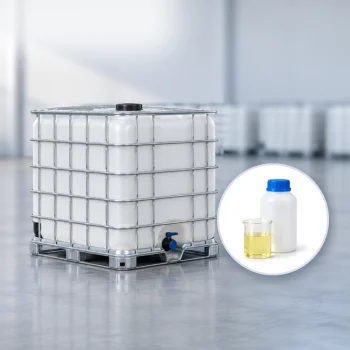
Packaging:Customizable
Description
1-Eicosanyl Sulfate Sodium Salt (CAS 13177-49-6) is the sodium salt of a linear C20 primary alkyl sulfate, an anionic surfactant in which a sulfate head group is attached to a long eicosyl hydrocarbon chain. It is recorded as a solid, off-white material. Its structure combines a strongly polar, anionic sulfate head group with a long hydrophobic alkyl tail, a combination that supports surface activity at air–water and oil–water interfaces and micelle formation in aqueous media. In industrial formulation, it serves as an anionic surfactant for emulsification, detergency, and wetting functions in aqueous systems.
In aqueous surfactant formulation and industrial cleaning concentrate manufacture, 1-Eicosanyl Sulfate Sodium Salt serves as an anionic surface-active component during batch compounding, where its sulfate head group and long alkyl chain contribute to interfacial tension reduction and emulsification. The resulting formulations are used in industrial cleaning, emulsification, and wetting applications.
Application
- Industrial cleaning formulations: In aqueous cleaning concentrates, 1-Eicosanyl Sulfate Sodium Salt serves as an anionic surfactant, where its sulfate head group and long hydrophobic chain contribute to detergency and soil removal. The resulting cleaners are used in industrial and institutional cleaning applications.
- Emulsification of oil–water systems: In emulsion formulation, 1-Eicosanyl Sulfate Sodium Salt serves as an anionic emulsifier, where its amphiphilic structure contributes to droplet stabilization. The resulting emulsions are used in industrial process and material formulation contexts.
- Wetting and surface-tension reduction: In aqueous process baths, 1-Eicosanyl Sulfate Sodium Salt serves as a wetting agent, where its surface activity contributes to improved substrate wetting. The resulting baths are used in industrial processing operations.
- Emulsion polymerization support: In emulsion polymerization, 1-Eicosanyl Sulfate Sodium Salt may be evaluated as an anionic surfactant for stabilizing monomer droplets and polymer particles, where its sulfate head group contributes to colloidal stabilization. This is a formulation evaluation context.
- Surfactant formulation research: In surfactant formulation research, 1-Eicosanyl Sulfate Sodium Salt may be evaluated as a long-chain anionic surfactant model, where its C20 alkyl chain and sulfate group support studies of surface activity and aggregation behavior. This is a research context.
Basic Information
| Property | Value |
|---|---|
| Product Name | 1-Eicosanyl Sulfate Sodium Salt |
| CAS No. | 13177-49-6 |
| Molecular Formula | UNKNOWN |
| Molecular Weight | 400.59 g/mol |
| Physical | Solid |
| Color | Off-white |
| Chemical Property | UNKNOWN |
| Customization | Content/concentration customizable per client specification |
Quality Control
The quality of 1-Eicosanyl Sulfate Sodium Salt is governed by its identity as a long-chain anionic sulfate surfactant, where chain length, sulfate head-group content, and counterion consistency directly affect surface activity, emulsification, and detergency in aqueous formulations.
| Differentiated QC focus | Structure, application impact, detection and control |
|---|---|
| Identity and alkyl chain length | The product is defined by a linear C20 alkyl chain attached to a sulfate group; chain-length variation changes hydrophobicity and surface activity. In emulsification and detergency, a shorter or branched chain can shift interfacial behavior and reduce performance consistency. Confirm identity and chain-length distribution against an agreed specification, and qualify incoming lots. Test by infrared spectroscopy for sulfate and alkyl features, and by chromatographic or mass-spectrometric methods for chain-length distribution where suitable methods are established. |
| Anionic surfactant content | The sulfate head-group content determines charge density and surface activity. In cleaning and emulsification, low active content requires higher dosage, while excess can affect foaming and formulation balance. Set an agreed specification range for active surfactant content and trend it against surface-tension or emulsification performance. Test by titration of anionic surfactant content or by a validated instrumental method. |
| Inorganic salts and counterion balance | Sodium sulfate or other inorganic salts can remain from neutralization or be present as formulation carriers. In aqueous formulations, high salt levels can affect solubility, cloud point, and emulsion stability. Set limits on inorganic salt content and monitor counterion balance. Test by ion chromatography or conductometric methods where applicable. |
| Moisture and water content | The material is recorded as a solid; moisture can affect weighing, dispersion, and storage behavior. In formulation, variable water content can shift active content and dosing. Set an agreed limit on water content and protect from ambient moisture during storage. Test by Karl Fischer titration or loss-on-drying where appropriate. |
| Appearance and color | The product is recorded as off-white; color development can indicate oxidation or contamination. In formulations where appearance matters, color variation can affect product consistency. Set agreed color limits and inspect lots against a standard. Test by visual comparison or colorimetry. |
Batch release, COA and traceability. Each batch is released only when it conforms to the agreed specification. The Certificate of Analysis (COA) records the actual analytical methods and results for that released batch. Batch identity and results remain traceable, with lot trending used where it supports consistency review.
Storage
- Storage conditions: Store in a cool, dry, well-ventilated area. Keep containers tightly closed when not in use.
- Secure storage: Store in a secure, designated area with access limited to authorized personnel.
- Incompatible materials: Keep away from strong oxidizing agents.
- Handling precautions: Avoid breathing dust. Use only in a well-ventilated area. Wear protective gloves, protective clothing, eye protection, and face protection. Wash hands thoroughly after handling.
- Waste disposal: Dispose of contents and container in accordance with local, regional, national, and international regulations.
- Reference: Refer to the Safety Data Sheet (SDS) for detailed handling and disposal information.
Hot Related Products

Sodium Lauryl Ether Sulfate CAS NO 68585-34-2

(2-Hydroxyethyl)Ammonium Dodecylsulphate CAS NO 4722-98-9

Sodium Dodecyl Sulfate CAS NO 151-21-3

Poly(Oxy-1,2-Ethanediyl), α-Sulfo-ω-Hydroxy-, C12-14-Alkyl Ethers, Sodium Salts CAS NO 68891-38-3
Ammonium Laureth Sulfate CAS NO 32612-48-9
Sodium Cetyl Stearyl Sulfate CAS NO 59186-41-3
Octyl Hydrogen Sulphate CAS NO 110-11-2

1-Butyl 9-(Sulphonatooxy)Octadecanoate CAS NO 122-53-2
Sodium 2-Ethylhexyl Sulfate CAS NO 126-92-1

Triethanolamine Lauryl Sulfate CAS NO 139-96-8
Diethanolamine Lauryl Sulfate CAS NO 143-00-0
Hexadecyl Hydrogen Sulphate CAS NO 143-02-2
Octadecyl Hydrogen Sulphate CAS NO 143-03-3
Decyl Hydrogen Sulphate CAS NO 142-98-3
Sodium Decyl Sulfate CAS NO 142-87-0
Dodecyl Hydrogen Sulphate CAS NO 151-41-7
Sodium Propylsulfate CAS NO 1000-56-2
Sodium n-Butyl Sulphate CAS NO 1000-67-5
Sodium n-Nonyl Sulfate CAS NO 1072-15-7
Sodium n-Undecyl Sulphate CAS NO 1072-24-8
why choose us
Trusted Manufacturer
With our own production facilities, we ensure consistent quality, reliable supply, and full traceability.
Rigorous Quality Assurance
Each batch undergoes strict QC, accompanied by COA, MSDS, and full compliance with international standards.
Advanced R&D Expertise
Our in-house lab drives process innovation, new product development, and tailored synthesis solutions.