




share
Tri-n-Octylamine n-Oxide CAS NO 13103-04-3
Unit Price:
CAS No.:13103-04-3
Grade:Customizable
Content:Customizable
Brand:Customizable
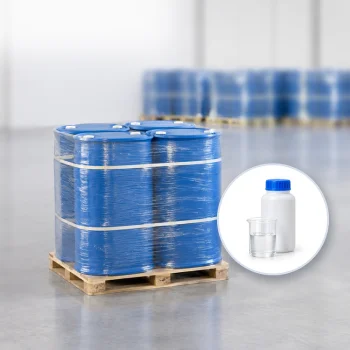
Packaging:Customizable
Description
Tri-n-Octylamine n-Oxide (CAS 13103-04-3) is a trialkylamine oxide in which a tertiary amine bearing three n-octyl chains is oxidized at the nitrogen to give the N-oxide functionality. It is described in the source record as a viscous liquid with a pale yellow color. The N-oxide group is strongly polar and hydrogen-bonding, while the three n-octyl chains supply substantial hydrophobic character, so the molecule combines a hydrophilic, charge-bearing head with a long-chain lipophilic tail. In surfactant and interfacial formulation work, this combination of a polar N-oxide head group and extended alkyl chains supports surface activity, wetting, emulsification and foam-related behavior in aqueous and mixed solvent systems.
In surfactant formulation and interfacial process development, Tri-n-Octylamine n-Oxide serves as an amphiphilic N-oxide component during batch compounding and formulation adjustment. The resulting surfactant blends are used in industrial cleaning, wetting, emulsification and foam-control applications where a long-chain amine oxide head-tail structure contributes to interfacial activity and formulation stability.
Application
- Surfactant formulation: In surfactant formulation, Tri-n-Octylamine n-Oxide serves as an amphiphilic N-oxide component, where its polar N-oxide head group and three n-octyl chains contribute to interfacial activity. The resulting surfactant blends are used in industrial cleaning and wetting formulations.
- Emulsification: In emulsification systems, Tri-n-Octylamine n-Oxide serves as an emulsifier component, where its hydrophilic N-oxide group and lipophilic alkyl chains support oil-water interfacial stabilization. The resulting emulsions are used in industrial process and formulation applications.
- Foam control and foam formulation: In foam-related formulation, Tri-n-Octylamine n-Oxide may be evaluated as an amine oxide surfactant component, where its head-tail structure contributes to interfacial film behavior. The resulting formulations are used in industrial foam-control and foaming applications.
- Wetting and surface tension reduction: In wetting and surface-tension modification, Tri-n-Octylamine n-Oxide serves as a surface-active additive, where its amphiphilic structure contributes to reduced interfacial tension. The resulting formulations are used in industrial wetting and spreading applications.
- Industrial cleaning formulation: In industrial cleaning formulation, Tri-n-Octylamine n-Oxide serves as a surfactant component, where its N-oxide head group and alkyl chains contribute to detergency and soil wetting. The resulting cleaners are used in industrial and institutional cleaning applications.
- Personal care surfactant formulation: In personal care surfactant formulation, Tri-n-Octylamine n-Oxide may be evaluated as a mild amphoteric-type surfactant component, where its N-oxide functionality contributes to foaming and conditioning behavior. The resulting formulations are used in rinse-off cleansing products.
- Amine oxide chemistry research: In amine oxide chemistry research, Tri-n-Octylamine n-Oxide may be evaluated as a long-chain trialkylamine oxide model compound, where its N-oxide group supports studies of surfactant phase behavior and interfacial properties. This is a research evaluation context.
Basic Information
| Property | Value |
|---|---|
| Product Name | Tri-n-Octylamine n-Oxide |
| CAS No. | 13103-04-3 |
| Molecular Formula | UNKNOWN |
| Molecular Weight | 369.67 g/mol |
| Physical | viscous liquid |
| Color | pale yellow |
| Chemical Property | UNKNOWN |
| Customization | Content/concentration customizable per client specification |
Quality Control
Tri-n-Octylamine n-Oxide is a long-chain trialkylamine oxide whose quality is governed by the balance between its polar N-oxide head group and three n-octyl chains, which together determine surface activity, solubility behavior and formulation performance.
| Differentiated QC focus | Structure, application impact, detection and control |
|---|---|
| N-oxide content and functionality | The N-oxide group is the functional center of the molecule and drives surface activity and interfacial behavior. In surfactant and emulsification formulations, incomplete oxidation or reduced N-oxide content can lower surface activity and shift emulsification or foaming performance. Set an agreed specification range for N-oxide content and qualify incoming lots against it. Test by titration or spectroscopic methods suitable for amine oxides, with in-process checks during manufacture. |
| Alkyl chain distribution | The three n-octyl chains determine the hydrophobic character and the head-tail balance of the surfactant. In wetting and emulsification applications, variation in chain length or branching can shift solubility, interfacial tension and foam behavior. Control the alkyl chain distribution against an agreed profile and trend it against application performance. Test by chromatographic methods such as GC for the alkylamine precursor profile. |
| Free amine and residual starting material | Residual tertiary amine or unoxidized starting material can remain from the oxidation step. In formulation use, residual amine can affect pH, odor and interfacial behavior, and may react with acidic components. Set specification limits for free amine and monitor it as a process control parameter. Test by titration or chromatographic methods. |
| Water content | Amine oxides are hygroscopic and can take up water during handling and storage. In aqueous and mixed-solvent formulations, water content affects concentration, viscosity and dosing accuracy. Set an agreed water specification and use moisture-controlled packaging and storage. Test by Karl Fischer titration. |
| pH and acid-base behavior | The N-oxide group participates in protonation equilibria that shift with pH. In formulation, pH affects charge state, solubility and compatibility with other surfactants and builders. Set an agreed pH range for the supplied material and check it against the intended formulation window. Test by potentiometric pH measurement in an agreed aqueous system. |
| Appearance, color and clarity | The material is described as a viscous, pale yellow liquid; color development can indicate oxidation or contamination. In clear or light-colored formulations, color and haze can affect product appearance. Set agreed color and clarity limits and protect from light and heat during storage. Test by visual comparison or colorimetry. |
| Viscosity | The long alkyl chains give the material a viscous, flowable character that affects pumping, dosing and mixing. In batch compounding, viscosity variation can change handling and dispersion behavior. Set an agreed viscosity range and correlate it with temperature and concentration. Test by rotational viscometry at a defined temperature. |
| Inorganic salts and ash | Residual salts can arise from neutralization or washing steps. In formulation use, salts can affect conductivity, stability and compatibility with ionic components. Set specification limits where the application requires and qualify lots accordingly. Test by ash determination or ion chromatography where relevant. |
Batch release, COA and traceability. Each batch is released only when it conforms to the agreed specification. The Certificate of Analysis (COA) records the actual analytical methods and results for that released batch. Batch identity and results remain traceable, with lot trending used where it supports consistency review.
Storage
- Storage conditions: Store in a cool, dry, well-ventilated area. Keep containers tightly closed when not in use to limit moisture uptake.
- Secure storage: Store in a secure, designated area with access limited to authorized personnel.
- Incompatible materials: Keep away from strong oxidizing agents and strong acids.
- Handling precautions: Avoid breathing vapors or mist. Use only in a well-ventilated area. Wear protective gloves, protective clothing, eye protection, and face protection. Wash hands thoroughly after handling.
- Waste disposal: Dispose of contents and container in accordance with local, regional, national, and international regulations.
- Reference: Refer to the Safety Data Sheet (SDS) for detailed handling and disposal information.
Hot Related Products

(Z,Z)-2-(8-Heptadecenyl)-4,5-Dihydro-1-Methyl-3-[2-[(1-Oxo-9-Octadecenyl)Amino]Ethyl]-1H-Imidazolium Methyl Sulphate CAS NO 94944-77-1

Tributyltetradecylphosphonium Chloride CAS NO 81741-28-8

Quaternary Ammonium Compounds, C12-18-Alkyl(Hydroxyethyl)Dimethyl, Chlorides CAS NO 85736-63-6
Diallyldimethylammonium Chloride CAS NO 7398-69-8
Benzyldimethylphenylammonium Chloride CAS NO 3204-68-0
Ethonium CAS NO 21954-74-5
Dodecyldimethylbenzylammonium Chloride CAS NO 139-07-1
Dioctadecyl Dimethyl Ammonium Chloride CAS NO 107-64-2
1-(Dimethylamino)Tetradecane CAS NO 112-75-4
Methacrylatoethyl Trimethyl Ammonium Chloride CAS NO 5039-78-1
Dodecyltrimethylammonium Bromide CAS NO 1119-94-4
Cetyldimethylethylammonium Bromide CAS NO 124-03-8
Benzyldimethylhexadecylammonium Chloride CAS NO 122-18-9
Octadecy Trimethyl Ammonium Bromide CAS NO 1120-02-1
Tetradecyltrimethylammonium Bromide CAS NO 1119-97-7
Tetrahexylammonium Hydrogensulphate CAS NO 32503-34-7
Tetrapropylammonium Hydroxide CAS NO 4499-86-9
Hexadecyl Trimethyl Ammonium Bromide CAS NO 57-09-0
Methyl Tributyl Ammonium Chloride CAS NO 56375-79-2
Benzyltriethylammonium Chloride CAS NO 56-37-1
why choose us
Trusted Manufacturer
With our own production facilities, we ensure consistent quality, reliable supply, and full traceability.
Rigorous Quality Assurance
Each batch undergoes strict QC, accompanied by COA, MSDS, and full compliance with international standards.
Advanced R&D Expertise
Our in-house lab drives process innovation, new product development, and tailored synthesis solutions.