




share
C.I. Pigment Yellow 1:1 CAS NO 12240-03-8
Unit Price:
CAS No.:12240-03-8
Grade:Customizable
Content:Customizable
Brand:Customizable
Packaging:Customizable
Description
C.I. Pigment Yellow 1:1 (CAS 12240-03-8) is a yellow organic pigment of the monoazo colorant class, recorded under the Colour Index designation Pigment Yellow 1:1. It is supplied as a fine powder and its color is yellow. As a pigment rather than a dye, it is handled as an insoluble colorant that is dispersed into a carrier rather than dissolved, so its coloring effect depends on particle size, dispersion quality and distribution within the medium. In coatings, printing inks and polymer coloration, it serves as a yellow colorant for tinting and mass coloration where an insoluble organic pigment is required.
In pigment dispersion and let-down operations, C.I. Pigment Yellow 1:1 is incorporated as a yellow colorant component during batch milling, dispersion and paint or ink manufacture. The resulting pigmented coatings, inks and polymer articles are used in industrial finishing, graphic printing and colored plastic goods for yellow coloration and tint adjustment.
Application
- Coatings coloration: In architectural and industrial coating formulation, C.I. Pigment Yellow 1:1 serves as a yellow pigment component, where its insoluble organic pigment character contributes to color development after dispersion. The resulting coating is used for yellow tinting and color matching in paint systems.
- Printing ink pigmentation: In printing ink manufacture, C.I. Pigment Yellow 1:1 serves as a yellow colorant for pigment dispersion into ink vehicles. The resulting ink is used in graphic printing for yellow image and color reproduction.
- Polymer and plastics coloration: In plastics coloration, C.I. Pigment Yellow 1:1 serves as a yellow pigment for mass coloration and masterbatch-type dispersion. The resulting colored polymer is used in molded and extruded plastic articles requiring yellow color.
- Pigment dispersion and mill base preparation: In mill base preparation, C.I. Pigment Yellow 1:1 serves as the pigment phase to be wetted and dispersed in a carrier, where dispersion quality contributes to color strength and uniformity. The resulting dispersion is used as a colorant concentrate for let-down into finished coatings and inks.
- Industrial tinting and color matching: In industrial color matching, C.I. Pigment Yellow 1:1 serves as a yellow shading component for adjusting hue and tint in pigmented systems. The resulting color-matched material is used in batch production of colored industrial products.
Basic Information
| Property | Value |
|---|---|
| Product Name | C.I. Pigment Yellow 1:1 |
| CAS No. | 12240-03-8 |
| Molecular Formula | UNKNOWN |
| Molecular Weight | 673.55 g/mol |
| Physical | fine powder |
| Color | yellow |
| Chemical Property | UNKNOWN |
| Customization | Content/concentration customizable per client specification |
Quality Control
The quality of C.I. Pigment Yellow 1:1 is governed by its character as an insoluble organic pigment, where coloristic performance depends on particle size, dispersion state and freedom from foreign matter rather than on a single assay value.
| Differentiated QC focus | Structure, application impact, detection and control |
|---|---|
| Color strength and shade | As an organic pigment, color strength and shade determine tinting power and hue match in coatings, inks and plastics. Weak or shifted shade can cause off-color batches and require re-tinting. Control by comparing against an agreed reference standard using spectrophotometric or visual color measurement, and trend results across lots. |
| Particle size and dispersion behavior | Pigment performance depends on how finely and uniformly the powder disperses in the carrier. Coarse or agglomerated particles can cause poor gloss, streaking, low color strength and settling. Control through agreed dispersion test methods, grind gauge readings and particle size measurement where suitable instrumentation is available. |
| Volatile matter and moisture | Residual moisture or volatiles can cause foaming, dispersion defects or viscosity drift in ink and coating systems. Control by defined drying or loss-on-drying checks and by moisture-limited packaging and storage. |
| Insoluble matter and foreign particulates | Foreign particulates or undispersed grit can create specks, pinholes and surface defects in films and printed images. Control by filtration or sieve checks and by clean handling during milling and packaging. |
| pH and water-soluble content | Soluble salts or residual acidity/alkalinity can affect dispersion stability and corrosion behavior in waterborne systems. Control by agreed extraction and pH measurement where the application requires it. |
Batch release, COA and traceability. Each batch is released only when it conforms to the agreed specification. The Certificate of Analysis (COA) records the actual analytical methods and results for that released batch. Batch identity and results remain traceable, with lot trending used where it supports consistency review.
Storage
- Storage conditions: Store in a cool, dry, well-ventilated area with containers kept closed when not in use.
- Secure storage: Store in a secure, designated area with access limited to authorized personnel.
- Incompatible materials: Keep away from strong oxidizing agents and sources of ignition.
- Handling precautions: Avoid generating and breathing dust. Use in a well-ventilated area. Wear protective gloves, protective clothing, eye protection and face protection. Wash hands thoroughly after handling.
- Waste disposal: Dispose of contents and container in accordance with local, regional, national and international regulations.
- Reference: Refer to the Safety Data Sheet (SDS) for detailed handling and disposal information.
Hot Related Products

1,3-Diiminoisoindoline CAS NO 3468-11-9
5,6,12,13-Tetrabromo-Perylo[3,4-Cd:9,10-C'D']Dipyran-1,3,8,10-Tetrone CAS NO 321945-85-1

Fluorphlogopite (Mg3K[Alf2O(Sio3)3]) CAS NO 12003-38-2

Quinacridone CAS NO 1047-16-1
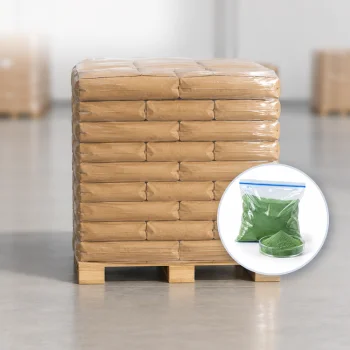
Malachite CAS NO 1319-53-5
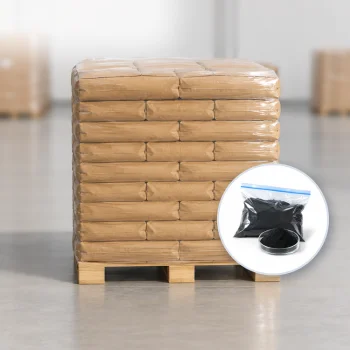
Carbon Black CAS NO 1333-86-4

Iron Oxide Black CAS NO 12227-89-3
4,4'-Diamino-1,1'-Iminodianthraquinone CAS NO 128-87-0

Iron Phthalocyanine CAS NO 132-16-1
3-Hydroxy-n-2-Naphthyl-2-Naphthamide CAS NO 135-64-8
Copper(Ii) Phthalocyanine CAS NO 147-14-8
Perylene CAS NO 198-55-0
Pigment Red 49:2 CAS NO 1103-39-5
Pigment Red 49:1 CAS NO 1103-38-4
Pigment Permanent Red F5Rk CAS NO 1211-16-1
Copper Acetate Arsenite CAS NO 1299-88-3

Lazurite CAS NO 1302-83-6

Cadmium Sulfide CAS NO 1306-23-6
Cobalt(Iii) Oxide Black CAS NO 1308-04-9
Dichromium Iron Tetraoxide CAS NO 1308-31-2
why choose us
Trusted Manufacturer
With our own production facilities, we ensure consistent quality, reliable supply, and full traceability.
Rigorous Quality Assurance
Each batch undergoes strict QC, accompanied by COA, MSDS, and full compliance with international standards.
Advanced R&D Expertise
Our in-house lab drives process innovation, new product development, and tailored synthesis solutions.