




share
Titanium Dioxide CAS NO 1317-70-0
Unit Price:
CAS No.:1317-70-0
Grade:Customizable
Content:Customizable
Brand:Customizable
Packaging:Customizable
Description
Titanium Dioxide (CAS 1317-70-0) is an inorganic titanium oxide material supplied as a fine powder. It is a white solid and is generally described as an insoluble inorganic oxide pigment. Its high refractive index and light-scattering behavior support opacity and whiteness in pigmented material systems, giving it the role of a white pigment and opacifier in coatings, plastics, and printing inks. In these material systems, it serves as a particulate white pigment for whiteness, hiding power, and brightness control.
In coating, plastic, and printing ink production, Titanium Dioxide is incorporated as a dispersed particulate pigment during batch formulation and repeated manufacturing. The resulting pigmented materials are used in industrial and consumer coating films, molded and extruded plastic articles, and printed substrates for whiteness, opacity, and color development.
Application
- Coatings and paints: In architectural and industrial coating formulation, Titanium Dioxide serves as a white opacifying pigment, where its light-scattering particulate nature contributes to hiding power and film whiteness. The resulting coatings are used for surface protection and appearance control on building and industrial substrates.
- Plastics and polymer compounds: In plastics compounding, Titanium Dioxide serves as a white pigment and opacifier, where its particulate dispersion contributes to whiteness and opacity in the compounded resin. The resulting compounds are used in molded and extruded plastic articles for appearance and light management.
- Printing inks: In printing ink formulation, Titanium Dioxide serves as a white pigment component, where its scattering behavior contributes to ink opacity and print contrast. The resulting inks are used in graphic and packaging printing on paper and film substrates.
- Pigment dispersion preparation: In pigment dispersion preparation, Titanium Dioxide serves as the particulate pigment phase, where its fine powder form is dispersed into carrier systems. The resulting dispersions are used as colorant concentrates in coating, ink, and polymer processing.
- Industrial colorant and whitening formulation: In industrial colorant formulation, Titanium Dioxide serves as a white base pigment for tinting and whitening, where its scattering behavior contributes to brightness adjustment in pigmented systems. The resulting colorant systems are used in material finishing and appearance control.
Basic Information
| Property | Value |
|---|---|
| Product Name | Titanium Dioxide |
| CAS No. | 1317-70-0 |
| Molecular Formula | UNKNOWN |
| Molecular Weight | 79.87 g/mol |
| Physical | Fine powder |
| Color | White |
| Chemical Property | UNKNOWN |
| Customization | Content/concentration customizable per client specification |
Quality Control
The quality of Titanium Dioxide is governed by its particulate nature and its function as a white pigment, where particle characteristics and dispersion behavior directly affect whiteness, opacity, and appearance in coating, plastic, and ink systems.
| Differentiated QC focus | Structure, application impact, detection and control |
|---|---|
| Identity and composition | The material is an inorganic titanium oxide pigment, and identity consistency underpins all downstream coloristic performance. In coatings, plastics, and inks, an off-spec identity can cause color deviation and inconsistent opacity. Confirm identity by suitable instrumental or wet-chemical methods against an agreed specification, and qualify incoming lots before release to compounding. |
| Particle size and size distribution | Particle size and distribution influence light scattering and therefore whiteness and hiding power. In coating films and pigmented plastics, coarse or broad distributions can reduce opacity and cause uneven appearance. Set agreed particle-size ranges, monitor distribution, and correlate results with application-specific opacity tests. |
| Whiteness and coloristic performance | Whiteness and tint are primary functional attributes for a white pigment. In coatings, plastics, and inks, batch-to-batch color variation can cause visible mismatch in finished articles. Set agreed color limits and compare lots against a retained standard under defined viewing or instrumental conditions. |
| Dispersion quality | The fine powder must disperse into carrier systems to deliver its optical function. In coating, ink, and polymer processing, poor dispersion can cause agglomerates, specks, and loss of hiding power. Control dispersion through agreed milling or dispersion procedures and inspect dispersions for undispersed particles. |
| Moisture and volatile content | Residual moisture or volatiles can affect powder handling and dispersion behavior. In coating and plastic processing, excessive moisture can cause processing defects and inconsistent dispersion. Set agreed limits on moisture or volatile content and check lots before use in moisture-sensitive systems. |
| Residue and contamination | Inorganic residues or foreign particulates can affect appearance and performance. In thin films and bright white articles, contamination can cause specks or color defects. Apply agreed screening or filtration controls and inspect lots intended for appearance-critical applications. |
Batch release, COA and traceability. Each batch is released only when it conforms to the agreed specification. The Certificate of Analysis (COA) records the actual analytical methods and results for that released batch. Batch identity and results remain traceable, with lot trending used where it supports consistency review.
Storage
- Storage conditions: Store in a cool, dry, well-ventilated area. Keep containers tightly closed when not in use.
- Secure storage: Store in a secure, designated area with access limited to authorized personnel.
- Incompatible materials: Keep away from strong oxidizing agents.
- Handling precautions: Avoid breathing dust. Use only in a well-ventilated area. Wear protective gloves, protective clothing, eye protection, and face protection. Wash hands thoroughly after handling.
- Waste disposal: Dispose of contents and container in accordance with local, regional, national, and international regulations.
- Reference: Refer to the Safety Data Sheet (SDS) for detailed handling and disposal information.
Hot Related Products

1,3-Diiminoisoindoline CAS NO 3468-11-9
5,6,12,13-Tetrabromo-Perylo[3,4-Cd:9,10-C'D']Dipyran-1,3,8,10-Tetrone CAS NO 321945-85-1

Fluorphlogopite (Mg3K[Alf2O(Sio3)3]) CAS NO 12003-38-2

Quinacridone CAS NO 1047-16-1
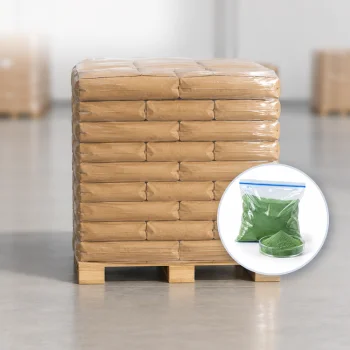
Malachite CAS NO 1319-53-5

Carbon Black CAS NO 1333-86-4

Iron Oxide Black CAS NO 12227-89-3
4,4'-Diamino-1,1'-Iminodianthraquinone CAS NO 128-87-0

Iron Phthalocyanine CAS NO 132-16-1
3-Hydroxy-n-2-Naphthyl-2-Naphthamide CAS NO 135-64-8
Copper(Ii) Phthalocyanine CAS NO 147-14-8
Perylene CAS NO 198-55-0
Pigment Red 49:2 CAS NO 1103-39-5
Pigment Red 49:1 CAS NO 1103-38-4
Pigment Permanent Red F5Rk CAS NO 1211-16-1
Copper Acetate Arsenite CAS NO 1299-88-3

Lazurite CAS NO 1302-83-6

Cadmium Sulfide CAS NO 1306-23-6
Cobalt(Iii) Oxide Black CAS NO 1308-04-9
Dichromium Iron Tetraoxide CAS NO 1308-31-2
why choose us
Trusted Manufacturer
With our own production facilities, we ensure consistent quality, reliable supply, and full traceability.
Rigorous Quality Assurance
Each batch undergoes strict QC, accompanied by COA, MSDS, and full compliance with international standards.
Advanced R&D Expertise
Our in-house lab drives process innovation, new product development, and tailored synthesis solutions.